
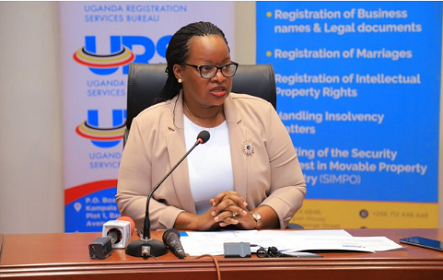
Uganda’s Inspectorate of Government has drawn a firm line in the sand, publicly overruling Justice Minister Norbert Mao and directing the Ministry of Justice and Constitutional Affairs to formally interdict Uganda Registration Services Bureau Registrar General Mercy Kainobwisho along with three other senior officials. The directive, issued in a statement dated October 26, 2026, signals that the country’s anti-graft body is not willing to let procedural softness derail what it describes as a serious, ongoing investigation.
A Soft Landing That Didn’t Satisfy the IG
When President Yoweri Museveni ordered an audit into the operations of the Uganda Registration Services Bureau earlier this year, Minister Mao moved to act, sending Kainobwisho and several senior bureau officials on mandatory leave in August. To Mao, that appeared to be a proportionate, orderly response. To the Inspectorate of Government, it was not enough.
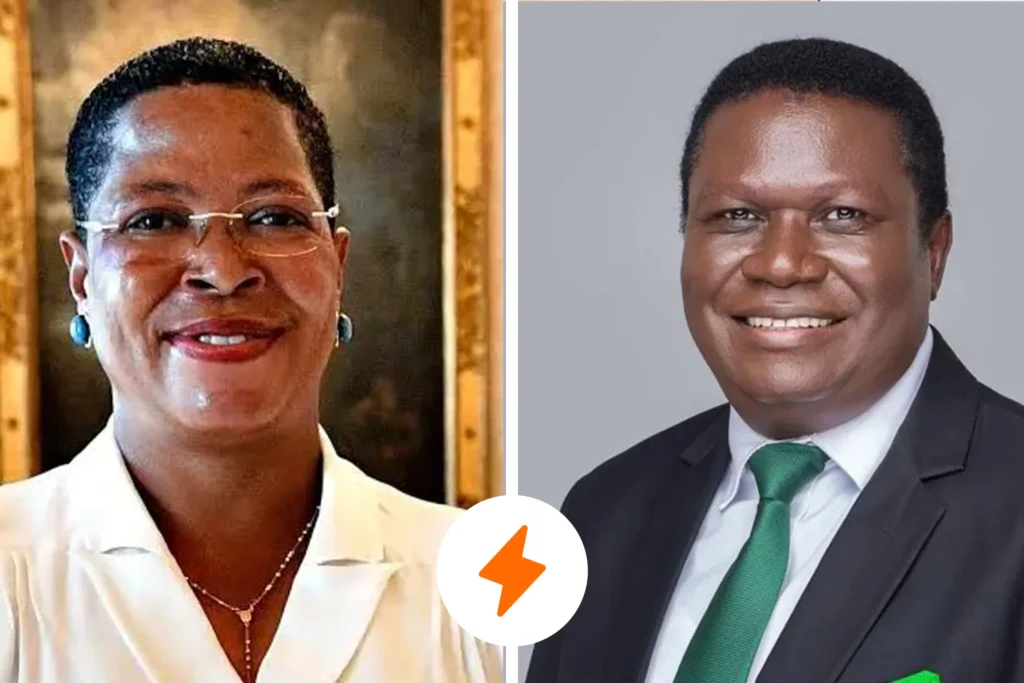
The IG had previously instructed Mao to formally interdict Kainobwisho, Deputy Registrar General Alex Anganya, Commissioner for ICT and Innovations Arthur Kwesiga, and Assistant Commissioner for Business Registration Services Walid Kule. Interdiction carries a different legal weight from mandatory leave. It removes an official from active duty in a way that is legally recognised and harder to sidestep, particularly when investigators need to ensure that no one under scrutiny can influence evidence, colleagues, or processes from inside the institution.
Instead, the four officials were placed on mandatory leave in August and have remained in that limbo status beyond their statutory leave entitlement. The Inspectorate described the situation in unusually direct terms, noting that the interdiction “was intended to ensure that the ongoing investigations are conducted without interference and in the public interest.”
What the Investigators Are Looking At
The scope of the allegations at the heart of this investigation is considerable. According to the Inspectorate, the probe covers the “commission of offences, abuse of office, institutional mismanagement, money laundering and maladministration at URSB.” That is a wide net, and it suggests investigators are looking at more than a few administrative irregularities.
URSB is not a peripheral agency. It handles the registration of companies, businesses, intellectual property, and a range of legal documents that underpin Uganda’s commercial and civil life. Any serious mismanagement within the bureau touches not just government operations but also the private sector businesses that depend on the bureau’s services to function legally. Money laundering allegations in that context take on particular weight.
While the investigations continue, Deputy Registrar General for Registries Mustapher Ntale has been assigned to perform the functions of Registrar General, keeping the bureau operational during what is clearly a turbulent period for its leadership.
The Significance of Overruling a Cabinet Minister
There is something worth pausing on here. The Inspectorate of Government, in issuing this directive, has effectively told a sitting cabinet minister that his approach was legally insufficient and needs to be corrected. That is not a trivial moment in Uganda’s governance landscape.
It speaks to the independent mandate the Inspectorate holds under Uganda’s constitutional framework. Anti-corruption institutions that can publicly correct ministers without political blowback are a meaningful feature of a functioning accountability architecture. Whether the Ministry of Justice now moves swiftly to enforce the formal interdiction as ordered will be a practical test of how seriously that architecture actually operates.
The full details of the Inspectorate’s directive also include an order regarding another official, Agaba, who is to be reinstated, adding another layer to what is fast becoming a complicated reshuffling of URSB’s leadership structure under the shadow of an active investigation.
What Happens Next
The Ministry of Justice now carries the responsibility of acting on the IG’s directive. Formal interdiction of four senior officials at once is a significant administrative move, one that will shape the tone of the investigation going forward and signal to public servants across Uganda’s institutions how seriously the rules of engagement during misconduct probes are taken.
For Kainobwisho and her colleagues, the distinction between mandatory leave and interdiction is not merely semantic. Interdiction typically affects salary, status, and the formal terms under which an official is removed from their duties pending investigation. It is a harder position to be in, legally and professionally.
The coming days will reveal whether the Ministry complies promptly, seeks to negotiate the terms further, or drags its feet in a way that invites further public rebuke from the Inspectorate. Given the watchdog’s unusually explicit public statement, any further delay seems likely to attract scrutiny.
Uganda has, over the years, seen numerous high-profile investigations into public institutions stall, fade, or produce minimal accountability. The URSB case, now elevated by a direct confrontation between the Inspectorate and a cabinet minister, has the attention of governance observers across the country. Whether that attention translates into genuine accountability or simply generates noise before a quiet resolution remains the question hanging over Kampala’s corridors of power.
The public, the business community reliant on URSB’s services, and the broader civil society watching Uganda’s anti-corruption institutions will be asking the same thing: when an independent watchdog tells a minister to act, does the system actually listen?