





On September 29, 2026, Estonia moved swiftly and publicly against Russia, summoning Moscow’s chargé d’affaires to the foreign ministry in Tallinn after a fire at Milrem Robotics, one of the Baltic state’s most strategically significant defence technology companies, was ruled a deliberate act by the country’s security services. The incident, investigators said, was both premeditated and coordinated, and Estonia’s government wasted no time connecting the dots to a broader campaign it believes is being run out of Moscow.
A Fire That Was No Accident
Arson at a robotics firm that builds some of the most sophisticated unmanned ground vehicles in NATO’s operational sphere is not a random act of vandalism. Estonia’s security agency confirmed the attack on Milrem Robotics was “deliberate and pre-planned,” language that strips away any ambiguity about how seriously Tallinn is treating the incident. This was not a disgruntled employee or a rogue criminal. This was, according to Estonian officials, a targeted hit.
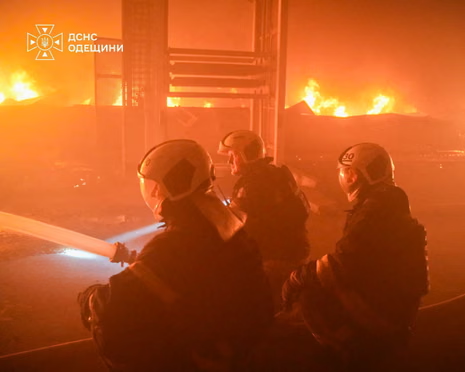
Milrem Robotics has grown into a company of genuine strategic weight. Its tracked unmanned ground vehicles have attracted interest from militaries across Europe, and the firm has been deeply embedded in several NATO-affiliated research and development programmes. Setting fire to such a facility carries a message well beyond the insurance claim. It signals vulnerability, or at least an attempt to project it.
Estonia’s Foreign Minister Acts
The foreign ministry’s decision to summon Russia’s chargé d’affaires, rather than an ambassador, reflects the current state of diplomatic relations between Tallinn and Moscow, which have been stripped down to their bare minimum. The summons itself is a formal protest mechanism, a way of placing responsibility on the record without declaring outright that war has been declared through the back door. But the language accompanying it left little room for diplomatic hedging.
Estonia’s foreign minister stated clearly that the arson attack was “consistent with other acts of sabotage carried out in Europe on behalf of Russia.” That framing is significant. It does not treat this as an isolated Estonian problem. It positions the attack as one thread in a wider fabric of hybrid warfare that has been documented from the Baltic to the Balkans over the past several years.
The Pattern Across Europe
Europe has been quietly cataloguing a growing list of suspicious incidents over recent years, from warehouse fires and railway interference to the harassment of military logistics routes. Western security services have linked a number of these to Russian intelligence networks operating through intermediaries, often recruited from diaspora communities or criminal organisations willing to carry out physical acts for cash, with no direct traceable link to the Kremlin.
This model of plausible deniability has become a signature feature of what analysts describe as Russia’s grey zone strategy, a campaign designed to inflict economic and psychological costs on NATO members without crossing the threshold that would trigger a formal Article 5 response. Targeting a defence technology company fits this logic precisely. It disrupts production, rattles investor confidence, and sends a message to other firms in the sector without a single uniformed soldier crossing a border.
As reporting on the day’s wider European security developments noted, senior NATO and Lithuanian officials were expected to address both the Estonia situation and ongoing events in Ukraine at a press conference, a signal that the alliance views these incidents as interconnected pressure points rather than isolated national concerns.
Why Milrem Robotics Matters
To understand why this company would appear on any adversary’s target list, you need to understand what it actually makes. Milrem’s THeMIS unmanned ground vehicle has been deployed in real operational environments, tested alongside special forces units, and positioned as a potential force multiplier for armies that need to reduce human exposure on contested terrain. In a war where drone technology and autonomous systems have reshaped the battlefield in Ukraine, a company making functional, exportable unmanned platforms is not just a commercial enterprise. It is a piece of the Western defence-industrial ecosystem.
Damaging that ecosystem, even temporarily, serves a strategic purpose. Production delays, engineering talent spooked into leaving, insurance premiums surging, or international partners reconsidering procurement contracts: any of these outcomes represents a win for an adversary trying to slow NATO’s technological edge without firing a single missile.
The Diplomatic Arithmetic
Summoning a chargé d’affaires is a measured response, calibrated to communicate outrage without escalating beyond the current diplomatic temperature. Estonia has consistently been one of the most vocal NATO members on the threat posed by Russian hybrid operations, and Tallinn’s security establishment has long argued that the rest of the alliance has been too slow to treat these acts as the acts of war they effectively are.
The real question now is whether this incident accelerates any meaningful collective response from NATO or whether it joins the growing archive of documented Russian sabotage operations that have been acknowledged, condemned, and then largely absorbed without structural consequence. Each time a warehouse burns or a fibre optic cable gets cut, the calculus shifts slightly. Whether it shifts enough to produce a deterrent policy that actually deters remains the central unresolved tension in Europe’s security conversation.
What Comes Next
Estonian authorities are likely to share intelligence from their investigation with allied services, and there will be pressure to publicly name any individuals or networks found responsible. Naming and sanctioning the people behind these operations has become one of the few tools short of military action that Western governments feel comfortable using, though its deterrent value is limited when the operatives involved are already inside Russia or operating through cut-outs.
For Milrem Robotics, the immediate priority is assessing the damage and restoring operations. But the attack has thrust the company into a geopolitical spotlight it never sought, and the wider European defence technology sector will be watching closely to see whether governments step up physical and cyber security support for firms that sit at the intersection of innovation and national security.
Europe has spent years debating how seriously to treat hybrid warfare. Estonia just got another very literal reminder that the debate is not abstract, and the question now pressing on Brussels, NATO headquarters, and allied capitals alike is: at what point does a pattern of documented sabotage demand a response that is as coordinated and deliberate as the attacks themselves?