




In the closing days of September 2026, Florida finds itself grappling with a public health situation that most Americans would have associated, until recently, with distant corners of Southeast Asia or Latin America. Multiple Florida counties have declared local states of emergency after dengue fever infections spread at a pace that caught health officials off guard. The dengue outbreak across Florida counties has now pushed the statewide case count to 392 confirmed infections for the year, according to the Centers for Disease Control and Prevention.
Hillsborough County Leads the Emergency Response
Hillsborough County moved first. On September 24, county officials signed an emergency declaration after recording 134 confirmed dengue cases within their jurisdiction alone. That is a striking concentration: a single county accounting for more than a third of Florida’s total reported cases. Officials did not mince words in their declaration, describing the spread of the illness as posing “an immediate and widespread threat to the public health, safety, and welfare of the residents and visitors of Hillsborough County.”
That language carries weight. Emergency declarations unlock resources, accelerate the deployment of mosquito control measures, and allow local governments to cut through bureaucratic red tape when time is genuinely short. In a situation like this, speed matters more than paperwork.
What Is Dengue Fever, and Why Does It Matter Here?
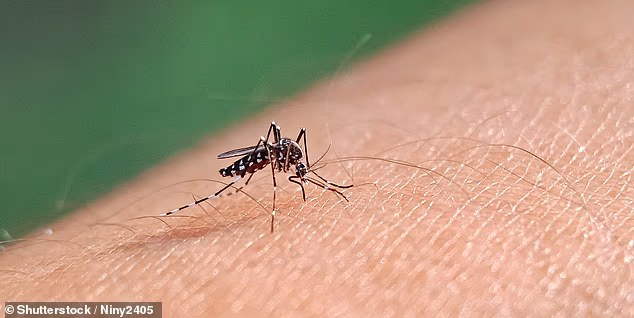
Dengue fever is caused by a virus transmitted almost exclusively through the bite of infected Aedes mosquitoes, particularly Aedes aegypti. The disease is not new. Globally, the World Health Organization estimates that roughly 400 million dengue infections occur annually, with the vast majority concentrated in tropical and subtropical regions. Symptoms range from high fever and severe headache to joint pain so debilitating that dengue earned the grim nickname “breakbone fever.” In serious cases, the illness can progress to dengue hemorrhagic fever, which can be life-threatening without proper medical care.
What makes Florida’s current situation notable is the domestic transmission angle. Historically, most dengue cases diagnosed in the United States were “travel-associated,” meaning a person picked up the infection abroad and brought it home. But Florida’s climate, particularly its humid, warm coastal areas, provides a hospitable environment for the Aedes mosquito population. As climate patterns shift and temperatures hold higher for longer, the window during which these mosquitoes can breed and spread disease is expanding.
The Numbers Behind the Outbreak
Three hundred and ninety-two cases statewide sounds like a manageable figure in a state of more than 22 million people. But epidemiologists are rarely comforted by raw counts alone. What matters is the trajectory. When cases cluster geographically, multiply quickly, and push one county to declare an emergency, public health professionals know they are looking at active local transmission rather than scattered imported cases.
Hillsborough County’s 134 confirmed cases represent a significant local concentration. Other counties contributing to the statewide total have not yet released specific breakdowns publicly, but the multi-county nature of the emergency signals that this is not a single, contained pocket of infection.
Who Is Most at Risk?
Anyone who spends time outdoors in affected areas carries some exposure risk. Dengue does not discriminate by age or background; the mosquito does not check identification. However, certain groups face heightened danger if they do contract the illness. People with underlying health conditions, the elderly, young children, and pregnant women are all more vulnerable to severe outcomes. Visitors unfamiliar with the local mosquito situation, and who may not think to use repellent, represent another group that health authorities are particularly keen to reach with public messaging.
Florida draws tens of millions of tourists each year. Tampa, which sits within Hillsborough County, is a major destination for business travelers, sports fans, and families. The timing of this outbreak, as the fall travel season picks up, adds another layer of urgency to official warnings directed at visitors.
What Authorities Are Doing About It
Emergency declarations are instruments of action, not just symbolism. In practical terms, they allow counties to ramp up aerial and ground-level mosquito spraying operations, fast-track contracts with pest control services, and coordinate messaging campaigns more aggressively. Health departments can also accelerate contact tracing efforts and work more closely with hospitals to ensure that clinicians are on alert for dengue symptoms in patients presenting with fever.
At the federal level, the CDC’s tracking of the statewide case count provides the national surveillance picture that state and local officials need to calibrate their responses. The agency’s involvement also signals that this outbreak has crossed a threshold where it demands more than a purely local reply.
Prevention Is Still the Sharpest Tool Available
No approved dengue vaccine is widely available for general use across the United States population, which means prevention remains the primary line of defense. Public health messaging has zeroed in on a familiar but critical checklist: apply EPA-registered insect repellent, wear long sleeves and pants during peak mosquito hours (dawn and dusk), eliminate standing water around homes and properties where mosquitoes breed, and use air conditioning or window screens whenever possible.
These measures sound simple, and they are. The challenge is getting enough people to actually follow them consistently, especially in communities where outdoor activity is a daily given and mosquito awareness has not historically been top of mind.
A Broader Warning Hidden Inside a Local Crisis
Florida’s dengue situation is not happening in a vacuum. Across the southern United States, health researchers have flagged the gradual northward creep of mosquito species capable of transmitting dengue, Zika, and chikungunya. Warmer winters mean fewer hard freezes to thin mosquito populations naturally. Urbanization creates more pools of standing water in drainage systems, construction sites, and residential areas. These factors combine to create conditions in which what was once a rare, travel-associated disease becomes something closer to a recurring seasonal threat.
The public health infrastructure will be tested. Resources that were not budgeted for dengue response will need to be reallocated. Medical professionals will need updated training on recognizing and managing a disease that many American clinicians have rarely encountered in domestic patients. And residents will need to absorb new habits into their daily routines, mosquito repellent becoming as routine as sunscreen on a Florida morning.
Florida’s emergency declarations are a serious response to a serious situation. But they also serve as a preview of the public health conversations the entire Sun Belt may be having with increasing regularity in the years ahead. The question worth sitting with is this: if a once-exotic disease can establish a foothold in Florida this quickly, which American city is next, and is it ready?