

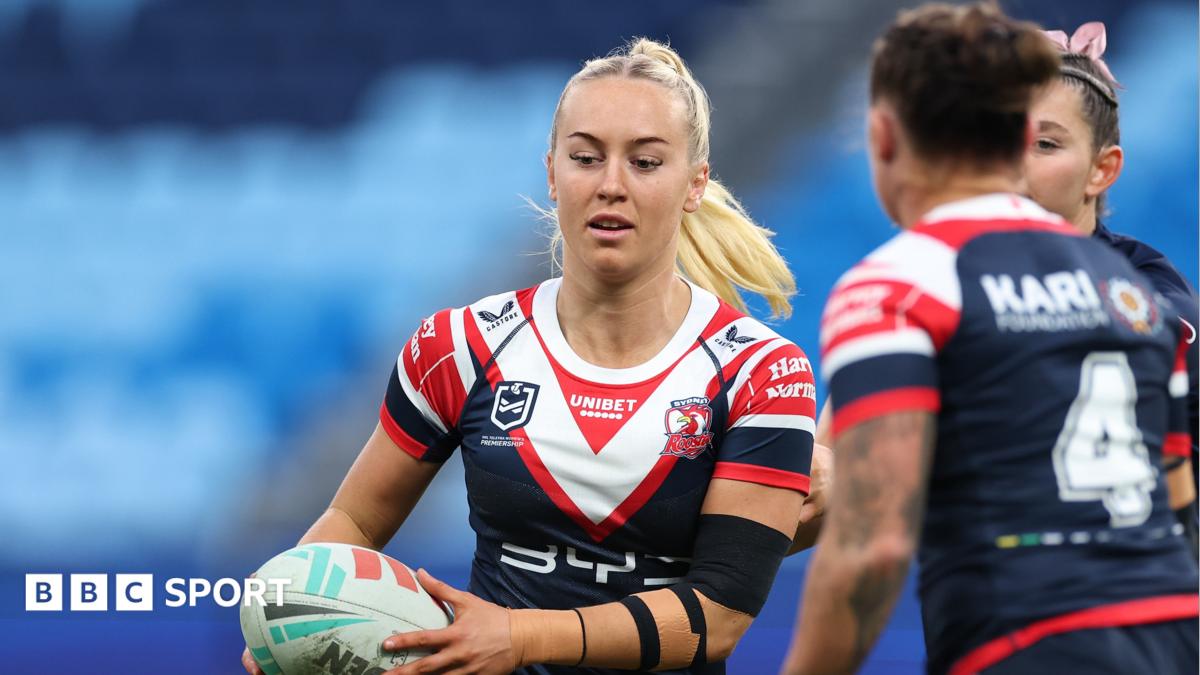
England’s Women’s Rugby League World Cup squad, announced this week, carries a name that turns heads and tells a story bigger than sport: Jasmin Strange, a 23-year-old second-row forward born in New South Wales, Australia, who has chosen to represent the country her father once called home. She is one of four potential debutants in a 23-player group that blends domestic grit with Southern Hemisphere firepower, and her inclusion signals something of a new era for the English game.
A Family Tie That Crosses Hemispheres
The Strange family name carries genuine weight in rugby league circles, though it earned that weight on opposite ends of the globe. Jasmin’s father, John Strange, spent part of his playing career in England during the 1990s, turning out for Featherstone Rovers before eventually settling into life back in Australia. He is now the head coach of the Sydney Roosters women’s side in the NRLW, the same team his daughter represents as a forward. Her mother, Adele, is the English connection, and it is through her that Jasmin qualifies to wear the white and red.
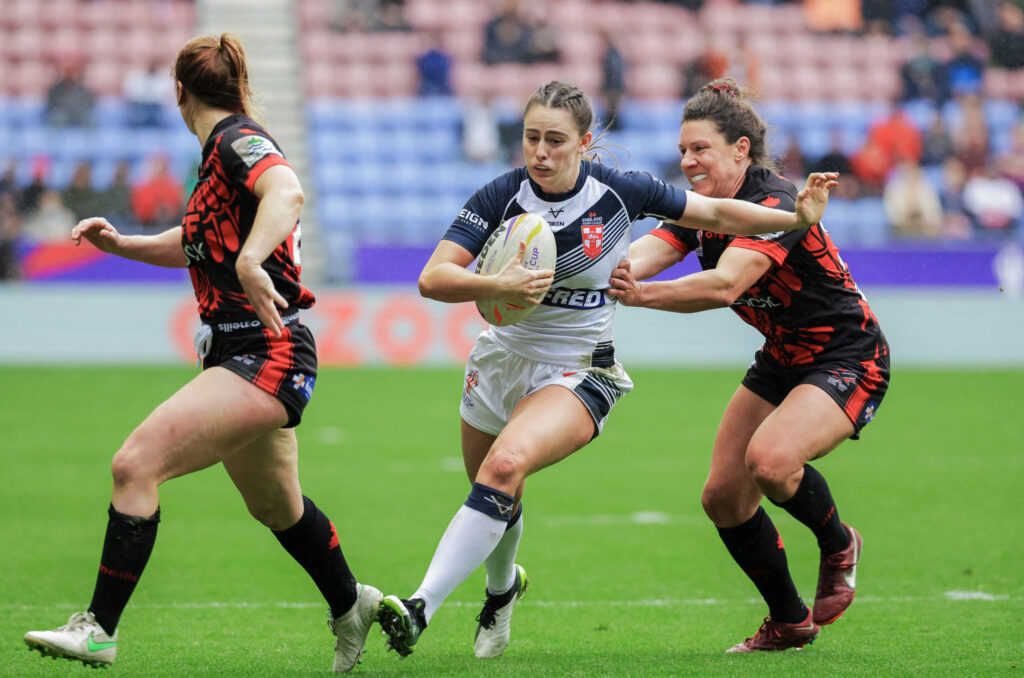
It is a deeply personal story dressed up in international jersey colours. Growing up in Australia, absorbing the game from a father who played it at a professional level and now coaches it at the highest women’s level domestically, Strange has rugby league running through her. But her eligibility for England is a thread woven by her parents’ relationship, which began when John was plying his trade in the heartlands of the English game. Sport, family, and geography have collided to produce one of the more compelling selection stories of this World Cup cycle.
The Rule Change That Opened the Door
Strange’s call-up would not have been possible without a significant shift in International Rugby League policy. A ruling introduced this year means players can now represent more than one of the three tier-one nations: Australia, New Zealand, and England. Previously, once you had represented one nation, the door to another was firmly shut. The new framework recognises the complex, borderless nature of modern rugby league, where players regularly cross between competitions and countries, and where heritage ties can be just as legitimate as birthplace.
Head coach Stu Barrow was always going to be watching the NRLW closely once that rule landed on his desk. The competition produces some of the most technically sharp and physically developed women’s players anywhere in the world, and several of them hold English heritage. According to BBC Sport, speculation mounted that Barrow might reach for names like Roosters playmaker Jocelyn Kelleher, Bulldogs half-back Tayla Preston, and Wests Tigers full-back Caitlin Turnbull. For now, Strange is the sole heritage pick from that pool, but the door is open and the precedent has been set.
Four Debutants, One Grand Final
Strange is not the only fresh face in Barrow’s squad. Leeds Rhinos’ Connie Boyd, Hope Millard of the Canterbury Bulldogs, and Lucie Sams of Wigan Warriors are the other uncapped players given their shot. Millard’s connection to the English game runs deep in its own right: her father Shane was a forward who represented Widnes, Leeds, and Wigan during his playing days, making her another product of that cross-hemisphere pipeline.
What makes Strange’s timing particularly striking is the context around her selection. She is due to take the field in Sunday’s NRLW Grand Final with the Sydney Roosters, facing the Brisbane Broncos. A player preparing for a domestic season-defining match while simultaneously digesting World Cup selection news is not in unfamiliar territory in rugby league, a sport notorious for its packed schedules, but it does sharpen the narrative considerably. Win or lose on Sunday, Strange will pack her bags with England colours waiting.
NRLW Experience Runs Deep Through the Squad
Beyond Strange, England’s squad reflects a broader recruitment strategy that treats the NRLW as a talent pool rather than a rival competition. Georgia Roche of the Newcastle Knights and Hollie-Mae Dodd of the Canberra Raiders have also been included, giving Barrow a group with genuine familiarity with the pace and physicality that the Australian competition demands.
Perhaps the most experienced of the NRLW contingent is Fran Goldthorp, a dual-code international who last represented England in rugby league at the 2022 World Cup. Her return adds leadership and a specific kind of knowledge, the sort that comes from having stood on a World Cup stage before and knowing exactly what it asks of you.
What This Squad Tells Us About England’s Ambitions
Assembling a squad that draws from both the English domestic competition and the NRLW is a statement of intent. It says England are not content to work with what is available at home; they are actively constructing the best possible group, using every legal avenue to do so. The heritage player route, freshly legitimised by the new IRL ruling, gives Barrow a tool other coaches in previous cycles simply did not have.
For Jasmin Strange specifically, the World Cup represents a chance to write herself into a very particular kind of story: an Australian-born player, shaped by the game through a father who once stood in the mud at Featherstone, now pulling on an England shirt and doing it all again, but on the biggest stage women’s rugby league has to offer. It is not a story you could make up. It is the kind that sport occasionally produces when geography, family, and timing line up just right.
As eligibility rules continue to evolve and the women’s game grows in depth and global reach, one question seems worth sitting with: should heritage-based selection be celebrated as a bridge between rugby league cultures, or does it risk diluting the meaning of national identity in sport? Where do you stand?