

It started, as many serious security scares do, with an ordinary person paying close attention. A farmer near RAF Fairford in Gloucestershire spotted what she described as a group of hooded and masked men moving near the perimeter of the base late on September 28, 2026. She called the police. That call has since triggered one of the most significant counter-terror investigations Britain has seen in recent memory, one that sits uncomfortably against the backdrop of an ongoing war between the United States and Iran.
The Tip That Launched an Investigation
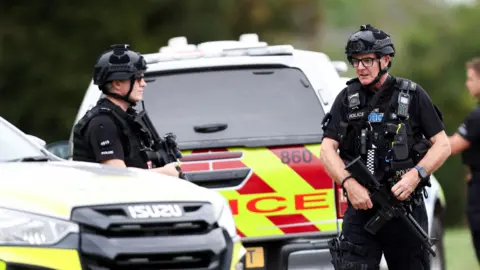
The farmer’s instincts, by any measure, proved right. Police responded, made arrests near the base, and now counter-terror officers and the wider security services are working to establish exactly what was being planned and by whom. Health Secretary Wes Streeting publicly thanked the farmer for her vigilance, though he was careful to add that she holds, in his words, “a partial picture” of events. A diplomatic way of saying: there is much more going on beneath the surface than a concerned local can see from a field.
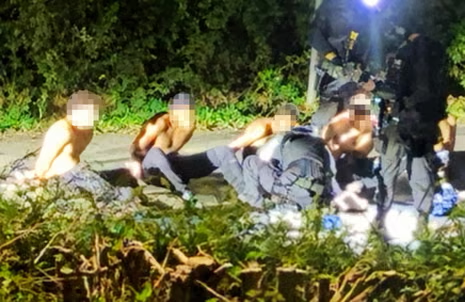
Her own assessment, shared openly, was blunter. She told reporters she believes “someone dropped the ball” in the lead-up to whatever was unfolding near the fence line of one of the UK’s most closely watched military installations. Whether that reflects a genuine intelligence gap or simply the fog of a fast-moving situation is something investigators will need to answer.
Why RAF Fairford Matters So Much Right Now
RAF Fairford is not just any base. Nestled in the Cotswolds, it has long served as a forward operating location for US Air Force heavy bombers, including B-2 Spirits and B-52 Stratofortresses. In times of heightened global tension, its runway has carried more strategic weight than many people realise. And right now, the tension level is about as high as it gets.
The war between the United States and Iran has been grinding on, dragging the UK into its orbit whether London wanted that or not. In July of this year, Iran’s Islamic Revolutionary Guard Corps made a pointed and public observation: RAF Fairford was being used by American bombers, and therefore, Tehran argued, it qualified as a legitimate military target. The IRGC’s statement was unambiguous. “Any base used for aggression against Iranian territory constitutes a legitimate target for our forces.” That kind of language does not stay in a press release. It feeds directly into the calculations of intelligence agencies trying to assess threat levels to UK soil.
The Iranian Connection: Motive Under the Microscope
Investigators are, according to multiple reports tracked by The Guardian’s live coverage, actively considering an Iranian motive as a leading line of inquiry. The combination of the arrest location, the prior IRGC threat, and the broader context of the US-Iran conflict makes it, as sources close to the investigation have suggested, high in the thinking of both government officials and security services.
This is not a leap in logic. Iran has spent years cultivating proxy networks and activating foreign-based assets to pursue adversaries abroad. The Islamic Revolutionary Guard Corps has a well-documented history of planning operations outside Iranian borders, including against Israeli, American, and Saudi targets across Europe and beyond. A UK military base actively hosting American strategic bombers would be a high-value symbolic target, particularly for an IRGC looking to send a message without crossing into full-spectrum warfare with NATO.
Whether this specific incident fits that pattern is what the investigation will determine. For now, the motive remains officially unconfirmed. But the circumstances are difficult to ignore.
Britain’s Security Posture and the Questions Nobody Wants to Ask Aloud
What makes this moment genuinely uncomfortable for the British government is the question of timing and warning. The IRGC’s July statement was not a whisper in a back channel. It was a public declaration broadcast widely. If Iranian actors were indeed planning something near RAF Fairford, was that warning tracked and acted upon? Was there specific intelligence that was missed, or was this the kind of diffuse, ambient threat that is nearly impossible to action without more detail?
The farmer’s comment about someone dropping the ball touches exactly this nerve. Governments and security services are understandably reluctant to answer in real time, particularly while an active investigation is in progress. But the public, and Parliament, will eventually want a cleaner account of the timeline between Tehran’s threat and the events of September 28.
There is also a broader strategic reality at play. Britain’s hosting of US military assets makes it a participant in American military operations, whether or not British aircraft are directly involved. That is not a new arrangement. But the US-Iran conflict has brought that arrangement into sharper relief, and the government will face pressure to clarify exactly what obligations that partnership carries on British soil and whether the country’s protective infrastructure is adequate to meet those obligations.
What Happens Next
The investigation is still in its early stages. Arrests have been made, but charges and formal identification of suspects have not yet been publicly confirmed. Counter-terror police in the UK operate under strict legal frameworks, and the process of establishing motive, building a case, and determining whether any wider network was involved takes time. Security services will also be combing through intelligence to establish whether this was an isolated attempt or part of a coordinated campaign.
In the meantime, RAF Fairford continues to operate. American bombers do not stand down because of a security scare at the perimeter. If anything, incidents like this tend to prompt a tightening of protective measures rather than any pause in operations. Whether that tightening proves sufficient, given what the IRGC has said and what is still unknown about the events of this week, is the question that will hang over British security planning for months to come.
A farmer with sharp eyes and a phone may have prevented something catastrophic. Or she may have caught something in its very early stages that points toward a much larger threat. Either way, her decision to call the police was exactly the kind of alert that security professionals spend years trying to cultivate through public awareness campaigns. The irony is that the most effective counter-terrorism tool on display this week was not a signals intelligence database or a drone. It was a member of the public who found something suspicious and acted on it.
As Britain waits for more answers, one question lingers: how many other warnings, whether from foreign governments, intelligence partners, or ordinary citizens, are sitting in inboxes right now, waiting for someone to connect the dots?