



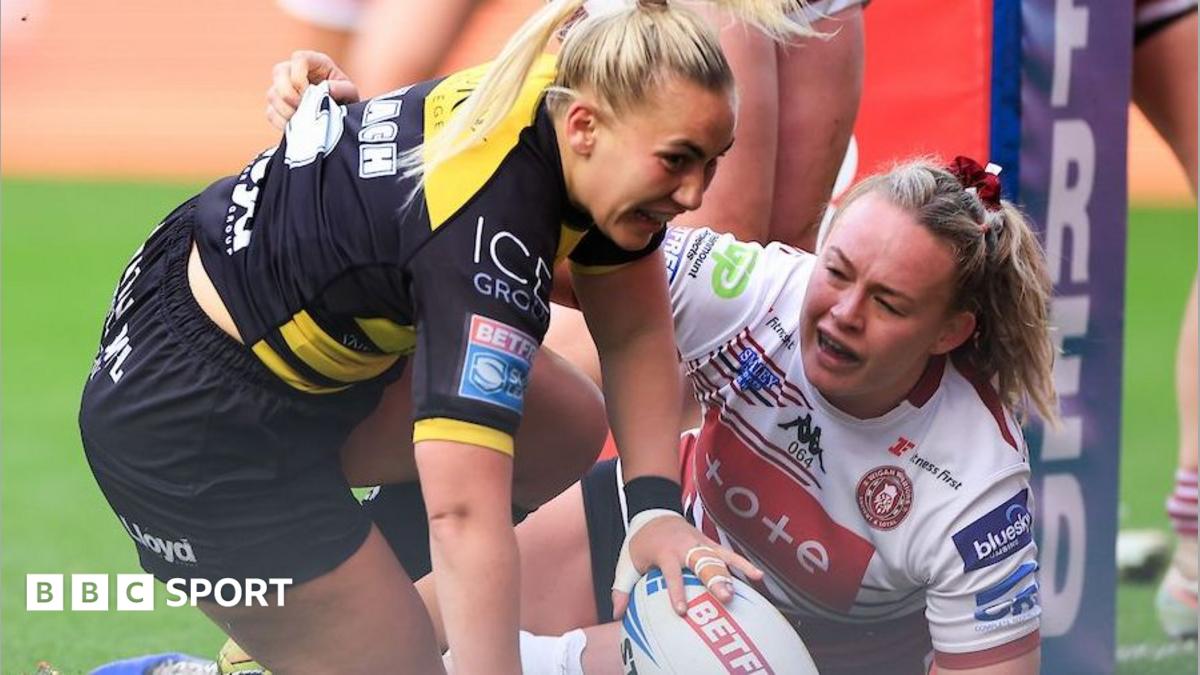
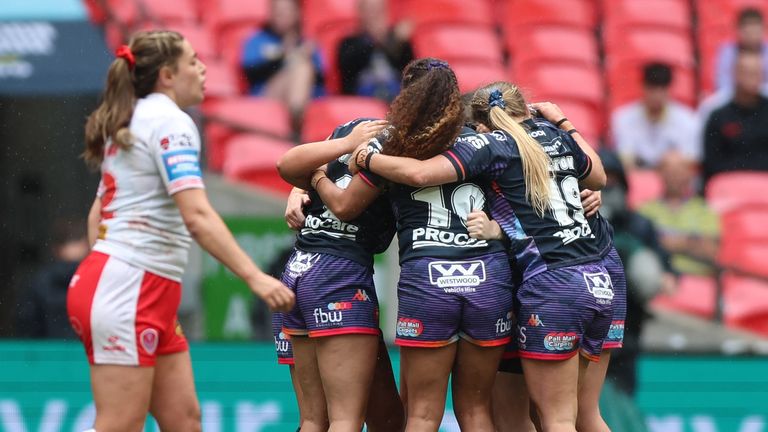
York Valkyrie are officially the greatest Women’s Super League dynasty the sport has ever seen. On September 27, 2026, at the Brick Community Stadium, they became the first club in history to win the Betfred Women’s Super League title three times, surviving an extraordinary second-half siege from Wigan Warriors to take the crown in one of the most gripping Grand Finals the women’s game has produced.
A Final That Had Everything Except a Second-Half Try
The scoreline, once the final whistle blew, told only part of the story. York won on the strength of a first-half try from Sinead Peach and two goals from Ellie Williamson. That was it for scoring. The entire second half passed without either side crossing the line, yet it was far from dull. If anything, it was unbearable. Wigan came at York in waves, and York, somehow, held firm every single time.
Peach carries her own slice of personal history into matches like this. She played in the 2019 Women’s Grand Final for Castleford, so she knows better than most what these occasions demand physically and mentally. Her try here, the one that ultimately separated the two sides, was worth its weight in gold.
The Teenager Who Held the Line
If one player defined York’s evening, it was Amelie Lenham. The teenager produced a series of defensive interventions that left the crowd breathless and Wigan’s attacking players increasingly frustrated. In a match decided by millimetres and moments, Lenham kept showing up in the right place at the right time. That kind of composure from someone so young speaks to both her individual talent and the culture York have built within this squad.
There is something quietly remarkable about what York have done over the course of this competition. Winning any championship once demands quality. Winning it a second time requires consistency. Winning it three times, and doing so by absorbing this level of pressure in a final, suggests something deeper is at work here. This club has a winning identity now, and it shows.
Wigan’s Night to Forget
For Wigan, this will sting for a long time. They arrived at the Brick Community Stadium as favourites, and for much of the match they looked like they had the firepower to justify that tag. But the first half handed them a pair of significant setbacks that changed the course of the game. Mia-Jayne Atherton, their only try-scorer on the night, was sin-binned. Eva Hunter joined her in the bin shortly after. Playing with twelve players during key passages of the first half is not a situation any team wants to find themselves in during a Grand Final.
Wigan’s display was described as uncharacteristically error-strewn, which is a polite way of saying they were not themselves. The handling mistakes, the decisions that went wrong under pressure, the inability to convert sustained second-half possession into points. All of it compounded into a defeat that will feel bitterly unjust given how much territory they dominated after the break.
The Squads That Shaped the Night
Wigan lined up with Banks at the back, a backline featuring Davies, Wilson, M Jones and Derbyshire, with Foubister and Rowe directing traffic in the halves. Their pack included Coleman, Wilton, Sams, E. Hunter, C Jones and Williams. On paper, a formidable unit. On the night, one that never quite clicked when it mattered most.
York’s structure was built around Donovan in the back, with Kershaw, Woods, Leniham and Partington across the wider channels. Akwiwu and Williamson ran the game from half-back, while the pack featuring A. Wood, Peach, Pakulis, O. Wood, Andrade and Parker absorbed punishment throughout. That front line bore the brunt of Wigan’s second-half onslaught and did not crack once.
What This Moment Means for Women’s Rugby League
Beyond the trophies and the records, this Grand Final was exactly the kind of match the women’s game needs people to see. Two well-organised, genuinely competitive clubs going to war in front of a crowd, with the result in genuine doubt until the very end. No blowout, no forgone conclusion. Just sport doing what it does best: refusing to be predictable.
York’s achievement of three titles sets a new standard. Every other club in the Women’s Super League now knows what the benchmark looks like. More importantly, every young player watching from the stands or at home now has a clearer picture of what sustained excellence in this competition actually requires. It requires nights like this one, where the margin is one try and the difference is a teenager making tackle after tackle when the pressure hits its peak.
Sinead Peach went from a Grand Final as a Castleford player in 2019 to a match-winning try-scorer as a York champion in 2026. That arc alone is a story worth following. The sport keeps growing, the players keep developing, and the Women’s Super League keeps delivering finals that demand your full attention.
So here is the question worth sitting with: with York Valkyrie now standing alone as the most decorated side in Women’s Super League history, does any other club in the competition have what it takes to knock them off their perch next season, or is another chapter of Valkyrie dominance already being written?