



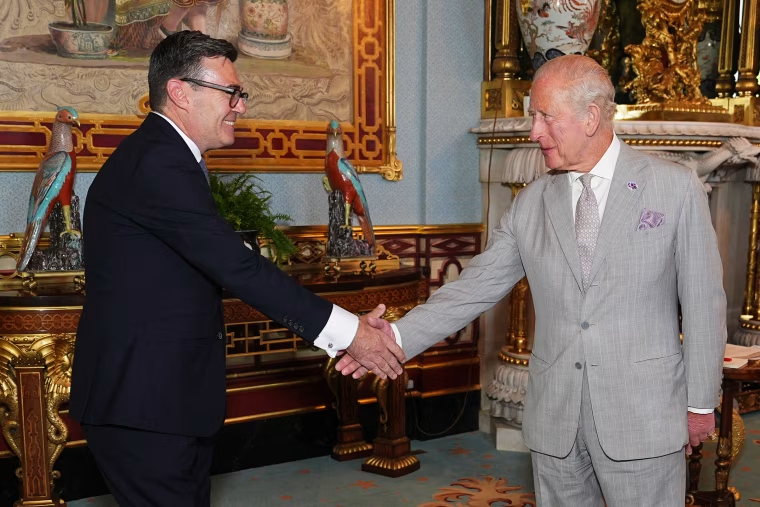
Andy Burnham, the UK Prime Minister, walked into conference season on Saturday with a message designed to cut through the noise: the country’s finances are under pressure, the public mood is restless, but his government will not use difficulty as an excuse for timidity. Speaking exclusively to the Guardian on the eve of Labour’s annual conference, Burnham drew a sharp line in the sand, telling the paper: “There’s always things you can do, it’s just whether you’re prepared to do them.”
It is the kind of statement that sounds simple on the surface but carries a mountain of political weight beneath it. Coming just weeks before next month’s budget, with public finances described by Burnham himself as “challenging”, it signals a prime minister who has decided that acknowledging hard truths is more useful than performing optimism he cannot back up.

Fiscal Stability First, Radical Change Second
The logic Burnham is laying out is sequential. Before you can fix the big things, he argues, you need to fix the books. Fiscal stability, in his framing, is not a conservative instinct dressed in Labour clothing. It is the foundation without which nothing else holds. Only once the government can demonstrate it has a grip on the numbers, he suggests, can it turn its full attention to the structural problems that Labour was elected to solve.
That framing will strike some on the left as familiar, perhaps uncomfortably so. The argument that you must first prove economic credibility before delivering social transformation has been made by Labour leaders before, sometimes as a genuine governing philosophy and sometimes as a reason to delay the bolder promises. What Burnham is betting on is that the public will read his version as the former.
The word “crucial” is doing a lot of heavy lifting in his statement about fiscal stability. It is the kind of word a leader uses when they want to acknowledge constraint without conceding defeat. He is not saying radical change is impossible. He is saying it must be sequenced properly.
Conference as a Pressure Test
Labour conferences tend to function as a mirror held up to a government’s own coalition. The party faithful who fill the conference hall want to hear ambition. The trade unions want to hear results. The MPs facing marginal seats want to hear strategy. Burnham has to speak to all three audiences at once, and they do not always want the same thing.
The economic headwinds he referenced are real and widely understood. Inflation, borrowing costs, and sluggish growth have put pressure on the public finances across much of the developed world. Burnham is not operating in uniquely difficult circumstances, but that does not make the circumstances any less difficult for the people at the receiving end of government decisions.
His pledge of radical change, then, is partly a rallying cry for a party that needs to feel it is still in the business of transformation, and partly a signal to voters watching from home that the government has not quietly given up on its original prospectus.
What ‘Radical’ Actually Means in This Context
The word “radical” is doing its own share of work here. In the context of a budget crunch, radical does not necessarily mean expensive. It can mean structural, systematic, or simply different from what came before. Burnham’s framing leaves enough room to interpret radical reform as changes that do not require enormous upfront spending, things that involve rewiring systems, redistributing power, or changing how existing money is spent rather than how much of it there is.
That reading would allow the government to hold the line on fiscal discipline while still presenting itself as genuinely reforming. Whether the public, or the Labour membership, accepts that interpretation is an open question. For many people, radical means visible and immediate. It means things feeling different in a way they can actually point to.
A Prime Minister Betting on His Own Conviction
What is perhaps most striking about Burnham’s pre-conference positioning is its tone. He is not projecting reluctant realism. He is projecting the confidence of someone who believes the answer to the question of what you can do in hard times is: more than people think, if you are willing to make the hard calls.
That is a political identity as much as a policy position. It positions him as a leader who does not hide behind circumstances, who refuses to let a difficult fiscal inheritance become a permanent excuse. Whether that narrative holds will depend enormously on what the budget actually contains, and whether the measures it introduces match the ambition of the language surrounding them.
Conference season is where governments plant their flags. The real test, as always, comes in the weeks and months that follow, when the flags have to be defended in budget chambers and kitchen tables alike.
Burnham has told the country he can deliver. The question worth sitting with now is: by this time next year, what will the scoreboard actually say?