


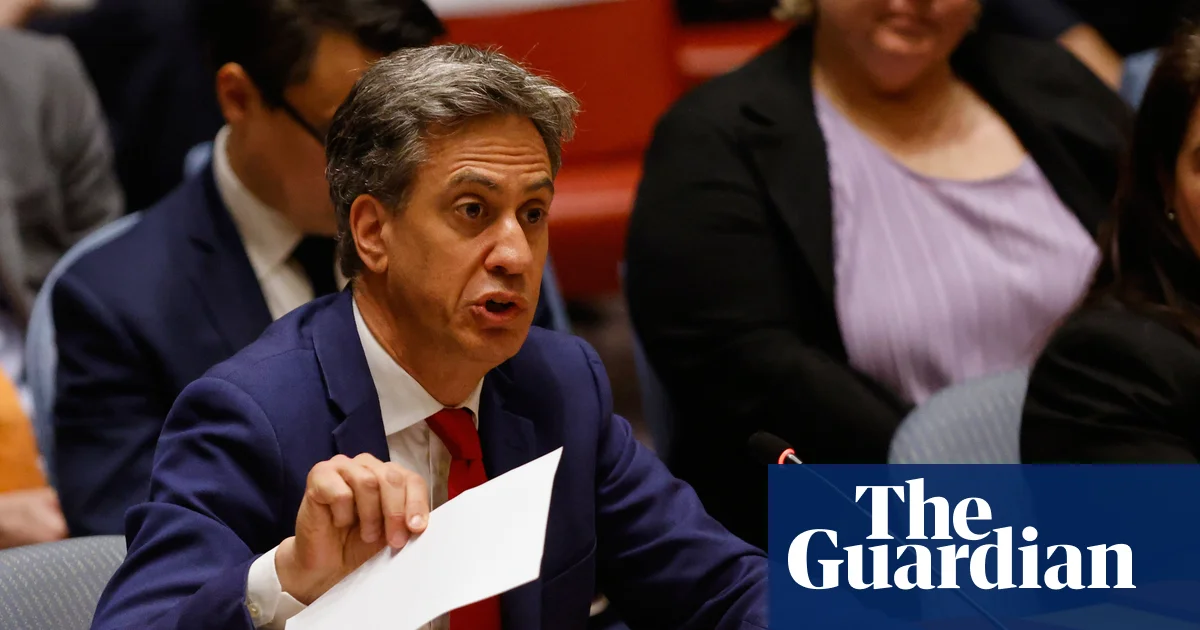
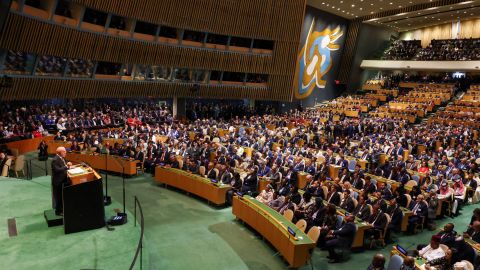
At a private meeting on the sidelines of the UN General Assembly in New York this Wednesday, UK Foreign Secretary Ed Miliband stood before the foreign ministers of European Union nations, Kenya, and other countries to deliver one of the more extraordinary briefings in recent British diplomatic history. The subject was not a war, not a sanctions regime, not a new trade bloc. It was the planet itself, and what happens to armies, borders, and food supplies when it stops cooperating.
The briefing was built on the findings of a report authored by Britain’s senior intelligence officials, one that concluded, in stark terms, that the collapse of natural systems worldwide would trigger waves of conflict, mass migration, and acute food shortages. A damning document by any measure. And one that, according to reporting by The Guardian, was suppressed during Keir Starmer’s time leading the government.
What the Spy Chiefs Actually Found
The report, produced by the UK’s intelligence community, connects the deterioration of natural ecosystems directly to hard security outcomes. Not soft policy outcomes. Not long-term sustainability targets. Real, near-term threats to national defence and stability.
Central to the findings is the role of El Niño, the cyclical climate pattern that periodically overheats large swaths of the Pacific Ocean and sends weather systems haywire across the globe. In recent years, El Niño events have grown more intense and more disruptive, worsening droughts in East Africa, flooding in South Asia, and crop failures across the Southern Hemisphere. The report, according to the facts now public, treats the coming El Niño not as a meteorological inconvenience but as a critical threat to the defensive capabilities of multiple nations.
The logic is not hard to follow. When harvests fail, governments face unrest. When freshwater sources dry up, communities move. When economies destabilise, armed groups find recruits. Climate change does not replace the traditional causes of conflict. It accelerates and amplifies all of them.
A Report Sitting in a Drawer
The more politically charged dimension of this story is what happened to the report before Miliband brought it to New York. Under Keir Starmer’s leadership, the findings were kept from public view. That detail, now confirmed, raises serious questions about the reasoning behind the suppression.
Governments routinely classify sensitive intelligence on national security grounds. That is understood. But there is a meaningful difference between protecting sensitive sources and methods and sitting on findings that, if shared, could help allied nations better prepare for threats. The report’s core conclusions, that nature collapse leads to human conflict, are not exactly state secrets requiring covert protection. They are policy-relevant facts.
Whether the suppression was a matter of political timing, internal disagreement, or something more calculated is not yet clear. What is clear is that Miliband chose to act differently, and he did so on one of the biggest diplomatic stages on earth.
Why New York, Why Now
The UN General Assembly is, among other things, a machine for projecting intent. World leaders and their foreign ministers gather not only to negotiate but to signal. By presenting the intelligence report’s findings to EU foreign ministers alongside counterparts from Kenya and other nations, Miliband was doing something deliberate. He was internationalising a conversation that had been kept domestic, and he was doing it with spy chiefs’ conclusions as his backing material.
The choice of audience is also worth noting. Kenya and other African nations sit on the front lines of climate disruption. East Africa has endured some of the most brutal drought conditions of the past decade. Bringing those countries into a security-framed conversation, rather than keeping the discussion within a wealthy-nation bubble, reflects a more honest geography of the crisis.
El Niño as a Security Variable
For decades, defence planners in Western governments treated climate as a background condition, something to factor into thirty-year infrastructure plans, not something that belonged in the same room as threat assessments and defence budgets. That thinking has been shifting, but slowly. Reports like this one, produced by intelligence services rather than environmental ministries, have the potential to accelerate that shift considerably.
El Niño’s security implications are direct. A severe event can cut agricultural output across multiple continents simultaneously. It can strain water infrastructure in countries already operating at the edge of their capacity. It can make wildfires larger, flooding more destructive, and disease vectors more unpredictable. For a defence planner, these are not abstract projections. They are force-multipliers for instability.
The Credibility Question
There is a reason Miliband chose to anchor his presentation in a spy chiefs’ report rather than, say, a climate ministry white paper or an NGO briefing. Intelligence assessments carry a particular weight in rooms full of foreign ministers. They signal seriousness. They bypass the political dismissiveness that often greets environmental advocacy in security circles.
Framing climate collapse as a finding of the security establishment, not just a concern of the green lobby, is a communication strategy as much as a policy one. If the goal is to get defence ministries and foreign offices to treat this differently, the provenance of the warning matters enormously.
What Comes Next
The immediate question is whether Wednesday night’s briefing translates into coordinated action. Foreign ministers exchanging presentations in New York does not automatically produce new defence doctrines, revised threat assessments, or increased climate adaptation funding. Diplomatic convenings have a long history of generating heat without light.
But the fact that a classified UK intelligence report on climate and national security has now been shared with allied governments at the highest level is not nothing. It changes the terms of the conversation. Countries that received this briefing can no longer claim they were not warned, and their own intelligence services will now face pressure to produce comparable assessments.
For Britain, this moment also carries a domestic dimension. The revelation that such a report existed and was kept quiet under a previous government configuration will fuel debate about transparency, about the relationship between intelligence and public policy, and about who decides which threats the public is allowed to know about.
The planet is not waiting for those debates to resolve themselves. El Niño is not interested in parliamentary timetables or political sensitivities. It will arrive on its own schedule, and the countries that have planned for its consequences will be the ones that fared better when it does.
So here is the question worth sitting with: if Britain’s spy chiefs concluded years ago that climate collapse is a direct threat to national security, what does it say about our political systems that it took this long for that conclusion to reach a room full of foreign ministers?