



A quiet but consequential diplomatic row has broken out between two of the world’s closest allies. The United States government, in a formal submission to Australian lawmakers, has branded Canberra’s proposed social media algorithm opt-out legislation as “censorship of protected speech”, a charge that Australian Prime Minister Anthony Albanese has flatly rejected. The dispute, which surfaced publicly in September 2026, cuts to the heart of a question that billions of internet users live with daily: who decides what you see online, and who should have the power to change it?
What Australia Is Actually Proposing
Australia’s draft digital duty of care laws are not, as some headlines might suggest, a plan to ban algorithms outright. The legislation would require social media platforms to give users a genuine choice, specifically the ability to opt out of algorithmically curated feeds, in an effort to reduce exposure to harmful content. Tech companies that fail to offer this option face significant financial penalties.

The principle is straightforward enough. Rather than having a platform silently decide what inflames you, what keeps you scrolling, and what shapes your understanding of the world, a user could theoretically choose a chronological or otherwise non-personalised feed instead. It is, in essence, a consumer rights argument dressed in digital clothing. As ordinary Australians interviewed about the proposal put it: it is simply good to have a choice.
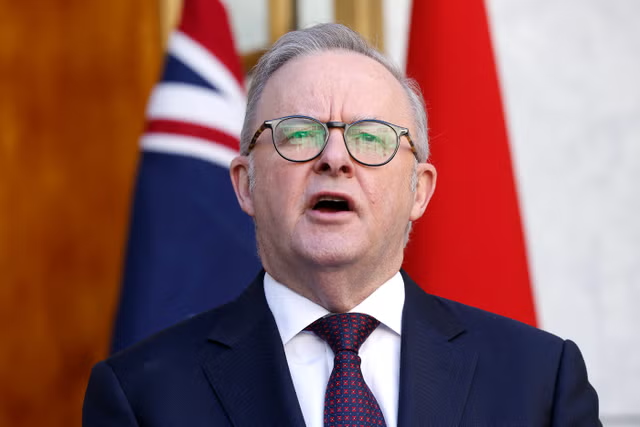
Prime Minister Albanese has been clear that the legislation is not designed to give governments control over online content. His framing is the opposite: the point is to return control to individuals who currently have almost none over the systems shaping their information environment.
Washington’s Objections, Unpacked
The US embassy in Canberra took the unusual step of filing a formal submission opposing the laws, which in itself signals how seriously Washington is treating this. Diplomatic submissions to foreign legislative processes are not routine, and the language used is pointed.
The embassy raised “serious concerns” that allowing the Australian government to “enforce vague definitions of harm” could lead to what it described as “viewpoint-based censorship.” It called on Australia to clarify exactly how terms like “harm” and “risks” would be defined, warning that loose language could end up restricting speech that would otherwise be protected.
The submission also raised a concern that is worth taking seriously on its own terms: that tech firms forced to comply might “pre-emptively demote” independent journalists or commentators whose work touches on sensitive subjects. The worry is that platforms, anxious to avoid regulatory penalties, might quietly suppress legitimate voices rather than risk a fine.
There is also a global dimension to Washington’s argument. Because social media platforms operate across borders, any design requirement imposed in Australia could ripple outward. The US submission warned that “mandated platform design features, especially when applied to algorithms, may affect what users see, say, and hear not just in or from Australia, but globally.” In other words, Canberra’s law could reshape feeds in São Paulo or Seoul without those users having any say in the matter.
The Tension at the Core of This Debate
Both sides are making arguments with genuine merit, which is precisely what makes this dispute so interesting. The US concern about vague harm definitions is not invented. Poorly drafted content laws have a long and unfortunate history of being applied selectively, and any legislation that hands a regulator broad discretion over what counts as dangerous speech deserves scrutiny.
At the same time, the American position carries an irony that is hard to miss. The platforms Washington is defending are not neutral carriers of speech. They are extraordinarily sophisticated commercial systems designed to maximise engagement, often by surfacing content that triggers strong emotional reactions. The algorithm is not a passive pipe; it is an active editorial force. Defending that system as a form of protected speech, while opposing a law that would let users simply turn it off, is a curious position for a government that champions individual liberty.
The opt-out framing is also important. Australia is not proposing to ban algorithmic feeds. It is proposing to make them optional. A user who loves their algorithmically curated experience could keep it exactly as it is. The law would only add a door for those who want out. Calling that censorship requires a fairly expansive definition of the word.
Why the Rest of the World Is Watching
Australia has developed a reputation in recent years for moving faster than most democracies on tech regulation. Its landmark news media bargaining code forced platforms to pay publishers for content, triggering a showdown with Meta and Google that ultimately ended with agreements rather than the outright news blackout that briefly hit Australian Facebook users. That experience showed that a mid-sized democracy can, in fact, extract concessions from the largest tech firms on earth, if it holds its nerve.
The algorithm opt-out proposal is a different kind of intervention, more structural and potentially more consequential. If it passes and survives legal challenge, it could become a model that other countries adopt. The European Union, the United Kingdom, and several Latin American governments have all been examining similar ideas. A working Australian framework would give them a template and, crucially, evidence about what happens when users actually get the choice.
That is almost certainly part of what concerns Washington. It is not just Australia’s 26 million social media users at stake. It is the precedent, and the possibility that a global wave of opt-out laws could fundamentally alter the business model that has made American tech platforms so dominant and so profitable.
What Happens Next
The legislation is still in draft form, and the US submission is part of a consultation process that will shape whatever final version reaches a vote. Australian lawmakers will need to decide how much weight to give foreign government objections, particularly those from an ally, and how to tighten the definitions of “harm” and “risk” to address the most legitimate criticisms.
For platform companies, the outcome matters enormously. An algorithm opt-out requirement, especially one with teeth in the form of meaningful fines, would force a genuine rethink of how feeds are designed and presented to users. The compliance cost alone would be significant, but the deeper disruption would be to the engagement metrics that drive advertising revenue.
For ordinary users, the stakes are different and arguably more personal. The question is whether they will get a real say in one of the most powerful forces shaping their daily perception of reality, or whether that force will remain entirely in the hands of companies whose incentives do not always align with user wellbeing.
So here is the question worth sitting with: if a government proposes letting you turn off an algorithm, and another government calls that censorship, who exactly is being protected, and from what?