







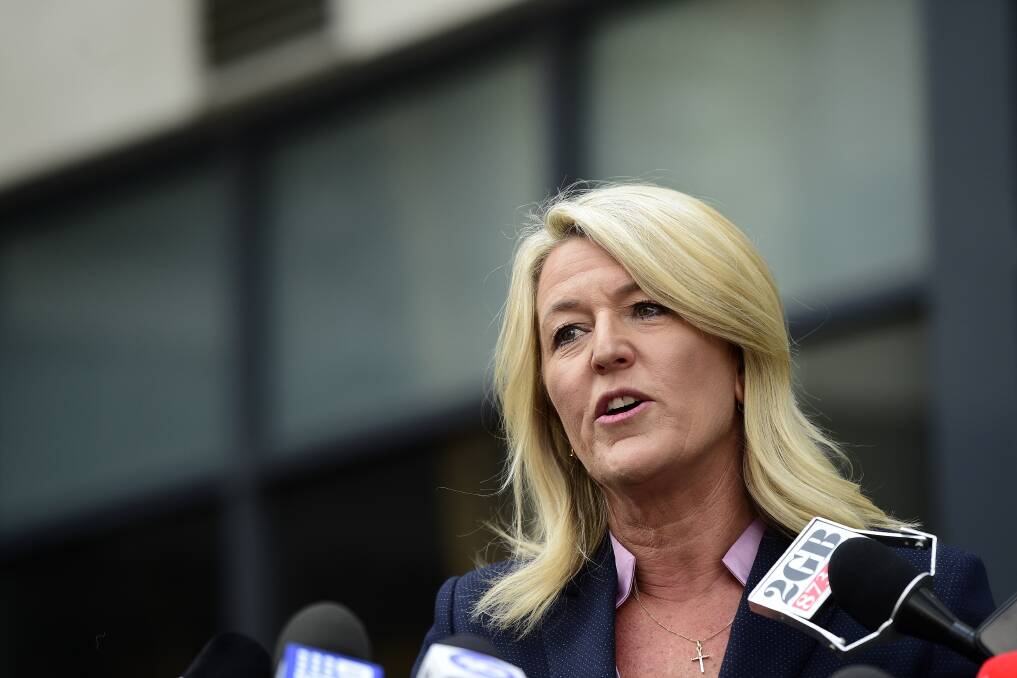
Two people are dead. Two days. Both suspected victims of a bullet meant for someone else. And yet, New South Wales Police Minister Yasmin Catley stood before the cameras on Thursday and delivered a message that cut through the noise with deliberate clarity: Sydney’s streets are not lost to gang violence, and the government intends to keep it that way.
The back-to-back fatal shootings, both believed to be cases of mistaken identity, have sent a chill through the country’s largest city and reignited a debate that law enforcement officials have been wrestling with for over a year. According to reporting from The Guardian, as many as six suspected mistaken identity shootings have taken place across New South Wales since the beginning of last year, a figure that underscores just how volatile the situation has become.

A Government on the Defensive
Catley’s appearance at Thursday’s media conference was equal parts reassurance and resolve. She acknowledged the recent deaths without hesitation, calling them unacceptable, while insisting that police have the resources and the capacity to confront organised criminal networks head-on. Her words, “we will not be surrendering our streets,” carried the kind of weight that politicians reach for when a crisis starts to feel like it’s getting ahead of the official narrative.
It is a difficult position to hold. When innocent people are caught in the crossfire of gang disputes, the public’s patience with political language wears thin fast. Residents want action, not assurances. They want to know why the wrong people keep dying, and whether anyone in power truly has a grip on who is pulling the triggers and why.
The Mistaken Identity Problem
The pattern of mistaken identity shootings is particularly disturbing. These are not just casualties of gang warfare where the risks are understood by the participants. These are situations where the wrong person, at the wrong place, at the wrong time, ends up paying the ultimate price because of a failure in criminal intelligence at the street level. For organised crime gangs operating with that level of imprecision, the danger they pose to ordinary civilians is genuinely serious.
Six suspected cases in roughly twenty months is not a statistic to be buried in a press briefing. It is a pattern. Patterns, in criminal justice terms, suggest systemic issues that require more than just additional police resources. They call for a harder look at how gangs are operating, how their rivalries are escalating, and whether existing legal tools are adequate to disrupt them before more shots are fired.
What the Numbers Actually Mean
When a government official says a situation is not out of control, the phrase is doing a lot of work. By most reasonable definitions, a city experiencing repeated fatal shootings linked to organised crime, with innocent victims caught in the middle, is a city with a serious public safety problem. That does not mean it is ungovernable. It does mean the bar for what constitutes acceptable progress needs to be raised considerably.
NSW Police are not starting from scratch. Australia’s state police forces have a long history of tackling organised crime, from bikie gangs to more recent networks tied to the illicit drug trade. Strike forces, covert operations, and inter-agency cooperation are all part of the toolkit. The question is whether those tools are being deployed quickly enough and with enough coordination to stay ahead of a threat that moves fast and adapts faster.
Sydney’s Reputation on the Line
Beyond the immediate human tragedy, there is a broader conversation worth having about what repeated gang-related violence does to a city’s identity. Sydney is one of the most visited cities on the planet, a place people associate with the Opera House, Bondi Beach, and a quality of life that draws migrants and tourists from across the globe. Sustained gang violence, even if concentrated in specific areas, chips away at that image in ways that are hard to quantify but very easy to feel.
City leaders, community organisations, and law enforcement all have roles to play in how this story ultimately gets written. Police resources matter. So does community trust, early intervention, and addressing the social conditions that make gang membership an attractive proposition for young men with limited options.
The Road Ahead
Catley’s message on Thursday was clear: the government is not backing down, and police have what they need to do the job. That commitment will be tested in the weeks and months ahead. Every subsequent shooting will be measured against it. Every press conference will be scrutinised for signs of whether the rhetoric is matching the reality on the ground.
For the families of those killed in the two most recent shootings, the political debate is a cold comfort. They are living the consequences of a problem that, whatever the minister says, has not yet been solved. The city owes them more than words.
As Sydney grapples with this troubling run of violence, the bigger question lingers: at what point does a series of tragedies stop being a collection of isolated incidents and start being a verdict on the effectiveness of the systems meant to prevent them? Where do you think the line is, and is the government on the right side of it?