








London, September 3, 2026. Uber has officially launched the United Kingdom’s first self-driving minicab service in the capital, marking a genuinely historic shift in how one of the world’s most congested cities thinks about getting from A to B. The rollout is small for now, cautious even, but the implications are enormous, for passengers, for drivers, and for everyone who has ever sat in traffic wondering whether a machine could do this better.
Fifteen Cars, One Big Moment
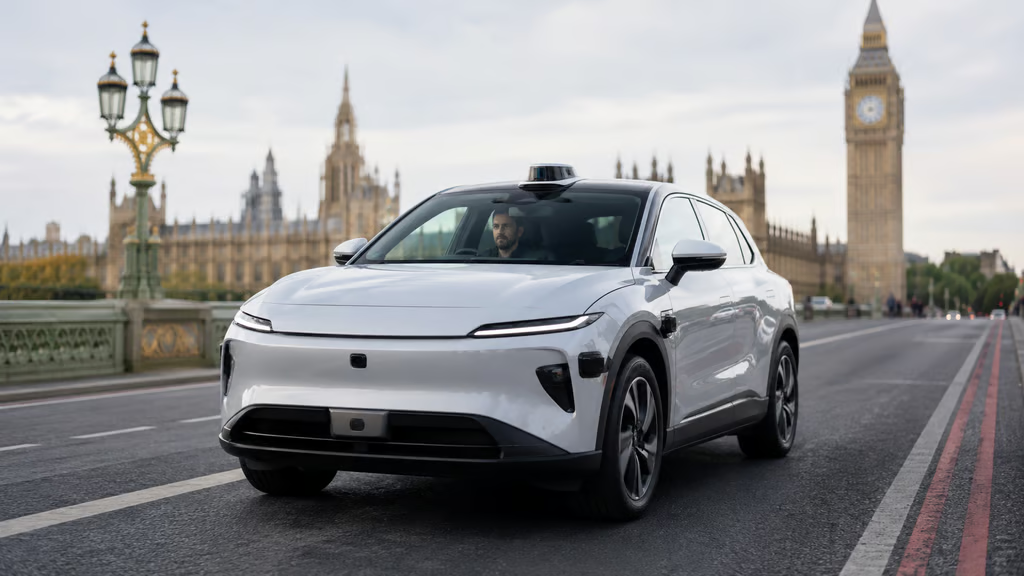
The fleet is modest by any measure: just 15 autonomous vehicles currently hold a licence to operate across London. Each one must carry a human safety driver in the front seat, ready to take over if the technology encounters something it cannot handle. That requirement reflects exactly where regulators and the public stand right now, curious, perhaps even excited, but not yet ready to hand the wheel over entirely.
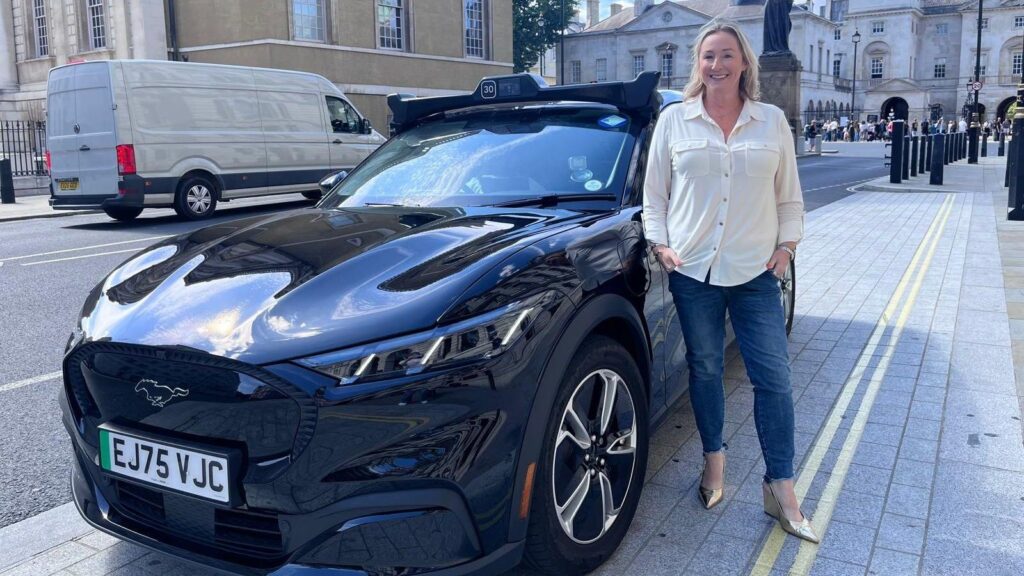
The vehicles in question are Ford Mustang electric models, kitted out with driverless technology developed by Wayve, a British artificial intelligence company. The system relies on a sensor bar mounted on the roof plus additional sensors positioned around the car, all feeding real-time data into an AI model that reads the road and makes driving decisions accordingly. No GPS-dependent pre-mapped routes, no rigid rule trees, just a system that watches, processes, and responds, much like a human driver would.
What the Ride Actually Feels Like
BBC technology editor Zoe Kleinman became the first British journalist to ride as a paying customer in one of these autonomous Ubers. By her account, the experience was mostly smooth, the kind of competent, unremarkable journey you hope for in any cab. There was one moment, though, where the safety driver did need to step in and take manual control. One intervention across an entire London trip. Whether that reads as reassuring or concerning probably depends on how optimistic you are about AI in general.
For passengers who want to try it, the process works like this: you book a standard Uber ride through the app, and only after booking does the option to take a self-driving vehicle appear, but only if one of the 15 cars happens to be available nearby. It will not be offered as a first choice, and you will not be forced into it. That feels like a deliberately gentle introduction, designed to let people drift into the future rather than be thrown at it.
The Price and the Promise
Here is something that might surprise you: riding in a robotaxi costs exactly the same as a standard UberX, Uber Electric, or Uber Comfort journey. Upfront fares are shown in the app as normal. There is no premium for the novelty, no surcharge for the sensors on the roof. That pricing decision is not accidental, Uber clearly wants people to try this without financial hesitation.
Before the launch, Uber surveyed London customers through its app. More than 100,000 said they would choose a self-driving taxi if one became available. That is a striking number, particularly given that driverless ride services in American cities like San Francisco have had their share of very public problems, vehicles stalling in traffic, making strange decisions, blocking emergency vehicles. London riders, it seems, are willing to look past those incidents and give it a go themselves.
Uber’s Global Strategy, Played Out on London Streets
Sarfraz Maredia, who leads Uber’s global autonomous mobility and delivery division, was clear about the long game here. This is not a replacement for human drivers, at least not anytime soon. The plan is to introduce autonomous vehicles gradually over several years, running alongside the existing driver workforce rather than displacing it overnight.
“We always want consumers to be able to request a human ride or an autonomous vehicle,” Maredia said, noting that as the market grows, human drivers will remain a core part of Uber’s London operations for a long time to come. It is a careful, politically aware position for a company that has spent years navigating complicated relationships with drivers, regulators, and city governments across the world.
What Wayve Brings to the Table
The technology partner in all of this, Wayve, is worth paying attention to. Founded in Cambridge and now operating out of London, the company has built its AI driving system on a foundation of machine learning rather than the pre-programmed mapping approaches used by some rivals. The idea is that the system genuinely learns to drive in the way a human would, by observing, making mistakes in simulation, and improving over time. That approach makes it potentially more adaptable to the unpredictable chaos of real urban streets, where a pigeon, a reversing lorry, and a child on a scooter can all appear in the same ten-second window.
The Bigger Picture for London Transport
London’s transport landscape has absorbed disruption before. The arrival of Uber itself more than a decade ago triggered protests, legal battles, and a long-running war of words with the city’s black cab trade. This latest development will likely generate its own debates, about jobs, about safety standards, about who gets to decide when a machine is trusted enough to carry passengers through one of the world’s busiest cities.
For now, though, the robots are here, they are quiet, and they are picking people up on London streets. The safety driver is watching. The AI is watching too. And the rest of us are watching all of them, trying to work out what this all means for the city we thought we knew.
Would you climb into a self-driving Uber today, or does the idea of a human hand hovering over the wheel still feel like the only sensible option? Let us know in the comments below.