



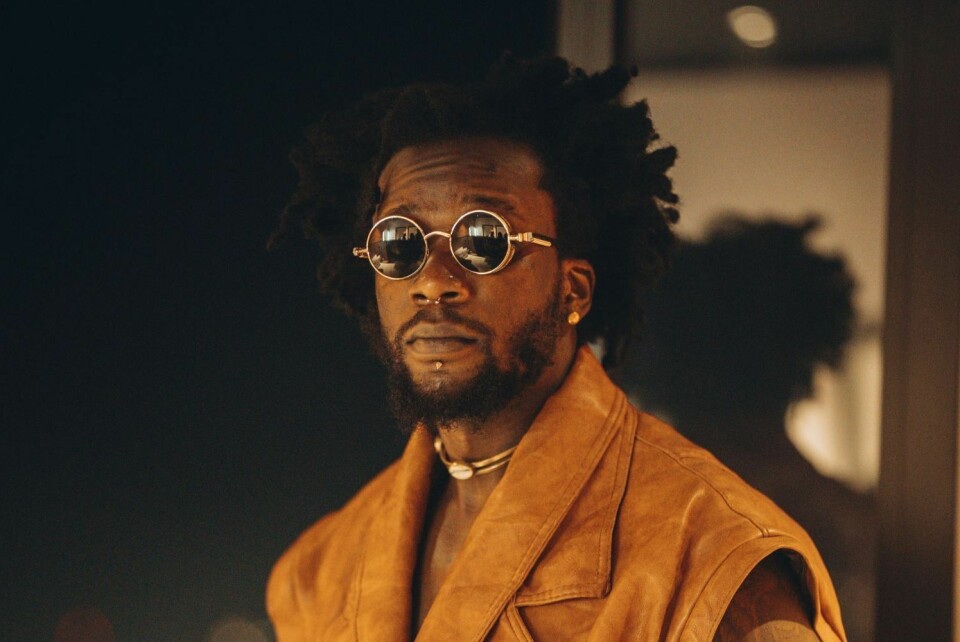
Elijah Kitaka writes his own music. He writes it well. And he will not sell it to you. Not to a fellow artist, not at a price, not under any deal. The Ugandan singer and songwriter has drawn a clean, uncompromising line between his creative output and the commercial appetites of the wider music industry, and his reasoning is as thoughtful as the songs themselves.
The Man Behind the Music
Kitaka has steadily carved out a reputation in Uganda’s competitive music landscape as someone who does both jobs at once: he sings and he writes, and he does neither carelessly. That dual identity is rare. Most artists lean heavily on one skill, outsourcing the other to collaborators or professional songwriters. Kitaka keeps the entire process close, almost protectively so.
In a recent conversation that has been widely discussed in Ugandan entertainment circles, Kitaka opened up about why he holds his songwriting so tightly, explaining that the process is something he considers deeply personal, not a service he renders on behalf of anyone else.
Writing from a “Perverted Point of View”
Here is where it gets genuinely interesting. Kitaka says his songwriting starts from what he calls a “perverted point of view.” That is his phrase, and it is a deliberately provocative one. He is not describing anything scandalous. He means that his mind processes ideas and experiences through an unusual, sometimes unconventional lens, one that does not always align neatly with what polite society expects from a pop song.
The craft, he explains, lies in the packaging. He takes that raw, unfiltered perspective and shapes it into something a parent could play while their child sits in the back seat without concern. The music sounds clean. The thinking behind it is layered.
“I like to make music when someone can listen to it with a kid,” Kitaka has said, “so I package it uniquely even though my mind speaks differently.”
That gap between private thought and public presentation is where his artistry lives. It is also precisely why selling songs to other artists feels, to him, like a fundamental contradiction. The song belongs to the thinking that produced it. Hand it to someone else and the thinking vanishes. What remains is just a melody wearing borrowed clothes.
Every Song Has Its Own Moment
When asked which of his songs feels most personal, Kitaka refuses to single one out. His answer is more honest than most artists would risk: all of them carry equal weight, because each one was born from a specific moment in time, a specific emotional state, a specific version of himself.
“I feel like all are personal because each song has its own moment,” he said. It is a simple sentence, but it carries the logic of a songwriter who treats his catalogue the way some people treat a diary. You do not sell pages of a diary. You do not license out a memory.
Ekyange: A Case Study in Creative Ownership
Kitaka pointed to his song Ekyange as an example of how inspiration works in his world. The song’s backstory, he noted, did not necessarily emerge from a direct romantic experience. The implication is clear: he did not need to live something literally to write about it convincingly. He observed, imagined, or felt adjacent to something and turned that into a fully realized piece of music.
That ability, to write authentically about experiences that are not strictly autobiographical, is what separates functional songwriters from genuine artists. Kitaka appears to understand, with unusual clarity, which category he belongs to.
What This Stance Says About Uganda’s Music Industry
In an industry where songwriting is increasingly treated as a commodity, where tracks are bought, sold, and ghostwritten with assembly-line efficiency, Kitaka’s position reads almost as a cultural statement. East Africa’s music scene has grown enormously over the past decade, with Ugandan artists finding audiences across the continent and beyond. That growth has created a market for songs, and where there is a market, there is pressure to supply it.
Kitaka is choosing not to. That choice costs him potential income. It also protects something harder to quantify: the integrity of a creative identity that he has built, song by song, on the foundation of genuine personal expression.
There is a version of this story where the artist is simply being precious, guarding his work out of ego or stubbornness. But listen to how Kitaka explains himself and a different picture forms. This is an artist who has thought carefully about what his music is actually made of, and has concluded that the raw material is too specific, too tied to his own way of seeing the world, to function properly in someone else’s hands.
The Rarity of Saying No
The music business runs on relationships, favors, and transactions. Saying no to selling songs is not the path of least resistance. It likely means turning away requests from artists with larger platforms, bigger budgets, and the kind of industry connections that could accelerate a career considerably.
Kitaka says no anyway. That kind of creative discipline is its own form of ambition, quieter than chasing features or playlist placements, but arguably more sustainable. Artists who know exactly what they are and what their work means to them tend to build careers with longer shelf lives than those who chase every available opportunity.
His music stays his because he has decided that is where it belongs. Simple as that.
So the question worth sitting with is this: in a world where almost everything creative is available for the right price, what does it mean when an artist genuinely refuses to sell, and what would happen to music culture if more of them made the same call?