









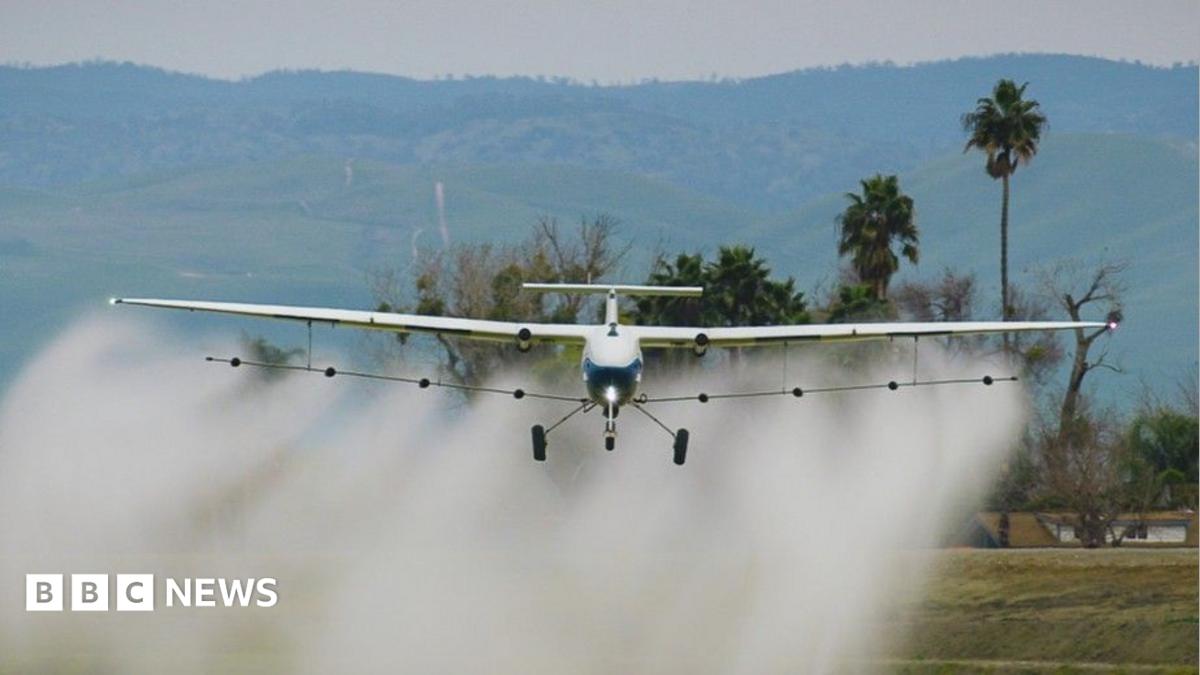
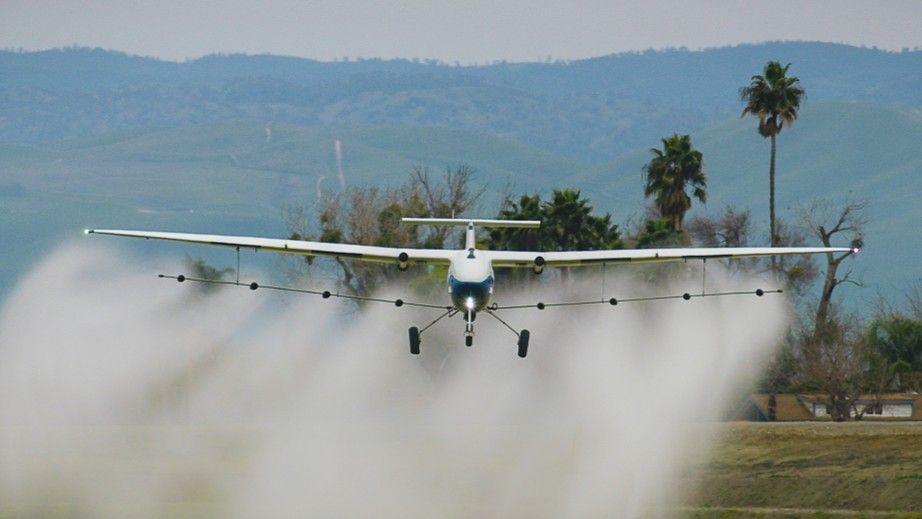
Over the flat, sun-baked stretches of California’s San Joaquin Valley, something unusual is happening above the alfalfa fields. A small crop-spraying aircraft is cutting through the air at uncomfortably low altitude, close enough to the crops that a conventional pilot would never dare go that low. But there is no pilot. There is no cockpit. There is no one on board at all.
The plane belongs to Pyka, a San Francisco Bay Area startup operating out of a converted Second World War hangar that looks over the bay. The company builds self-flying, fixed-wing aircraft for two commercial purposes right now: spraying crops and carrying cargo. Its machines are already in operation across fields in the United States and Brazil, making Pyka one of the more mature players in a quietly intensifying race toward fully autonomous aviation.
Flying Lower, Spraying Smarter
Russ Marotzke, a flight test engineer at Pyka, put it simply while watching the aircraft skim the field: autonomous planes can fly lower than any human pilot would risk. That is not a trivial point. In crop dusting, altitude is everything. Get closer to the crop, and you reduce the drift of chemicals through the air. Less drift means less waste. Less waste means fewer chemicals needed overall, which matters both for cost and for the environment.
It is the kind of precision that humans struggle to maintain consistently over hours of repetitive flying. A machine running on software does not get fatigued, does not flinch, and does not second-guess itself over a field on a long afternoon. The agricultural case for autonomous flight, at least at this scale, is already being made in real time, above real crops, with real results.
Beyond the Field: The Bigger Vision
Crop dusting is, in the grand scheme of aviation ambition, a modest starting point. Pyka’s co-founder and CEO Michael Norcia has made clear that agriculture and cargo are stepping stones, not destinations. His stated goal is what he calls a “fully scaled, ubiquitous passenger operation”, a large fleet of minibus-capacity autonomous planes moving passengers up and down the US east and west coasts. He has described this as the holy grail of the company’s long-term vision.
That is a significant leap from spraying alfalfa in the San Joaquin Valley, but the logic is coherent. Establish a safety record in low-risk environments first. Prove the technology in conditions where a failure causes economic damage rather than human casualties. Then, gradually and methodically, build toward carrying people.
The Crowded Sky of Competition
Pyka is not operating in isolation. A small cluster of companies is chasing similar ambitions in autonomous fixed-wing flight. What makes this race particularly interesting is that it has largely been overshadowed in public conversation by a flashier category of aircraft: electric vertical take-off and landing vehicles, known as eVTOLs, or flying urban air taxis.
The eVTOL world has attracted enormous capital and media attention, with companies racing to offer helicopter-style urban transport without the noise or the operating cost of a traditional rotor aircraft. But the autonomous fixed-wing sector has been grinding forward in parallel, with less fanfare and arguably more immediate commercial traction. Pyka’s crop dusters are already earning their keep. Many eVTOL projects are still years from regular commercial service.
The Certification Hurdle Nobody Talks About Enough
The single largest barrier between where autonomous aviation sits today and where its pioneers want it to go is not engineering. The hardware is increasingly capable. The real challenge is regulatory certification, specifically convincing aviation authorities that a plane with no human in the cockpit is as safe as one with a trained pilot at the controls.
That is a question that touches on public trust as much as technical standards. Flying freight between warehouses is one thing. Asking a passenger to board a plane knowing no pilot will ever touch the controls is quite another. Regulators in the US and elsewhere are navigating genuinely new territory, writing rules for technologies that did not exist when current aviation frameworks were designed.
Pyka’s strategy of starting with unmanned agricultural work is shrewd precisely because it sidesteps the most contentious regulatory questions in the short term, while accumulating flight hours and safety data that will eventually be critical in any certification conversation about passenger transport.
What This Means for the Aviation Industry
If autonomous fixed-wing aircraft do eventually carry passengers at scale, the ripple effects across the aviation industry would be profound. Pilot salaries represent a major portion of airline operating costs. Regional air travel, which has contracted sharply in many markets because short routes are not economical with full crew requirements, could become viable again at a fraction of the current cost.
Smaller communities that lost regular air service years ago might reconnect to transport networks. The economics of on-demand air travel could shift in ways that make it accessible to people for whom it is currently a luxury. None of that is guaranteed, and none of it is imminent. But the direction of travel is clear enough that the question is no longer whether autonomous commercial aviation will arrive, but when and in what form.
For now, the most tangible version of that future is a quiet, pilotless plane banking over a California alfalfa field, spraying its chemicals with more accuracy than any human ever could, and writing the early chapters of something much larger in the sky above.
As this technology edges closer to carrying human passengers, here is the question worth sitting with: would you board a plane knowing no pilot was at the controls, if the safety record was flawless?