







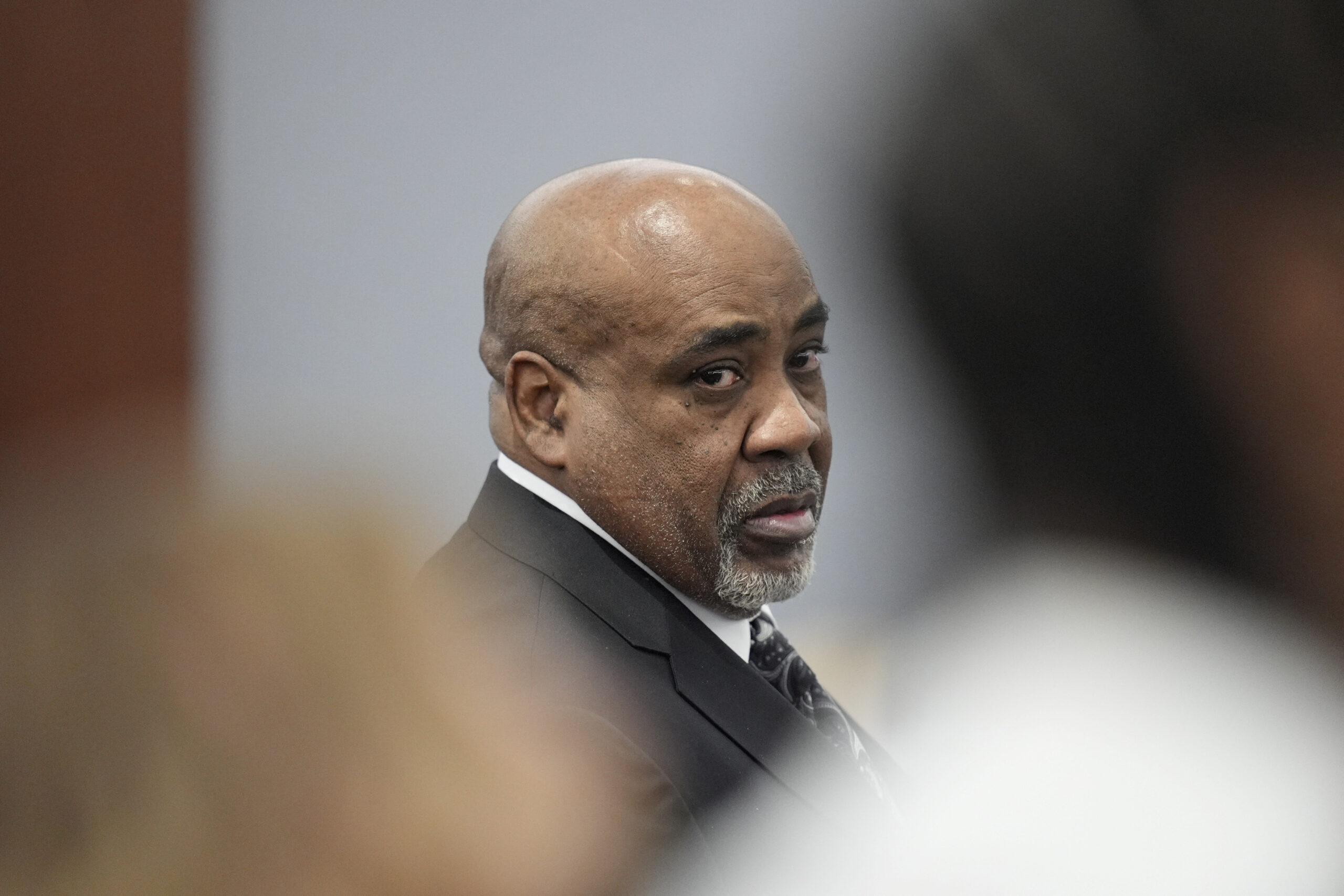
On the last day of August 2026, a courtroom in downtown Las Vegas delivered a verdict that millions of hip-hop fans never truly believed would come. After nearly thirty years of unanswered questions, cold leads, and cultural mythology built around one of music’s most shocking crimes, a Clark County jury found Duane “Keffe D” Davis, 63, guilty of first-degree murder with a deadly weapon in the 1996 killing of rap superstar Tupac Shakur. The jury reached its decision after deliberating for just under three hours, capping an 11-day trial that gripped the music world and the legal community alike.
Davis now faces a maximum sentence of life in prison without the possibility of parole. His sentencing is scheduled for October 13, 2026. Following the verdict, Davis told the presiding judge that he intends to appeal.
A Crime That Defined an Era
To understand the weight of this verdict, you have to go back to the night of September 7, 1996. Tupac Shakur, then 25 years old and at the absolute peak of his commercial and creative powers, was shot multiple times in a drive-by attack in Las Vegas after attending a Mike Tyson boxing match. He died six days later in hospital. The murder sent shockwaves through the music industry and left a wound in hip-hop culture that never fully healed.
Tupac was not just a rapper. He was a poet, an actor, a political voice, and a generational symbol. Albums like All Eyez on Me and Me Against the World had cemented his place at the very top of the art form. His death, unsolved for so long, turned him into something close to legend, and the lack of accountability made the grief that much harder to process.
For years, the case sat cold. Theories circulated endlessly online and in documentaries. Names were floated. Books were written. But no charges were ever filed, and no one ever sat in a courtroom to answer for what happened on that Las Vegas strip.
How the Case Finally Cracked Open
The breakthrough came, ironically, partly through Davis himself. Over the years, he made public statements and gave interviews that placed him in the car from which the shots were fired. Investigators with the Las Vegas Metropolitan Police Department, re-energized by a task force dedicated to the cold case, used those admissions alongside other evidence to build the prosecution’s case.
Davis was arrested in September 2023 after a grand jury indictment. The arrest was a seismic moment. For the first time in 27 years, someone was actually facing legal consequences for the murder of Tupac Shakur. The trial, which ran for 11 days in a downtown Las Vegas courtroom, kept the world watching closely. Prosecutors laid out their case methodically, and the jury needed less than three hours to reach its conclusion.
As NTV reported, several people in the courtroom gallery wiped away tears and embraced a prosecutor when the verdict was read, a raw and deeply human moment in what had been an almost impossibly long journey toward accountability.
What the Verdict Means for Hip-Hop and American Justice
The conviction carries meaning far beyond a single criminal case. It represents the rare triumph of persistence in a legal system that often lets cold cases go permanently cold. The Las Vegas Metropolitan Police Department spent years quietly rebuilding the investigation, and this verdict validates that effort.
For hip-hop culture, the implications are layered. Tupac’s murder, alongside the still-unsolved killing of Notorious B.I.G. just months later in 1997, became twin symbols of the violence that consumed rap music’s golden age. For decades, those cases represented a kind of institutional indifference toward Black artists and the communities they came from. A guilty verdict, even arriving three decades late, chips away at that narrative.
It also raises uncomfortable questions. If this case could be solved, why did it take 27 years? What changed? And what does the long delay say about the urgency with which such cases are pursued when the victims are young Black men from marginalized communities?
Davis Maintains He Will Fight On
Davis’s stated intention to appeal means this story is not entirely over. Appeals in high-profile murder cases can drag on for years, and legal observers will watch closely to see what grounds his legal team presents. At 63, with a life sentence on the table, Davis has every incentive to pursue every available avenue in court.
But the jury has spoken. After 11 days of testimony and evidence, twelve ordinary citizens from Clark County deliberated and concluded, in under three hours, that Duane “Keffe D” Davis was responsible for one of the most devastating losses hip-hop has ever endured.
Tupac’s Legacy, Undiminished
Whatever happens next in the courts, Tupac Shakur’s body of work remains as vital as ever. His music still streams in the hundreds of millions. His image still appears on murals from Compton to Kampala. Entire generations who were not yet born when he was killed know his lyrics by heart. That kind of cultural staying power is extraordinarily rare.
The verdict will not bring Tupac back. Nothing can. But for those who loved him, and for those who believe accountability still matters even when it arrives late, Monday’s ruling in Las Vegas carries real weight. Justice, however long it takes, is still justice.
The question now is this: with the Tupac case finally closed, will investigators and prosecutors bring the same renewed energy to the still-unsolved murder of Christopher Wallace, the Notorious B.I.G., who was killed just months after Tupac in a drive-by shooting in Los Angeles in March 1997? The families are still waiting. So is the culture.