




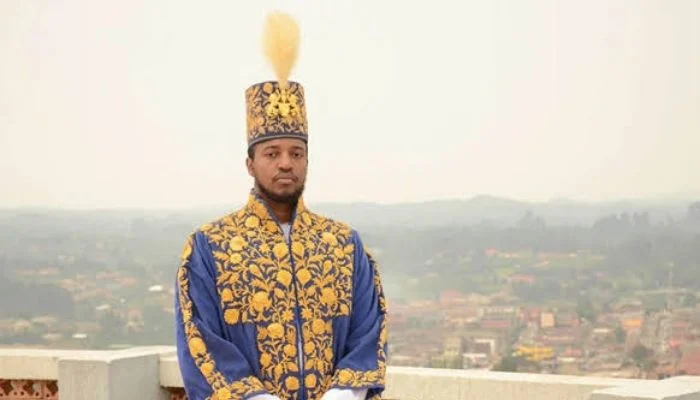
Tooro Kingdom’s supreme legislative council, the Rukurato Orukuru Orw’Ensanju, will not be convening anytime soon. On Tuesday, September 1, Kingdom Prime Minister Calvin Armstrong Rwomiire announced that the council session scheduled for that day had been called off with no replacement date set, as the institution redirects all its focus toward the repatriation and burial of King Oyo Nyimba Kabamba Iguru Rukidi IV, who died in the United States at the age of 34.
The announcement landed at a moment of intense grief and institutional pressure for one of Uganda’s most historically significant kingdoms. The Rukurato, the kingdom’s highest governing body, carries enormous cultural and administrative weight. Suspending its proceedings is not a decision taken lightly, and it signals just how consuming the preparations for the King’s final rites have become for Tooro’s leadership.
A Kingdom’s Priorities Laid Bare
Rwomiire communicated the postponement directly to members of the Rukurato, informing all Abakurasi that the meeting was cancelled and would be rescheduled only when the Office of the Prime Minister formally announced a new date. He offered no specific timeline, framing the pause as an open-ended but necessary response to the gravity of the moment.
“At this solemn moment, there can be no greater priority for the Kingdom than bringing our King home and laying him to rest with the dignity, honour and respect befitting His Majesty,” Rwomiire said, according to reporting by Chimpreports.
The prime minister went further, issuing a broader directive that kingdom officials stand down from meetings, debates, and any other activities that could pull focus away from the funeral arrangements. The language was deliberate and firm: this is not a time for internal administration. This is a time to mourn, and to act in service of that mourning.
Questions Over the Prime Minister’s Whereabouts
The decision to suspend proceedings did not emerge in a vacuum. Before the announcement, a segment of Tooro elders had voiced frustration over Rwomiire’s presence in Kampala rather than at the royal palace in Fort Portal, where kingdom officials had been gathering for discussions about the King’s burial and what comes next for the throne.
That tension is understandable. In a time of royal crisis, visible leadership at the cultural seat of power carries enormous symbolic importance. Elders and community figures watch who shows up, who leads, and who is present when it matters most. An absent prime minister, even one engaged in logistically necessary work, can read as a statement of misaligned priorities.
Rwomiire addressed this directly, clarifying that his time in Kampala was spent in active negotiations with government officials and other relevant authorities regarding the logistics of bringing the King’s remains back to Uganda. Repatriating a monarch who died abroad is not a simple administrative task. It involves coordination between government ministries, foreign affairs channels, diplomatic processes, and the physical and ceremonial arrangements that must be in place before the body arrives.
The Weight of Repatriation
The repatriation of King Oyo’s remains is, in itself, a politically and culturally charged process. Uganda’s cultural kingdoms occupy a unique space in the country’s national life, operating under a constitutional framework that recognizes them as cultural institutions while restricting their political functions. Even so, the death of a monarch draws national attention, government involvement, and a complex web of stakeholders who all have a stake in how the process unfolds.
King Oyo was no ordinary royal figure. He ascended to the Tooro throne as a child in 1995, making him one of the youngest monarchs in the world at the time of his coronation. For three decades, he grew up in the public eye, becoming a symbol not just for Tooro but for the broader story of Uganda’s post-conflict cultural recovery. His death at 34 is a loss that resonates well beyond the borders of western Uganda.
What Suspension Means for Kingdom Governance
The Rukurato Orukuru Orw’Ensanju is the apex governing council of Tooro Kingdom. Its functions include deliberating on matters of cultural policy, kingdom administration, and issues affecting the Batooro people. Pausing its work, even temporarily, leaves a number of institutional processes in a holding pattern.
That said, the decision is defensible on both practical and symbolic grounds. Holding a council session in the immediate aftermath of a king’s death, while funeral arrangements are still being finalized, would risk appearing tone-deaf. More practically, key leaders are otherwise occupied with logistics that cannot wait. The kingdom’s attention is singular right now, and that is as it should be.
The directive to suspend other unnecessary meetings and debates reflects an attempt to create institutional coherence around the moment. Tooro is not just grieving privately. It is performing that grief publicly, as kingdoms do, and every arm of the institution must be aligned in that performance.
Fort Portal Waits
Back in Fort Portal, the royal palace has become the gathering point for those waiting, planning, and mourning. Community members, elders, and cultural officials have been holding their own discussions, even as the prime minister works the phones and meeting rooms of Kampala. The distance between those two locations is more than geographic right now. It represents the split between ceremonial presence and administrative necessity, and Rwomiire’s announcement is partly an attempt to bridge that gap by showing that Kampala’s work is in direct service of Fort Portal’s grief.
Once the King is home and buried with the dignity his reign deserves, the Rukurato will reconvene. The question of succession, of what Tooro looks like without the only king many of its people have ever known, will eventually demand answers. For now, though, those conversations must wait.
As Tooro Kingdom navigates one of the most consequential moments in its modern history, what does the handling of this transition tell us about the resilience and adaptability of Uganda’s cultural institutions in the 21st century? Share your thoughts below.