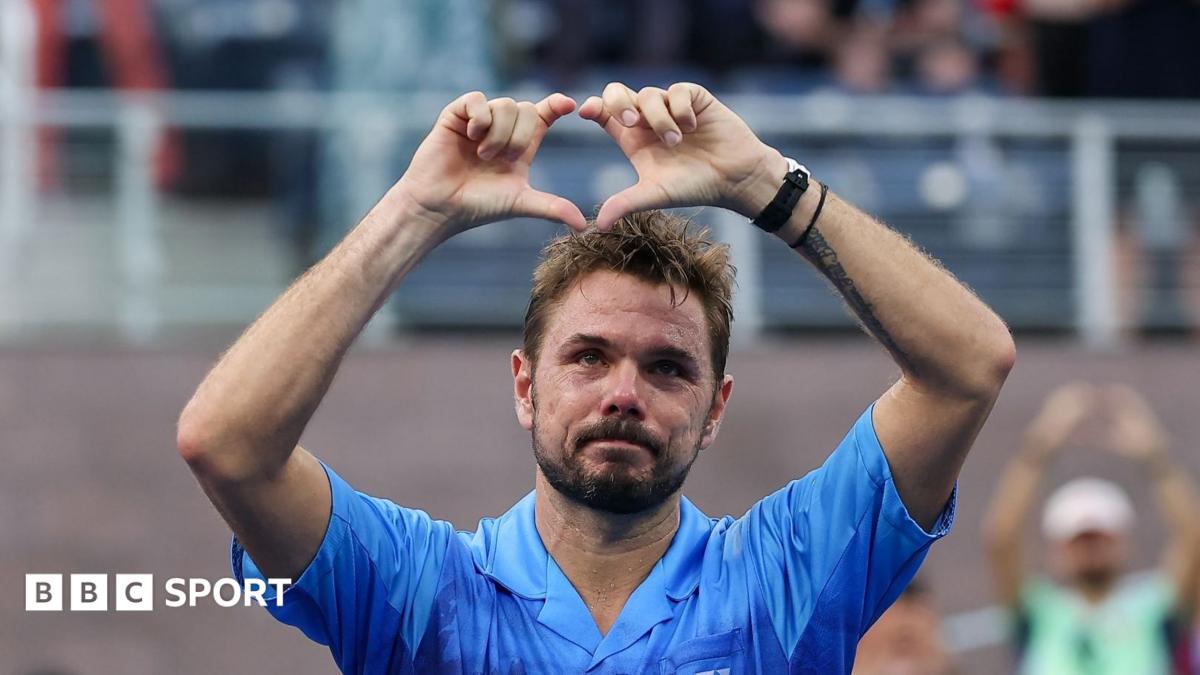
New York handed Stan Wawrinka one final gift at the 2026 US Open, a thunderous, heartfelt farewell from thousands of fans packed into the Grandstand court at Flushing Meadows, marking the last Grand Slam match of a career that defied every reasonable expectation for longevity and brilliance.
The 41-year-old Swiss veteran lost in straight sets to Italy’s Matteo Berrettini, but nobody at Arthur Ashe’s sprawling complex seemed to care much about the scoreline. What filled that 8,000-capacity venue was something rarer than a scoreboard victory: genuine affection, the kind that crowds reserve for players who gave them moments they will never forget.
A Last-Minute Reprieve That Felt Like Fate
Wawrinka almost didn’t make it to this moment at all. Tournament organisers had initially left him off the wildcard list, a decision that raised eyebrows given everything the Swiss had contributed to Grand Slam tennis across two decades. His place only opened up after American player Patrick Kypson withdrew, creating a gap that the US Open ultimately filled with the right name.
In hindsight, the belated call looks less like an administrative correction and more like the tournament catching itself before making a regrettable mistake. The thousands who showed up specifically to see Wawrinka one last time at the venue where he lifted the trophy a decade ago validated that decision completely.
You can read the full BBC Sport report on Wawrinka’s emotional farewell for a sense of just how charged the atmosphere was inside that court.
Three Slams Against the Odds
To appreciate what Wawrinka achieved, you have to understand the era he played in. Roger Federer, Rafael Nadal, and Novak Djokovic didn’t just dominate professional tennis during those years. They restructured what was possible, raising the ceiling so high that almost every other player on tour spent the better part of fifteen years competing for the scraps left behind by three of the greatest athletes the sport has ever produced.
Wawrinka didn’t just collect scraps. He won the Australian Open in 2014, the French Open in 2015, and the US Open in 2016, three different Slams on three different surfaces, each title ripped away from a sport that was doing its level best to keep him off the podium. That record puts him in a category that very few players across tennis history can claim, regardless of the generation they played in.
His backhand alone deserves its own museum wing. Single-handed, flat, and struck with the kind of ferocity that made opponents rethink their entire approach to the game, it remains one of the most aesthetically devastating shots the sport has ever produced. On his best days, even Federer, Nadal, and Djokovic had no answer for it.
The Moment That Said Everything
When the match ended at Flushing Meadows, Wawrinka did something quietly profound. He made heart gestures with his fingers, pressed his hand against his chest, and then encouraged the already roaring crowd to get even louder. It wasn’t a performance. It was a conversation between a man and the sport that shaped his life.
He then knocked balls into the stands, handing out physical souvenirs of a moment that most people there will carry in memory long after the balls have been forgotten in a cupboard somewhere.
“One of the reasons I played until 41 was to live these moments,” Wawrinka told the crowd, his voice carrying the unmistakable weight of genuine gratitude. He acknowledged the wildcard, the city, and the decade that had passed since he first won there. “I want to thank you all for all these years,” he added, coming close to tears as the cheers washed over him.
What Longevity at the Top Actually Looks Like
Wawrinka turning 41 this season and still competing at Grand Slam level is a physical achievement that deserves far more attention than it typically receives. Professional tennis is a sport that brutalises bodies. The shoulder, knee, and back surgeries that pile up across a long career are not minor inconveniences. They are career-ending events for most players. Wawrinka fought through them and kept coming back.
His path wasn’t always linear or glamorous between the major titles. There were long stretches of rebuilding, of grinding through Challenger-level events to find form again, of being written off by pundits who should have known better. But he kept showing up, kept competing, and kept producing moments that reminded everyone why they fell in love with the game.
Retirement and What Comes Next
Wawrinka has confirmed he will retire at the end of the 2026 season. The US Open farewell serves as a symbolic full stop on a career that opened with a Swiss teenager learning the ropes alongside Federer and closes with one final standing ovation in New York.
What he leaves behind is a blueprint for anyone in sport who has ever been told the competition is simply too good, the era too crowded, the window too narrow. Wawrinka found the window anyway, three times, and he kicked it open with that backhand.
The sport will miss him. The crowds clearly already do.
As one of tennis’s genuinely great careers draws to a close, here’s the question worth sitting with: in a sport so completely defined by the Federer-Nadal-Djokovic trilogy, does history give Wawrinka the credit he truly deserves? Leave your take in the comments below.