








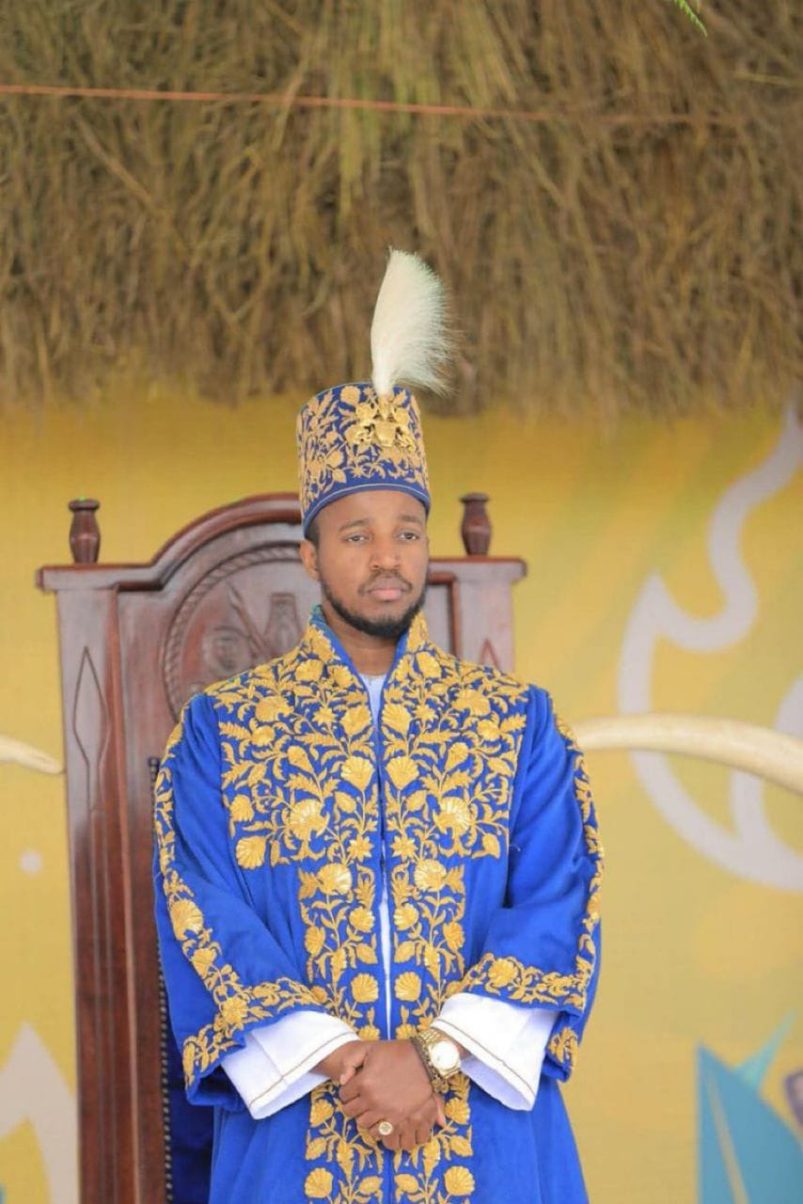
On August 29, 2026, one of Uganda’s most storied royal institutions took a decisive step toward continuity. Tooro Kingdom formally constituted a 21-member committee of Babiito clan elders, tasked with identifying, vetting, and ultimately announcing the successor to King Oyo Nyimba Kabamba Iguru Rukidi IV, whose passing has left the ancient throne vacant and the kingdom’s subjects in a period of mourning and anticipation.
The move signals that Tooro’s leadership is not prepared to let the succession drift into uncertainty. The committee operates with clear cultural authority, drawn entirely from within the Babiito clan, the royal lineage from which Tooro’s kings have always emerged. At its helm is Charles Kamurasi, who holds the title of Musuuga and serves as head of the Babiito clan. His office has formally assumed responsibility not only for the succession process but also for the funeral rites and cultural ceremonies that accompany such a profound transition.
A Palace Meeting Sets the Wheels in Motion
The process began with a formal gathering at Karuziika Palace, the seat of Tooro’s royal authority, held last Friday. Representatives from the kingdom’s various clans attended alongside members of the Rukurato, Tooro’s legislative and advisory body. What emerged was a reaffirmation of something the kingdom holds as foundational: that succession to the throne is a cultural ritual, not a bureaucratic exercise, and that custodianship of that ritual belongs to the Office of the Musuuga.
The Office of the Musuuga released a statement on August 29 that left little room for ambiguity. “The meeting reaffirmed that succession to the throne is a cultural ritual falling under the authority and custodianship of the Office of the Musuuga, and that the Babiito clan bears responsibility for the succession plans and protocols that follow on behalf of the people of Tooro,” it read. The language is deliberate, almost constitutionally precise, a clear signal that external interference in the process would not be welcomed.
Who Sits on the Committee
The 21-member body reads like a cross-section of expertise and cultural gravitas. Among those named are Monsignor Dr Isaac Mayombo, Father Dr Charles Oyo, Justice Paul Mugamba, Harriet Nyakake, and Patrick Muganzi, alongside several senior Babiito clan elders. The composition reflects a conscious effort to draw from spiritual, legal, and traditional domains, a recognition that a transition of this magnitude requires wisdom from multiple disciplines.
Interestingly, the published numbering of the committee skips position four, though the document confirms 21 members in total. It is a minor clerical detail, but it speaks to the speed with which the committee was assembled. The kingdom is clearly prioritising action over administrative perfection.
As reported by Chimpreports, the committee’s mandate covers three core responsibilities: identifying the successor to the throne, formally announcing that successor to relevant stakeholders, and preparing the traditional and cultural ceremonies that are tied to the handover of royal authority.
A Prince Waits in the Shadows
Before the Musuuga’s office issued its statement, Tooro’s Prime Minister Calvin Armstrong Rwomiire had already offered a tantalising detail to the public: King Oyo left behind a prince. The identity of that child, however, will only be disclosed at a time deemed appropriate under the kingdom’s traditions. It is a calculated silence, one that reflects how seriously Tooro takes the protocols governing its monarchy.
This approach is consistent with how many of Uganda’s kingdoms have historically managed succession. The process is not built for public drama or media speculation. It unfolds according to customary timelines, guided by those with the cultural knowledge and lineage authority to see it through correctly.
Why This Moment Matters Beyond Tooro
Uganda’s constitutional kingdoms were restored in 1993 after decades of suppression, and since then institutions like Tooro, Buganda, Bunyoro, and Ankole have navigated the complex terrain of preserving cultural identity within a modern state. Each succession carries weight not just for the kingdom in question, but for the broader question of how traditional governance survives and adapts in a country with competing political and social pressures.
King Oyo’s reign was itself a study in resilience. He ascended to the throne as a very young child, making him one of the youngest reigning monarchs in the world at the time, and he carried that distinction for decades. His passing closes a remarkable chapter. The selection of his successor, whoever that prince turns out to be, will write the opening lines of the next one.
The committee’s work now begins in earnest, behind closed doors, guided by custom, accountable ultimately to the people of Tooro and to the long memory of the Babiito lineage. Charles Kamurasi’s office has made clear that unity, diversity, and inclusiveness are the values the process must uphold. Whether a committee of elders can deliver all three, while satisfying both tradition and the expectations of a modern audience, is the question Tooro will have to answer in the weeks ahead.
How do you think traditional kingdoms should balance cultural secrecy in succession with the public’s desire for transparency? Share your thoughts below.