



There are towns that produce football clubs, and then there are towns that probably should not, by any reasonable measure, produce football clubs that play at the highest level in Germany. Elversberg belongs firmly in the second category. With a population of just 13,000 and no railway connection to speak of, this small settlement in the Saarland region has done something that larger, better-connected, and far wealthier communities have failed to do: sent its local side to the Bundesliga.

Where Exactly Is Elversberg?
Before the recent football noise, most Germans outside the Saarland would have struggled to point to Elversberg on a map. It sits quietly in Germany’s southwest, a place defined more by its residential calm than any kind of urban energy. There is no train station. Getting there requires either a car or a level of public transport ingenuity that most visitors would find inconvenient. The kind of place, in other words, that football’s big money machine tends to ignore entirely.
And yet, that is precisely what makes the story worth telling. Elversberg did not wait for infrastructure or investment or a wealthy owner with a vision board. The club climbed, rung by rung, through the lower tiers of German football, a journey that reads more like a local legend than a sports biography.
The Rise Through the Ranks
German football’s pyramid is notoriously unforgiving. The regional leagues at the bottom are full of clubs with genuine ambitions and modest means, and most of them stay there. The path from those divisions to the Bundesliga is long, brutal, and littered with clubs that came close before falling back. SV Elversberg navigated that path anyway.
The club’s ascent through the regional German football structure represents years of consistency, careful management, and performances that repeatedly exceeded what the size of the town might suggest was possible. By the time they arrived at the top flight, they had already proven themselves across multiple competitive steps, each one harder than the last.
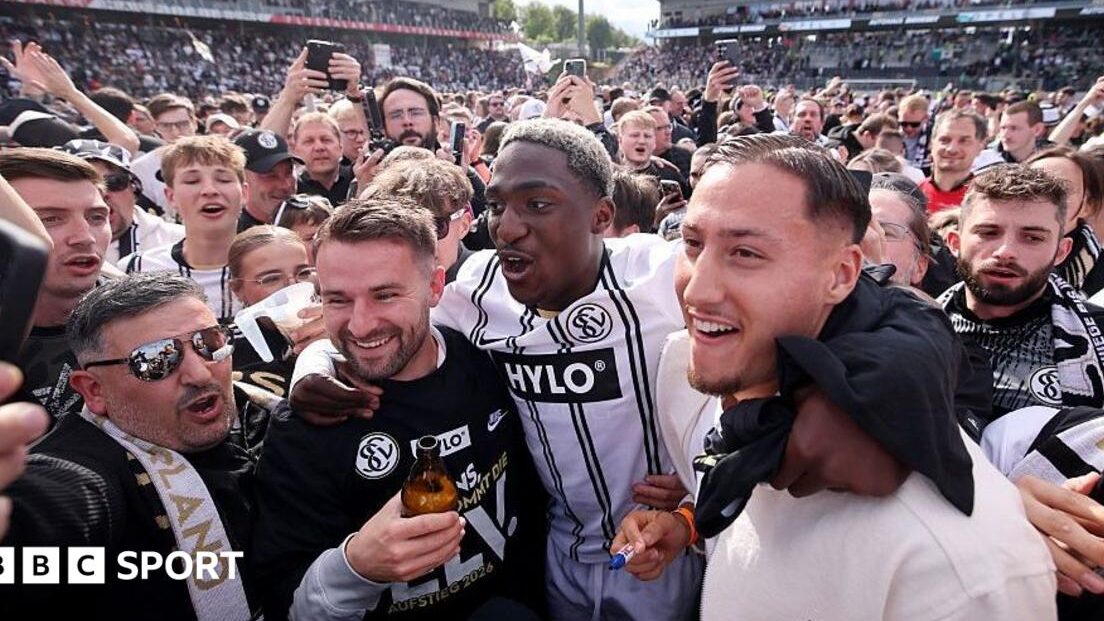
As BBC Sport detailed in their feature on the club, Elversberg’s journey to the Bundesliga is the kind of story that reminds you why football, at its core, still belongs to communities rather than corporations.
What the Bundesliga Means for a Town This Size
Context matters here. The Bundesliga is not just Germany’s top division. It is one of the most commercially powerful and globally watched football leagues on the planet. The stadiums are enormous, the television contracts are vast, and the clubs competing regularly include some of the most recognizable names in world sport. Elversberg, with its 13,000 residents, is stepping into that world.
For the town itself, the implications go well beyond ninety minutes of football each week. Bundesliga status brings media coverage, sponsorship money, visiting supporters from across the country, and a kind of national attention that a small Saarland community would otherwise never attract. Local businesses will feel it. The infrastructure question, including that notable absence of a train station, will likely face renewed scrutiny. When thousands of away fans need to reach you on a matchday, the logistics of a town without rail access become a talking point fast.
The Community at the Center
Small-town football clubs carry something that the sport’s biggest institutions often lose: a genuine connection between the players on the pitch and the people watching from the stands. In Elversberg, the gap between the squad and the supporter is not measured in wealth or celebrity. These are neighbors, familiar faces, people who share the same streets and local shops. That kind of closeness tends to create a particular kind of passion, raw and unperformed, the sort that television cameras love once they finally show up.
The Bundesliga debut is not just a sporting milestone. For many in the town, it will feel like a collective vindication. Years of watching bigger clubs with bigger budgets take the places that Elversberg could only dream about, followed by the moment those dreams stopped being hypothetical.
The Odds and the Opportunity
Survival in the Bundesliga for a newly promoted side from a small town is genuinely difficult. The financial gap between a club making its top-flight debut and the established giants of German football is significant. Player recruitment, coaching quality, stadium capacity, all of it tilts against the newcomer. History shows that many clubs in this position spend a season proving they belong before returning to the division below.
But history also has a way of being rewritten by clubs that refuse to read it. Elversberg has already defied the obvious script once. The town has no train station, no metropolitan crowd to draw from, and no legacy of top-tier football to lean on. What it does have is a club that has shown, across years of grinding competition, that it knows how to win when it needs to.
Whether that formula translates at the Bundesliga level remains the open and genuinely exciting question. The team will face opponents with deeper squads, bigger budgets, and far more experience at this standard. Every match will be a test not just of tactics, but of whether a 13,000-person town can genuinely hold its own among Germany’s football elite.
A Story Worth Following
Football needs stories like this. The sport has spent decades consolidating around wealth, with a handful of super-clubs absorbing resources while smaller communities watch from the margins. Elversberg’s arrival in the Bundesliga is a small but satisfying disruption to that pattern. It will not restructure European football’s economics, but it does prove that the ladder still exists and that determined clubs can still climb it.
For now, the town without a train station has arrived at the biggest stage in German football. The journey in was remarkable. What happens next will be watched by a lot more people than the 13,000 who call Elversberg home.
So here is the question worth sitting with: in an era when football increasingly rewards size and money over spirit and graft, can a club like Elversberg actually stick around long enough to change what we expect from a Bundesliga side?