





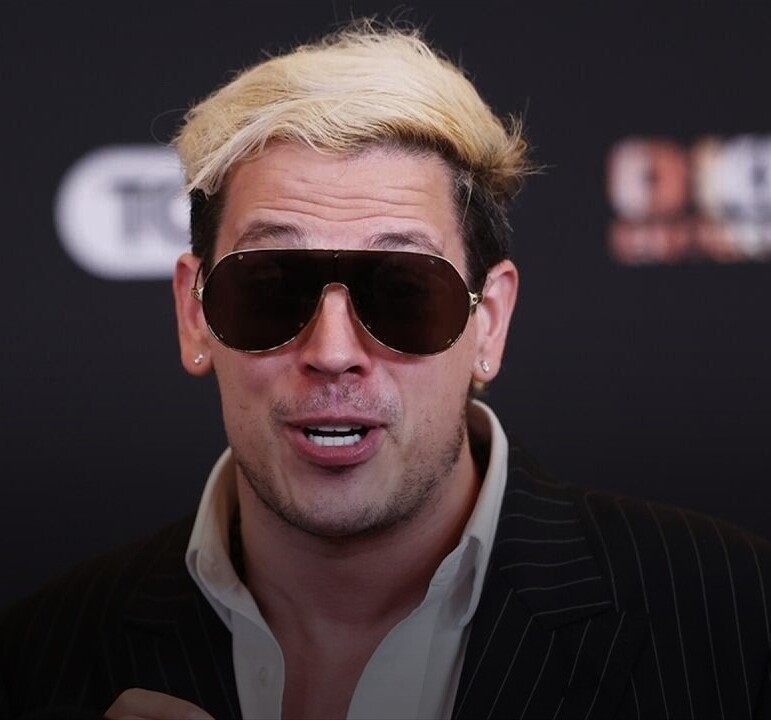
On Thursday, August 27, 2026, federal immigration agents arrested Milo Yiannopoulos, the British far-right political commentator and former editor of Breitbart News, at Louis Armstrong New Orleans International Airport. The Department of Homeland Security confirmed the arrest the following day, stating that Yiannopoulos had entered the United States legally back in May 2019 but had, in the years since, simply never gone home.
What the DHS Said
A spokesperson for the Department of Homeland Security did not mince words in their official statement. According to the agency, Yiannopoulos “legally entered the country” more than seven years ago but “chose to overstay his welcome in violation of our nation’s laws.” That phrase, “overstay his welcome,” carries a certain irony when applied to a man who built much of his public persona on loudly policing who belongs where. The statement confirmed the arrest took place at the Louis Armstrong New Orleans airport, a detail that adds a strange theatrical quality to an already surreal story.
As reported by The Guardian, the DHS characterised the situation squarely as an immigration violation, with no ambiguity about the legal basis for the detention. An overstayed visa is not a grey area under US immigration law. It renders a foreign national undocumented, regardless of how they arrived or who they once worked for.
A Career Built on Controversy

For those who need a refresher, Yiannopoulos rose to prominence in the mid-2010s as a culture-war provocateur with a flair for spectacle. His time at Breitbart News made him a familiar figure to a particular corner of the internet, and he cultivated a devoted following by wading into the most incendiary debates of his era with deliberate relish. His public profile was, at various points, enormous.
That profile took a significant hit in 2017 when remarks he made about relationships between adults and minors surfaced and triggered a rapid unravelling: his book deal collapsed, his Breitbart role ended, and speaking invitations dried up. He has spent the years since attempting various comebacks with mixed results.
More recently, he served as an intern for Marjorie Taylor Greene, the Georgia congresswoman and prominent figure in the American right. That connection had kept him tethered, at least symbolically, to political relevance in Washington circles.
The Uncomfortable Irony of the Moment
There is no delicate way to state the obvious: Yiannopoulos spent years as a vocal supporter of strict immigration enforcement and border security. He appeared at rallies, wrote columns, and gave speeches championing the very apparatus that has now detained him. Being arrested by ICE for overstaying a visa is the kind of plot twist that screenwriters would reject for being too on the nose.
It is worth being clear about what this arrest is and is not. It is, at its core, an immigration matter. The DHS statement frames it entirely within that context. Whether politics played any role in the timing of the arrest, or whether this is routine enforcement, is a question that will undoubtedly circulate loudly across social media in the days ahead. What is not in dispute is the factual sequence: a legal entry in May 2019, more than seven years on US soil, and an arrest at a Louisiana airport in August 2026.
What Happens Next
When ICE detains a foreign national for overstaying a visa, the typical process involves an immigration hearing where the individual may contest removal or seek relief. British citizens detained in the US have consular rights, meaning the UK government would ordinarily be notified. Whether Yiannopoulos will contest deportation, seek legal counsel, or attempt to regularise his status through some other avenue remains to be seen.
Given his history of turning personal setbacks into media moments, it would be naive to assume this chapter closes quietly. The man has survived controversies that would have buried most public figures permanently. That said, overstaying a visa by seven-plus years is not a minor administrative hiccup. It is a sustained, knowing violation of immigration law, and the legal exposure is real.
For now, one of the louder voices in recent years of American far-right cultural politics finds himself on the wrong side of the enforcement machinery he once championed. Whatever your view of Yiannopoulos or the politics surrounding his arrest, the question worth sitting with is this: should immigration law apply with exactly the same force regardless of a person’s politics, platform, or connections?