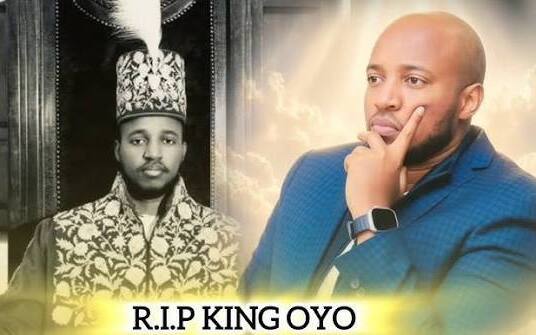
Uganda woke up on August 27, 2026, to news that stopped the country cold. His Royal Majesty Rukirabasaija Omukama Oyo Nyimba Kabamba Iguru Rukiidi IV, the king of the Tooro Kingdom, has died at the age of 34. The official confirmation came directly from the Tooro Kingdom, arriving shortly after reports that the monarch had been in a critical condition. A reign that began before most children learn to read has now come to a quiet, devastating close.
A Crown Placed on Childhood Shoulders
Born on April 16, 1992, Oyo spent the first three years of his life as any child would, unburdened by protocol or palace politics. That changed in 1995 when his father, Omukama Patrick Matthew Kaboyo Olimi III, passed away. In the tradition of the Tooro Kingdom, succession moved swiftly, and a toddler was suddenly a king.
His coronation took place on September 17, 1995, and photographs from that day tell a story that words struggle to match: a small boy, wide-eyed and solemn, dressed in royal regalia at a ceremony meant for adults. The moment confirmed his place in history as one of the youngest reigning monarchs the world had ever seen.
Tooro is one of Uganda’s constitutionally recognised cultural kingdoms, rooted in the western part of the country near the foothills of the Rwenzori Mountains. The kingdom carries deep cultural weight, and its monarchy is not merely ceremonial in the hearts of its people. For them, the Omukama is both a cultural anchor and a living symbol of identity.
Growing Up in Public, Carrying a Kingdom
There is something genuinely uncommon about a monarch who cannot remember a time before the throne. King Oyo grew up entirely within the spotlight, his childhood milestones tracked by cameras, his adolescence unfolding under the watchful eye of a kingdom and, increasingly, an international audience fascinated by the young African king.
He was profiled by international media over the years, often described with a mixture of curiosity and admiration. The optics were undeniable: a young African boy holding the weight of tradition and sovereignty simultaneously. But beyond the compelling imagery, Oyo matured into a monarch who took his responsibilities seriously. He became an advocate for youth empowerment and cultural preservation, using his platform to speak to issues that affected the younger generations of his kingdom and Uganda at large.
Where many royals retreat into formality, King Oyo demonstrated a consistent interest in connecting with young people. His engagements were not purely ceremonial. He attended forums, participated in events that addressed youth welfare, and carried himself as someone who understood that a kingdom’s future lives in its youth.
Rumours, Then Silence, Then the Worst
In the weeks leading up to August 27, unsettling rumours had begun to circulate across social media and within Ugandan communities. Reports suggested that the king was unwell, though official sources were initially quiet on the matter. The silence itself became a kind of signal, and public anxiety grew.
When the Tooro Kingdom confirmed that King Oyo was in critical condition, the mood shifted from speculation to dread. The final announcement of his death arrived soon after, confirming what many had feared. He was 34 years old. By any measure, far too young.
The Weight of What He Leaves Behind
Uganda has four constitutionally recognised kingdoms: Buganda, Bunyoro, Toro, and Rwenzururu. Each carries its own traditions, its own sense of pride, and its own relationship with the modern Ugandan state. The death of a sitting Omukama is not a quiet event. It ripples through communities, through cultural institutions, and through the lived experience of people whose sense of belonging is tied directly to the monarchy.
For the Tooro people specifically, King Oyo was not just a figurehead. He was a constant. He had been their king for 31 years, which means an entire generation of Tooro citizens never knew a time without him on the throne. His absence will not simply be felt at official occasions; it will be felt at the level of identity.
The question of succession now sits at the centre of every conversation about the Tooro Kingdom’s immediate future. The processes, traditions, and protocols that will govern what comes next are deeply rooted in the kingdom’s customs, and the coming days and weeks will see those traditions activated in the most serious possible context.
A Life That Defied Easy Description
King Oyo was, in the truest sense, a singular figure. No script exists for a person who becomes king at three. No guidebook prepares a child for that weight. He navigated it, visibly and imperfectly at times, in the way that all human beings navigate lives they did not choose but must inhabit fully.
He was a child king who became a man still wearing his crown. He advocated for culture in an era that relentlessly pulls youth away from tradition. He held a title so old it predates the Ugandan state by centuries, and he carried it into the age of social media and global connectivity with a kind of quiet dignity.
Uganda has lost a king. The Tooro Kingdom has lost its Omukama. And the world has lost a figure who, simply by existing and persisting, reminded us that history is not always something that happened long ago. Sometimes, history is a boy at his own coronation, growing up in real time, carrying more than any child should.
As tributes pour in from across Uganda and beyond, one question lingers quietly in the background: what does it mean to spend an entire life in service to a kingdom, from the very beginning, without ever choosing it yourself, and what does a people do when the only king they have ever known is suddenly gone?