




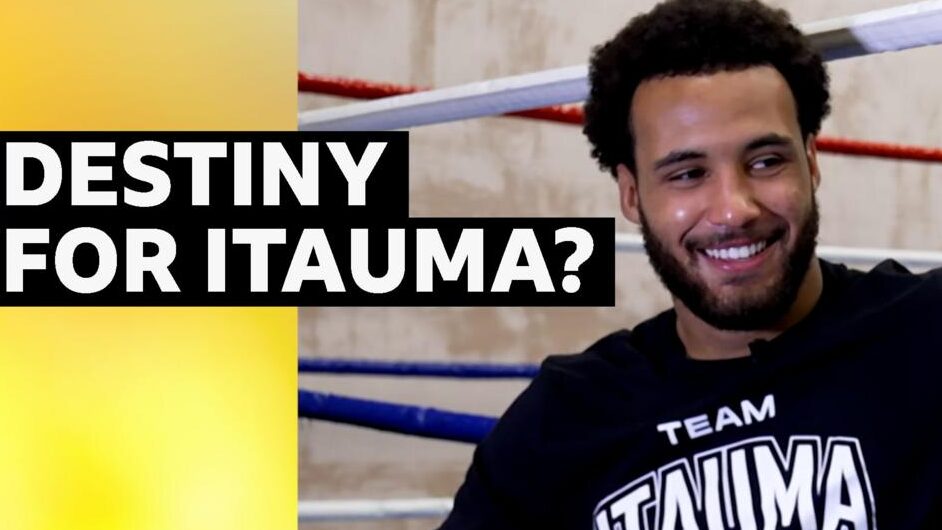
There are moments in sport that arrive quietly before they explode into something the world never forgets. Saturday’s IBF world heavyweight title fight, with 21-year-old Moses Itauma on one side and seasoned Croatian contender Filip Hrgovic on the other, has every ingredient to become one of those moments. A vacant belt. A young British fighter. And a record that has stood since the late 1980s.
The Fight That Could Define a Generation
Itauma steps into the ring with the kind of opportunity most professional boxers spend their entire careers chasing. The IBF heavyweight championship is on the line, and with it, a place in the history books. Should he get his hand raised, Itauma would become the youngest man to hold a world heavyweight title since Mike Tyson claimed that honour back when most of today’s boxing fans were not yet born.
That is not a small footnote. That is a headline that echoes across decades. Tyson was 20 years old when he became the WBC heavyweight champion in 1986, a moment that announced him as one of sport’s most ferocious talents and launched a career that still occupies considerable space in the cultural imagination. For any fighter to approach that standard is to invite enormous scrutiny. For a 21-year-old Briton to do it would carry particular significance on this side of the Atlantic.
What Itauma Himself Has Said
Itauma has not shied away from the weight of expectation. Speaking ahead of the fight, the young heavyweight acknowledged that expectations are real and present, and that he understands his role in a broader story, carrying the flag for British boxing. That is a considerable thing to say at 21. It suggests a maturity that often takes fighters years, sometimes careers, to arrive at.
British boxing has produced world heavyweight champions before, of course. The division has a proud domestic history. But the prospect of a 21-year-old claiming the throne adds a different texture to the narrative. It speaks to longevity, to a career still in its earliest chapters, and to the possibility that British fans could be watching their heavyweight champion grow up in real time over the next decade.
The Opponent: Filip Hrgovic Is No Formality
It would be a mistake to treat this as a coronation before the bell rings. Filip Hrgovic is a former Olympic bronze medallist from Croatia who has built a credible professional record and carries genuine punching power. He has been a fixture near the top of the heavyweight rankings for several years and represents exactly the kind of experienced, technically sound opponent designed to test whether a young fighter’s promise is ready to become achievement.
Hrgovic will not be overawed by the occasion. He has been in big fights before and will arrive with his own ambitions. The vacant IBF title means neither man walks in as champion, so both are hunting the same prize with equal desperation. That tends to produce the kind of fight that justifies every yard of the hype surrounding it.
Why Age in the Heavyweight Division Matters So Much
Heavyweight boxing operates by different rules than other weight classes. The physical demands are extreme, the margin for error is almost nonexistent, and experience tends to matter in ways that are difficult to quantify but impossible to ignore. When a fighter wins the heavyweight title young, it is not simply impressive athletically, it signals something about their capacity to absorb pressure, to adapt mid-fight, and to perform when the stakes are at their highest.
Tyson’s record has survived precisely because the combination of youth, power, and the demands of the heavyweight division makes it so difficult to replicate. Challengers have come and gone. Some talented, some hyped, none quite young enough or good enough at the right time. Itauma now stands closer to that record than any fighter has in many years.
What a Title Win Would Mean for British Boxing
British boxing has enjoyed a rich period of success across multiple weight classes, but the heavyweight division carries a particular cultural prestige. A British heavyweight champion at 21 would not simply be a sporting achievement. It would become a talking point across the country, the kind of result that draws casual viewers back to the sport and inspires a new generation of young fighters to look at their own potential differently.
Itauma seems to understand this. The language he has used about expectations and carrying a flag is the language of someone who has thought beyond Saturday night and is already considering what comes after. That long view, in a sport that can be brutally short-term, is itself a marker of something worth watching.
Saturday Night and the Weight of History
Every great fighter has a moment when potential crystallises into something permanent. Itauma’s moment arrives this Saturday. Win or lose, he will be tested in a way that tells the sport, and tells him, something definitive. But if he wins? The youngest heavyweight champion since Mike Tyson. A 21-year-old with the IBF belt and the whole of British boxing on his shoulders, grinning back at the weight of it.
That would be a big deal. And then some.
Will Moses Itauma seize his moment and etch his name alongside boxing’s greats, or will Hrgovic prove that experience still trumps youth when the heavyweight title is on the line? Share your prediction below and tell us what a Itauma victory would mean for the future of British boxing.