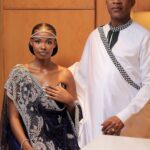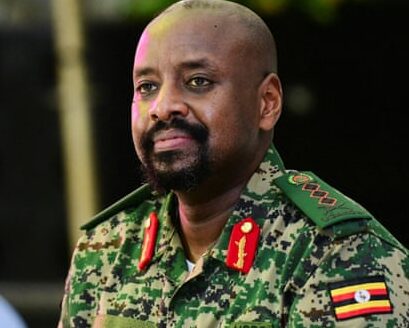
Kampala has seen its share of political theatre, but what unfolded this week belongs in a category of its own. Uganda’s Chief of Defence Forces, Gen Muhoozi Kainerugaba, unleashed a storm of threats on social media platform X on Tuesday, declaring that the Presidential Advisory Committee on Exports and Industrial Development, better known as PACEID, is an “illegal organisation” and vowing to arrest its members. The target of his fury? None other than Odrek Rwabwogo, the man married to his own sister and the chairman of the very agency he now wants shut down.
The Declaration That Shook Kampala
For an institution established directly by President Yoweri Museveni in March 2022 and coordinated through the Office of the President, being labelled “illegal” by the country’s top military commander carries weight that words alone cannot fully capture. Muhoozi did not mince his language. “PACEID is an illegal organisation. We shall start arresting its members immediately,” he posted, according to a report by Chimpreports. He followed that up with an even blunter warning: “We are going to arrest ALL the members of PACEID involved in corruption.”
The posts landed with the kind of force that clears a room. PACEID is not some fringe initiative cooked up by a minor functionary. It was commissioned by Uganda’s long-serving president and operates from within his own office. For Muhoozi to publicly brand it criminal is, at minimum, a dramatic escalation. At most, it is a constitutional flashpoint.
A Claim of Arrest, and a Very Telling Goodbye
Muhoozi did not stop at threats. He claimed, without naming the individual, that an arrest had already been made. “We have already arrested one of the criminals,” he wrote, signing off with the Runyankore-Rukiga word “Muraregye”, which translates loosely to “good night.” It was the kind of sign-off that reads as both casual and deeply ominous at the same time. No name of the alleged detainee was offered, no charge was stated, and no location of detention was disclosed.
The absence of details is itself telling. In a country with functioning legal processes, an arrest of a presidential advisory body member would generate documentation, a charge sheet, a public statement from prosecutors. What Muhoozi offered instead was a social media post and a Runyankore farewell. Whether an actual detention occurred remains unverified.
Broadcasters Warned: Stay Away From PACEID
The general’s posts moved beyond the immediate targets of PACEID. He extended his warning to Uganda’s media landscape, putting both radio stations and television broadcasters on notice. “Radios and TVs that allow members of the outlawed PACEID to talk will face severe consequences,” he wrote. The phrasing “outlawed PACEID” is instructive, he had already moved from calling it illegal to treating it as formally banned, all through a series of posts on a social media platform.
Press freedom advocates would rightly find this alarming. Threatening broadcast media with unspecified consequences for hosting guests is not a grey area. It is direct intimidation of an independent press, delivered by the commander of the national military. Whether media houses will comply, push back, or seek legal clarity remains an open question, but the chilling effect of such a statement from such a figure is immediate and real.
“You Saw What We Did With Parliament”
Perhaps the most charged line in the entire episode came in a separate post in which Muhoozi wrote: “You saw what we did with Parliament. Wait for this one…” The reference appears to be directed at the Patriotic League of Uganda’s recent, widely-discussed intervention in the contest for parliamentary leadership. Whether one views that intervention as decisive political action or as inappropriate military overreach into civilian governance, Muhoozi clearly viewed it as a proof of concept, a demonstration of what his network can accomplish when it decides to move.
The implication, that PACEID will receive similar treatment, signals that this confrontation is not bluster for social media engagement. It suggests a calculated, premeditated campaign against an institution that Muhoozi has decided to treat as an adversary.
Family Ties, Power Struggles, and the Museveni Question
The personal dimension of this feud is what makes it truly extraordinary. Odrek Rwabwogo is not a political opponent in the conventional sense. He is family, the husband of Muhoozi’s sister. For a public falling-out of this magnitude to play out between two men connected by blood to Uganda’s first family raises questions that go far beyond policy disagreements.
What does President Museveni make of all this? The man who commissioned PACEID, who made it a presidential body, who entrusted his son-in-law with its chairmanship, now has his own son publicly declaring that institution a criminal enterprise and threatening to detain its members. The silence from the presidency, if it holds, will be a statement in itself. And if Museveni does weigh in, which direction does a father and father-in-law turn when his two children’s orbits collide so publicly?
Uganda has a long tradition of political power being managed within tight family and regional networks. But those networks function precisely because tensions are typically resolved away from public view. Muhoozi has chosen a very different approach, weaponising transparency as a form of aggression. Every post on X is a move that forces a response, narrows options, and raises the stakes for everyone involved.
What Comes Next
The legal status of PACEID has not changed because of posts on X. It remains a body created by presidential authority, coordinated through the Office of the President, with a mandate around exports and industrial development. Any actual arrests of its members would require legal grounding that Muhoozi’s social media posts do not provide. Whether the institutions around him, the judiciary, the attorney general’s office, the presidency itself, allow the situation to escalate into actual detentions is the critical question right now.
Uganda is watching. So is the region. The behaviour of powerful figures within ruling families has a way of setting precedents, and the precedent being established here is one where the military commander publicly moves against a presidential advisory body, threatens the press, and invokes past interventions in parliament as a warning. That is a combination of signals that deserves serious attention from anyone interested in how political power operates in East Africa.
Where does the line fall between a family spat and a genuine institutional crisis, and who in Uganda has both the authority and the will to draw it?