










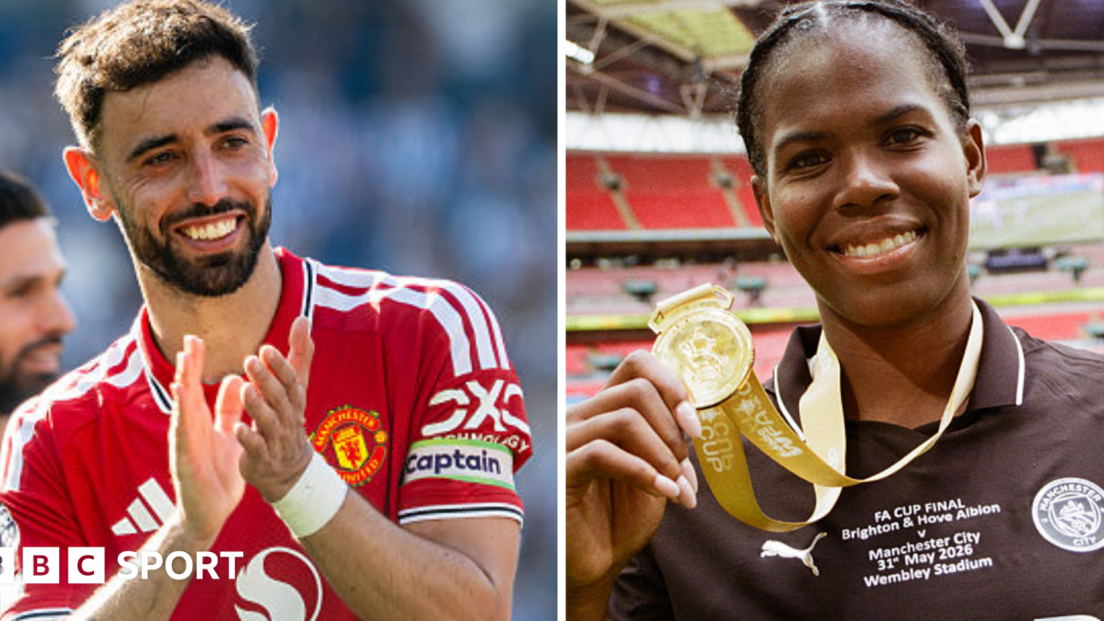
There are trophies voted on by journalists, trophies handed out by governing bodies, and then there is the one your fellow professionals give you. The Professional Footballers’ Association awards carry a weight that most individual honours simply cannot match, because the people casting the votes are the ones who face these players week after week, in training grounds and on matchdays, with everything on the line. This year, that weight landed squarely on the shoulders of Manchester United captain Bruno Fernandes and Manchester City forward Khadija Shaw, who have been named the PFA’s men’s and women’s players of the year respectively.

Bruno Fernandes: The Captain Who Commands Respect Across the Dressing Room
Winning a popularity contest among your peers in professional football is no small achievement. These are competitive, often ruthless individuals whose livelihoods depend on outperforming one another. When they collectively point to one man and say he has been the best, you listen. Bruno Fernandes, the Portuguese midfielder who wears the captain’s armband at Old Trafford, has earned exactly that recognition.
Fernandes has long been one of the Premier League’s most dynamic creative forces. His ability to dictate tempo, produce moments of genuine brilliance in tight situations, and carry the responsibility of leadership at one of world football’s most scrutinised clubs sets him apart. The PFA award is peer validation that his performances this season were not just eye-catching for the fans but genuinely impressive to the professionals sharing the pitch with him.
For Manchester United supporters, this honour carries an extra layer of significance. The club has navigated a period of considerable transition and expectation, and having a captain recognised at the highest individual level provides a focal point around which optimism can gather. Fernandes has consistently been the heartbeat of United’s attacking play, and this award reflects a season where his influence reached another level entirely.
According to the BBC’s coverage of the PFA awards, both Fernandes and Shaw claimed the top individual honours in their respective categories, making it a landmark night for English football’s most storied prizes.
Khadija Shaw: A Force of Nature Who Has Rewritten Expectations
If Bruno Fernandes winning the men’s award felt like a reward for sustained brilliance, Khadija Shaw claiming the women’s honour feels like the sport acknowledging something even more visceral. The Jamaican striker at Manchester City plays football with a physical intensity and technical sharpness that leaves defenders with very few answers and supporters with very little breath.
Shaw’s journey to the top of the women’s game has been one of genuine determination and remarkable athletic development. Her goalscoring record at Manchester City has been the kind of return that managers build entire tactical systems around. She is not a player who asks for space politely. She takes it, creates it, and punishes any hesitation from the defensive line.
The women’s game in England has grown enormously in profile and quality over recent seasons, and Shaw represents the cutting edge of that growth. Being voted the best player in the division by the professionals who compete against her speaks to a dominance that goes beyond raw statistics. It is about the way she changes a game simply by being on the pitch, the way opponents must account for her even when the ball is on the other side of the field.
What the Women’s Award Means for the Broader Game
Shaw’s recognition matters beyond the individual. Every time a women’s footballer receives the kind of mainstream acknowledgment that the PFA awards carry, the game expands its reach and its legitimacy in the eyes of new audiences. There was a time when women’s football in England operated almost entirely in the margins of the sporting conversation. That time is over, and winners like Shaw are the reason why.
Her status as one of the most feared strikers in women’s football globally adds an international dimension to the award. Jamaica’s rise as a footballing nation has been closely tied to the performances of players like Shaw on club stages across Europe, and this recognition will resonate far beyond the borders of English football.
A Night That Reflects the Depth of English Football
The PFA awards have always served as a kind of collective mirror for the state of the game. When you look at who wins in any given season, you get a sense of where the quality is concentrated, where the leadership is coming from, and which clubs are doing something genuinely right. This year, that mirror reflects a Manchester United side carrying genuine ambition through its captain, and a Manchester City women’s side built around a striker who operates on a different frequency to most of her contemporaries.
Both Fernandes and Shaw represent something important about modern football: the idea that sustained excellence, built through hard work and clarity of purpose, still gets recognised in an era where noise and marketing can sometimes drown out genuine quality. Their peers voted with honesty and conviction, and the results speak clearly.
Football has a way of cutting through the clutter when it needs to. A night like this, with two deserving winners celebrated by the people who know the game best, is exactly that kind of moment. Whether you follow the men’s game, the women’s game, or both, the PFA awards remind you why individual excellence within a team sport still commands such admiration.
So here is the question worth sitting with: in a season where both Manchester clubs have produced players their peers consider the very best in the country, what does that say about the standard these two institutions are now setting, and can anyone else rise to meet it?