









Seven people are dead. Two of them were police officers doing their jobs on a Saturday morning. The crash that killed them, a car travelling the wrong way down a dual carriageway near Middlesbrough, lasted only seconds. The grief it left behind will last considerably longer. And now, in the wreckage of that tragedy, a question is being asked loudly from Downing Street downward: why are social media platforms still letting people turn reckless driving into entertainment?
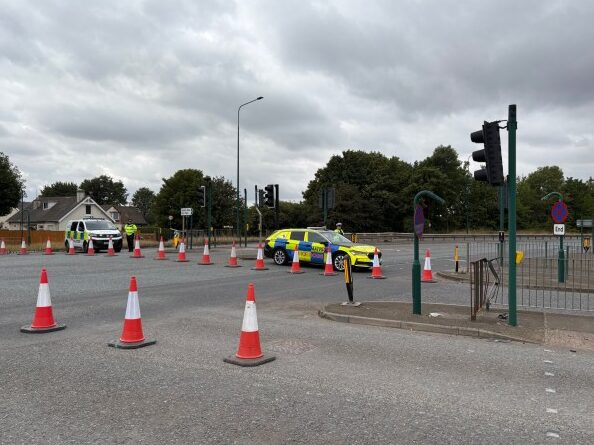
What Happened Near Middlesbrough
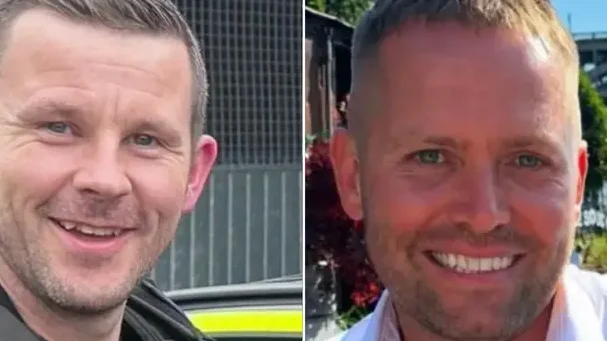
The collision occurred on a dual carriageway close to Middlesbrough when a car travelling in the wrong direction slammed into a police vehicle. PC Tom Clough and PC Matthew Blades were killed instantly. Five passengers riding in the other car also lost their lives. Among them was 18-year-old Makai Saddington, whose TikTok account had previously contained videos that appeared to document dangerous driving. Those videos were removed from the platform after the crash.
Cleveland Police were careful, however, to draw a line between those earlier posts and the events of that night. According to the force, there is no evidence that anyone was filming the activities that led to the crash for the purpose of uploading content. That distinction matters legally and factually. But it doesn’t soften the broader, more uncomfortable reality: a culture exists online that treats illegal, high-speed driving as content worth watching, sharing, and admiring.
The Government Turns Up the Heat on Platforms
Prime Minister Andy Burnham described the sharing of dangerous driving videos as “truly reprehensible”, language that is unusually blunt for a head of government addressing the tech sector. His words landed alongside a broader government push urging social media companies to pull posts that glorify this kind of behaviour and to rework the algorithms that have been quietly amplifying it for years.
Defence Minister Luke Pollard appeared on BBC Breakfast to reinforce the message, arguing that platforms are not naive bystanders in this problem. “They know exactly what content is on their site, they know how their algorithm works,” Pollard said, adding that the government had already moved to inform companies that such material needs to come down. The implication was clear: compliance is expected, not requested.
It is a significant moment. Governments across the world have long struggled to hold social media firms accountable for the content that spreads through their networks. Firms typically hide behind the argument that they are platforms, not publishers, and therefore not responsible for what users post. But that argument is wearing thin, particularly when algorithms are actively designed to surface high-engagement content, and few things generate engagement quite like the adrenaline of watching a car tear through traffic at dangerous speeds.
Why Dangerous Driving Content Spreads So Easily
Understanding the mechanics of why this content thrives online requires a brief look at how recommendation systems work. Short-form video platforms prioritise content that users watch repeatedly, share quickly, and interact with emotionally. Dangerous driving clips tick all of those boxes. They are viscerally exciting. They feel transgressive. They generate comments. And the more comments and views a video collects in its first hours, the more aggressively the algorithm pushes it to new audiences.
This is not an accident or an oversight. It is the product of deliberate engineering choices made by companies that have historically valued growth metrics over community safety. Pollard’s point, that these firms know exactly how their systems operate, is not a conspiracy theory. It is a statement of fact that every engineer who has ever worked on a recommendation algorithm would confirm off the record.
The tragedy is that young people are both the primary creators and primary consumers of this content. Teenagers and young adults are the core audience for short-form video. They are also, statistically, the demographic most likely to engage in high-risk driving behaviour. The pipeline from watching glorified speeding content to attempting it is not inevitable, but it is not imaginary either.
A Culture Problem That Predates the Algorithm
Dangerous driving as a form of social performance is not new. Boy racers, joyriders, and illegal street racing scenes have existed for decades. What has changed is scale and visibility. In the pre-smartphone era, reckless driving was witnessed by bystanders and occasionally caught on CCTV. Today it is filmed in portrait mode, edited with a music track, and posted to an audience of thousands before the car has even stopped.
That shift in scale changes the incentive structure entirely. When the reward for dangerous behaviour is not just the thrill in the moment but also likes, followers, and social clout, the risk calculus for some young people shifts in a deeply troubling direction. The crash near Middlesbrough is an extreme and devastating outcome. But it exists on a spectrum of harm that begins long before any fatality.
What Responsibility Looks Like in Practice
Demanding that platforms remove individual videos is a start, but it is the least sophisticated response available. More meaningful change requires the kinds of algorithmic adjustments that Pollard referenced, namely reducing the distribution of content that features reckless behaviour even when it does not technically violate a platform’s stated community guidelines. It also requires speed and consistency. A video that racks up a hundred thousand views before it is taken down has already done its damage.
There is also a conversation to be had about age verification and targeted content restrictions. If platforms can identify and market to teenagers with startling accuracy, they can certainly identify and limit the distribution of dangerous content to the audiences most vulnerable to its influence.
Two Officers, Seven Lives, One Question That Won’t Go Away
PC Tom Clough and PC Matthew Blades went to work on a Saturday and did not come home. Five other people, including a teenager, also died in a crash that should never have happened. Whatever the specific circumstances of that night, the broader context is a society that has allowed the glamourisation of dangerous driving to flourish online largely unchecked for years.
The government’s language has shifted from gentle suggestion to something closer to a demand. Whether social media companies respond with genuine structural change or the usual cycle of temporary content removal and public apologies remains to be seen. The families of seven people who lost their lives near Middlesbrough deserve more than the latter.
At what point does a platform’s responsibility for what it actively promotes through its own algorithms become indistinguishable from endorsement, and who should be making that call?