






A road accident involving Ugandan singer King Saha on August 22, 2026 was always going to attract sympathy. What nobody expected was for it to blow the lid off one of the music industry’s most uncomfortable open secrets. When Saha launched a public fundraiser to repair his damaged vehicle, veteran disc jockey DJ Roja fired back with a pointed observation that has since sent ripples across Uganda’s entertainment circles: are the country’s biggest concerts actually making the kind of money everyone assumes they are?

The Accident That Started It All
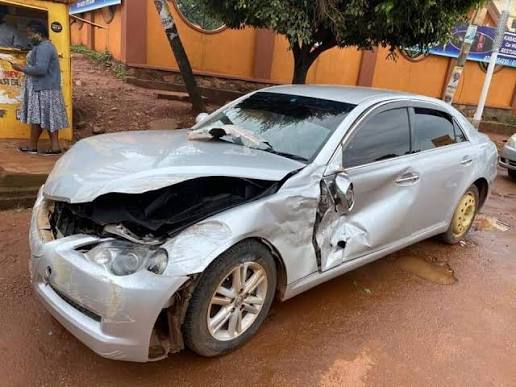
According to King Saha, a trailer struck the door of his car while he was in the process of getting out of the vehicle. The impact left the car visibly damaged, though Saha himself escaped without serious injuries. By any measure, that is a lucky outcome, and the outpouring of public concern that followed confirmed just how much goodwill the artist commands among his fans.
Saha wasted little time turning that goodwill into something practical. He shared videos of friends and supporters phoning him from various locations, each pledging different amounts of money toward fixing the car. He then went a step further, posting his personal phone number publicly and urging followers to contribute whatever they could. The response was warm, and the clips circulated quickly on social media.
DJ Roja Asks the Question Hanging in the Air
It was at this point that DJ Roja, a respected figure in Uganda’s music and events scene, decided to weigh in. Rather than simply joining the chorus of goodwill, Roja used the moment to raise a broader concern that, as reported by Mbu, cuts to the heart of how Uganda’s entertainment economy actually functions. His argument, in short, is that many shows across the country are built far more around publicity and brand-building than around generating real, sustainable profit for the artists headlining them.
It is a claim that will sting, precisely because it rings so true to anyone who has watched Uganda’s live music scene from the inside. Concerts here are often massive affairs. The crowds are real, the energy is genuine, and the social media impressions can run into the millions. But impressions do not pay mechanics. Visibility does not settle a car repair bill. And if a performer who commands sold-out shows still needs to crowdfund after an accident, something in the arithmetic deserves a second look.
The Gap Between Spectacle and Substance
Uganda’s music industry has grown considerably over the past decade. Artists like King Saha have built genuinely loyal audiences, and the country’s concert culture is vibrant by any regional standard. But vibrancy and profitability are two very different things. The costs associated with staging a major show, from venue hire and sound equipment to promotion and performer logistics, can be staggering. When those costs are stacked against ticket revenue and sponsorship income, the margins often shrink to near nothing, or worse.
What is left, in many cases, is the exposure. The photos, the videos, the column inches, the brand associations. These things have real value, particularly for artists building long-term careers. But they do not translate directly into cash in hand. And when life throws an unexpected bill at you, as a trailer door certainly qualifies, exposure is not what gets you back on the road.
The Crowdfunding Question
There is nothing inherently wrong with fans rallying around an artist they love. The impulse is generous and human. King Saha’s supporters clearly felt moved to help, and that kind of community connection is genuinely meaningful. But the scene also raises a fair question about industry structure. Should an established artist, one capable of drawing substantial crowds, be in a position where a car accident sends him to social media with a phone number and a prayer?
DJ Roja’s commentary suggests the answer lies not in criticising individual artists but in being honest about the economics underpinning the whole system. If concerts are primarily marketing exercises rather than income-generating events, then the financial vulnerability many artists experience is not a personal failing. It is a structural one.
What Needs to Change
The conversation Roja has sparked is one Uganda’s music industry has been circling for years without ever quite landing on. Ticket pricing, revenue sharing, artist management, and the role of corporate sponsorship all feed into the equation. So does financial literacy and planning at the individual artist level. None of these are simple problems, and none have single, clean solutions.
What is clear is that the gap between an artist’s public profile and their private financial reality can be enormous. The lights, the crowds, the social media heat, none of it reliably tells you whether someone is financially secure or one bad week away from a fundraiser.
King Saha is fine physically, and his car will presumably get fixed. But the conversation his accident has opened is likely to linger long after the repair bills are settled. Uganda’s music industry is talented, passionate, and full of potential. Whether it is also financially sustainable for the people at its centre is a question worth sitting with.
So here is what we want to know: if Uganda’s biggest concerts are more about profile than profit, what would it actually take to build a music economy where artists can weather an unexpected crisis without turning to their followers for help?