



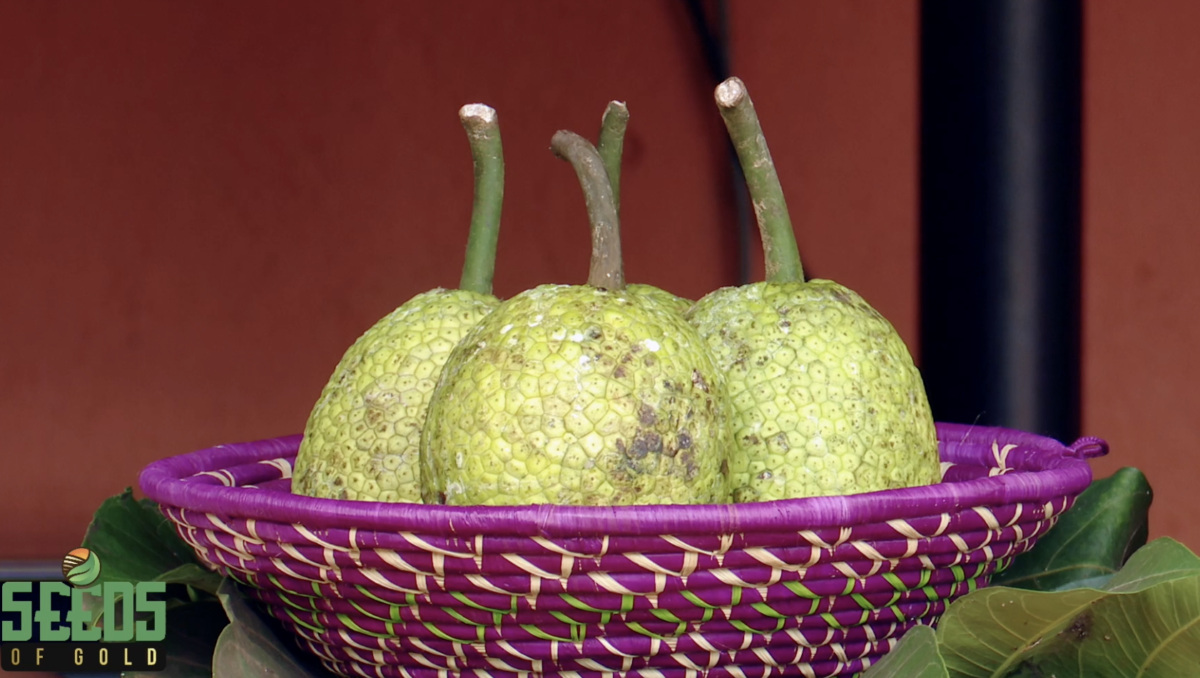
Long before quinoa became a supermarket staple and moringa got its wellness moment, breadfruit was quietly feeding entire Pacific Island communities with minimal fuss and maximum efficiency. Now, as food insecurity continues to squeeze rural households across East Africa, this large, starchy fruit is stepping into the spotlight, and farmers paying attention may be looking at a serious opportunity.
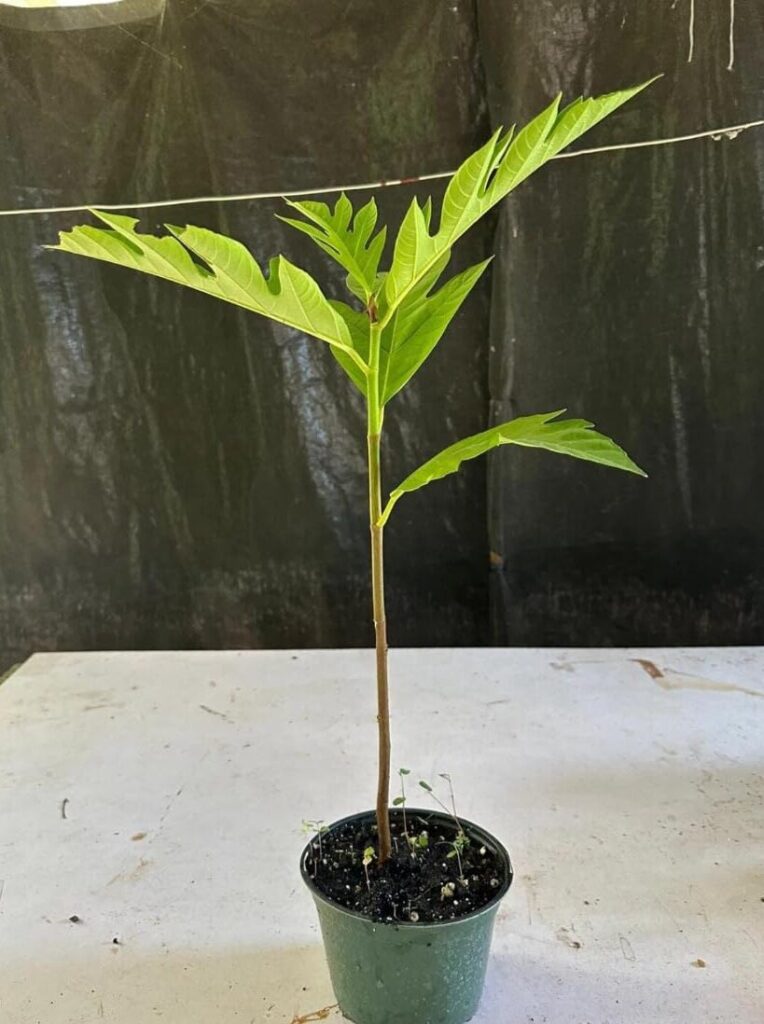
A recent feature on NTV Uganda’s Seeds of Gold visited Uwepo Farms to unpack the story of breadfruit, its origins, its cultivation, and the income possibilities it holds for smallholder farmers willing to give it a chance. The picture that emerges is of a crop that has been hiding in plain sight, underestimated and underused.
A Crop With Deep Pacific Roots
Breadfruit, known scientifically as Artocarpus altilis, traces its origins to the Pacific, a region where it has been a dietary cornerstone for generations. Polynesian voyagers carried it across islands long before European explorers ever set eyes on it. The British, famously, even launched the ill-fated HMS Bounty expedition in the late 18th century specifically to transport breadfruit plants from Tahiti to the Caribbean as cheap food for enslaved workers. That story did not end well for Captain Bligh, but breadfruit arrived in the tropics anyway and quietly took root.
The plant thrives in warm, humid climates with well-distributed rainfall, conditions that large stretches of Uganda and the broader East African region can offer. Yet despite this climatic compatibility, breadfruit has remained a curiosity rather than a commercial crop across much of the continent. That gap between potential and practice is exactly what conversations like the Seeds of Gold segment are trying to close.
What Makes Breadfruit Worth a Second Look
The fruit itself is dense with starch, making it a genuine carbohydrate source that can substitute for maize, cassava, or potato in everyday cooking. Boil it and it has a soft, dough-like texture. Roast it over an open fire and the skin crisps while the inside becomes creamy. Fry it in slices and you get something that sits comfortably alongside any protein. The versatility alone sets it apart from many traditional staples that tend to demand specific preparation methods.
But the real commercial excitement surrounds processing. Breadfruit can be dried and milled into flour, and that flour opens a door that raw fruit alone cannot. Breadfruit flour is gluten-free, relatively high in fibre, and carries a nutritional profile that makes it attractive to health-conscious consumers and food manufacturers alike. As demand for gluten-free alternatives grows across global markets, a locally produced, tropical flour with genuine nutritional credentials starts looking less like a niche product and more like an export-worthy commodity.
The Tree Does More Than Feed
One of breadfruit’s most underappreciated qualities is that the value does not stop at the fruit. The tree itself is an agroforestry asset. Its canopy provides shade, which matters enormously in mixed farming systems where protecting lower-growing crops from harsh midday sun can be the difference between a good yield and a scorched one. The leaves and organic matter it drops serve as natural mulch, returning nutrients to the soil and reducing the need for synthetic inputs.
This means a breadfruit tree is not simply occupying space on a farm. It is actively contributing to soil health, microclimate regulation, and long-term land productivity. For farmers already practising or considering intercropping, adding breadfruit trees to the system makes agronomic sense, not just economic sense.
Food Security and Farmer Income: A Dual Promise
The phrase “food security” gets thrown around so frequently it has almost lost its weight. But when you consider that breadfruit trees, once established, can produce fruit for decades with relatively low maintenance compared to annual crops, the food security argument becomes concrete rather than abstract. A farmer who plants breadfruit today is effectively investing in a food source that could sustain their household and generate surplus income for years, potentially outlasting their own farming career.
The income generation angle is equally real. Local markets for fresh breadfruit exist wherever the crop is known, and the processing pathway into flour, chips, or other value-added products creates additional revenue streams that raw produce alone cannot capture. For smallholder farmers who currently depend on a single cash crop, often at the mercy of volatile commodity prices, diversifying into breadfruit represents a hedge as much as an opportunity.
Challenges That Cannot Be Ignored
None of this means breadfruit is a silver bullet. Any crop that is relatively unfamiliar in a region faces the same set of obstacles: limited access to quality planting material, a shortage of agronomic expertise tailored to local conditions, and the perennial challenge of convincing consumers to cook with something they did not grow up eating. Market linkages matter too. A farmer with a bumper harvest of breadfruit needs buyers, processors, or the capacity to process the crop themselves. Without that chain in place, abundance can quickly become waste.
Building that ecosystem takes time, investment, and consistent knowledge-sharing efforts. Farm visits, demonstration plots, and media coverage that goes beyond surface-level fascination are all part of the process. Platforms that bring farmers face-to-face with real practitioners, the way Seeds of Gold does through its field reporting, play a role in shortening that learning curve for anyone willing to engage.
The Bigger Picture
Africa is increasingly being positioned as the agricultural frontier of the coming decades, a continent with the land, the climate diversity, and the growing rural workforce to feed not just itself but significant portions of the global population. That future, though, depends on expanding the range of crops in active production, reducing dependence on a handful of staples, and finding plants that can perform well in changing climate conditions.
Breadfruit checks several of those boxes. It is a perennial, which means it does not need to be replanted every season. It is productive in tropical heat. It has culinary flexibility that makes consumer adoption more feasible. And it carries a nutritional value that aligns with where both local and international food trends are heading.
The Pacific figured this out centuries ago. The Caribbean adopted it, however reluctantly, and it became a dietary staple. The question for East African farmers and food entrepreneurs right now is straightforward: what are you waiting for?