









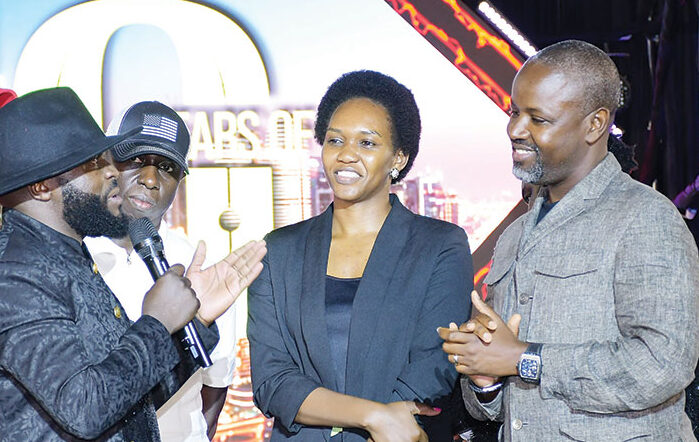
At a burial ceremony that brought Uganda’s creative community together in grief, two of the country’s most recognisable comedians chose not to stay silent. Madrat and Chiko used the occasion of the late playwright Alex Mukulu’s send-off to raise a question that has lingered uncomfortably over Uganda’s arts sector for years: why does the state wait until its creative giants are gone before it decides to honour them?
A Funeral That Became a Wake-Up Call
Alex Mukulu was laid to rest at his ancestral home, surrounded by fellow artists, mourners, and members of the press. He was a playwright whose work left a deep mark on Uganda’s theatrical identity, a storyteller who used the stage to speak truths that many others could not. But like so many creatives on the continent, the recognition he deserved during his lifetime never fully arrived in the form of tangible government support.
It was in this charged atmosphere that Madrat and Chiko stepped forward. Speaking to journalists at the burial, the comedy duo made their case plainly and without apology. The government, they argued, should be rewarding veteran creatives with financial tokens of appreciation and gratuity packages while those artists are still breathing, still conscious, and still able to use that support to live with dignity.
The frustration behind their words was palpable. There is something deeply uncomfortable about watching a country roll out official fanfare for an artist’s funeral when that same artist spent decades without the kind of structural support that would have made a real difference to their daily life. Madrat and Chiko were not merely grieving a colleague. They were naming a systemic failure.
What Ugandan Creatives Actually Need
The entertainment industry in Uganda is vibrant, layered, and culturally rich. Its comedians, playwrights, musicians, and visual artists have shaped national identity in ways that go far beyond entertainment. They have processed political tension through satire, preserved cultural memory through storytelling, and built communities through shared laughter and art.
Yet the infrastructure of recognition for these contributors remains paper-thin. There is no widely known gratuity framework specifically designed for veteran artists. There is no formal retirement structure tailored to creatives whose careers are often non-linear, project-based, and rarely salaried in the conventional sense. When the lights go out on a long career, many artists are left without the financial cushion that their counterparts in civil service or formal employment would take for granted.
This is the gap Madrat and Chiko are pointing at. Not a ceremonial plaque at a state funeral, but actual financial recognition, delivered while the recipient can still use it.
The Alex Mukulu Standard
Alex Mukulu represents exactly the kind of legacy the duo is speaking about. A playwright of considerable standing, his contributions to Ugandan theatre were substantial and long-lasting. Whether his works reached you in a school auditorium, a community hall, or a formal theatre setting, the impact was real. The question Madrat and Chiko are posing is straightforward: should someone with that kind of cultural footprint have had to wait for death before the state formally acknowledged their worth?
The answer, for most reasonable people, is no.
A Broader Conversation Africa Needs to Have
Uganda is not unique in this tension. Across the continent, the pattern repeats itself with disheartening consistency. Artists who define generations, who carry the cultural weight of entire communities, frequently age without institutional safety nets. The posthumous tributes are often generous. The lifetime support, far less so.
Countries with more developed creative economies have begun building frameworks that treat artists as professional contributors deserving of pension schemes, health coverage, and retirement support. South Africa has had intermittent discussions about this. Kenya’s creative sector has pushed for formal policy structures. But progress is slow, and implementation slower still.
Uganda’s government has the opportunity to take a different approach, to create a precedent rather than follow one. A structured gratuity programme for veteran creatives would not only be morally sound, it would send a clear signal about how the state values cultural production as a legitimate and serious field.
The Economic Case Is Also There
Beyond the moral argument, there is a practical one. Uganda’s entertainment and creative industries generate economic activity, attract tourism, and build soft power. Investing in the people who built those industries is not charity. It is sensible long-term stewardship of a national asset. When veteran creatives are financially stable, they mentor younger generations. They remain active contributors. They do not disappear from the cultural landscape out of necessity or neglect.
Madrat and Chiko understand this intuitively. They are not just advocates for their elders out of sentiment. They are, whether they frame it this way or not, making an economic and cultural policy argument wrapped in the language of human decency.
The Industry Is Watching
The comedy duo’s intervention at Alex Mukulu’s burial is already generating conversation across Uganda’s creative community. Artists who have spent years quietly absorbing the disparity between their cultural contributions and their material circumstances are finding voice in Madrat and Chiko’s words. It is one thing for an activist or a policy researcher to raise the issue in a formal setting. It lands differently when it comes from two working artists standing at a colleague’s grave.
The government now has a clear ask on the table. Not an abstract policy debate, but a specific, human request: see your creatives before they are gone, and support them in the time they have left. The legacy of Alex Mukulu gives that request its weight. The voice of Madrat and Chiko gives it its urgency.
So here is the question worth sitting with: if Uganda’s government can find the resources to organise a dignified state burial for a creative legend, what exactly is stopping it from channelling even a fraction of that effort into keeping those legends comfortable while they are still alive?