











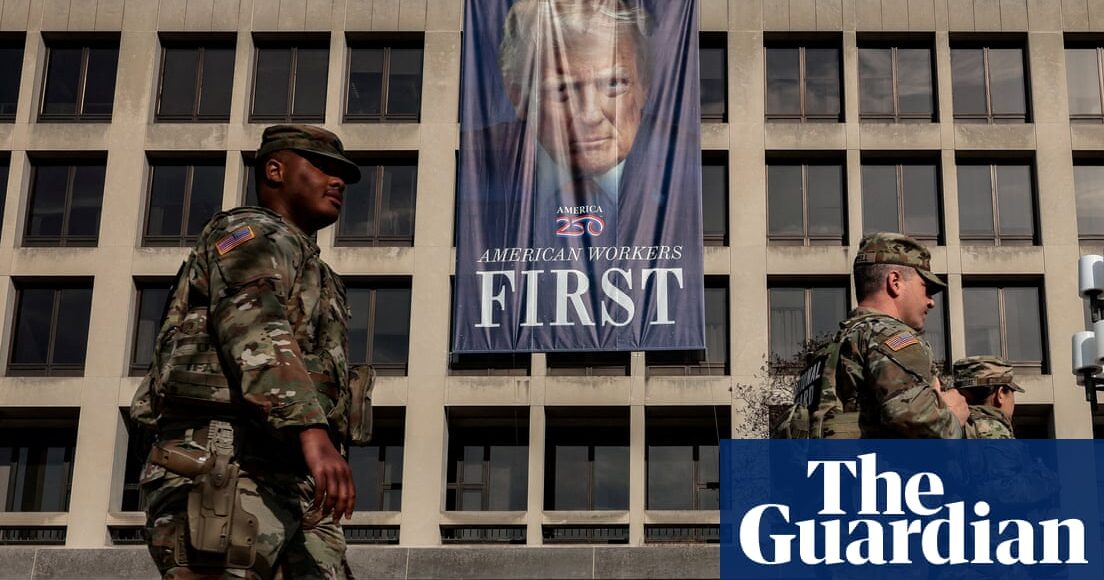
A Washington-based research organization is staring down a nine-figure legal threat after publishing a report that drew an uncomfortable conclusion: that the Trump administration’s high-profile National Guard deployment across three major American cities did not move the needle on crime. Not even a little.
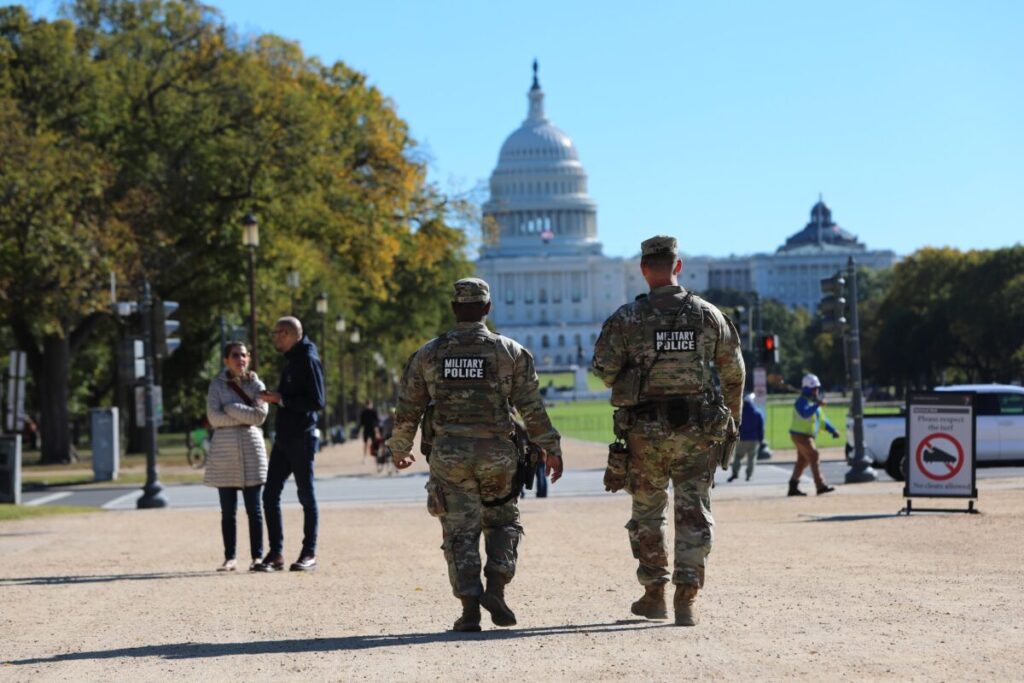
The Center for American Progress, a prominent liberal think tank, received a letter from Donald Trump’s lawyer threatening a $5 billion lawsuit unless the organization retracts the report in question. The message was clear: walk it back, or face the consequences.
What the Report Actually Said
The report, released on July 13, focused on the National Guard’s presence in Washington DC, Memphis, and Los Angeles. Researchers examined crime data from those cities and compared it against cities that did not receive any military intervention. Their conclusion, drawn from that statistical comparison, was that the rate of crime decline in the cities with National Guard boots on the ground was not meaningfully different from cities that had none.
In plain terms: the deployment cost an estimated $1.7 billion and, according to the report, produced no measurable public safety benefit. That is the kind of finding that tends to generate headlines. It apparently also generates letters from attorneys.
The full details of the legal threat, first reported by The Guardian, represent one of the more aggressive uses of litigation threats to challenge independent policy research in recent memory.
The Chilling Effect Problem
Legal threats against research institutions rarely get to a courtroom. That is not really the point. The goal is discomfort, hesitation, and the kind of internal second-guessing that can quietly reshape how an organization presents its work. A $5 billion number, regardless of how realistic it is as a legal claim, is designed to land with psychological weight.
Think tanks operate on credibility. Their output is their product. A retraction, even a forced or coerced one, does lasting damage to that credibility in a way that no settlement or legal victory can fully repair. The threat, in other words, is the punishment.
For the Center for American Progress, backing down would mean acknowledging that its methodology or conclusions were flawed, something the organization has not done. Publishing a report and then pulling it under legal pressure would raise far more questions about its independence than the report itself ever could.
The Broader Policy Debate
Beyond the legal drama, there is a substantive conversation worth having about what the National Guard is actually meant to accomplish in an urban crime context. The Guard is a military asset. Its training, culture, and operational design are built for different kinds of missions than patrolling city neighborhoods or deterring street crime.
Criminologists have long pointed out that military-style interventions in cities can create short-term visibility without long-term safety gains. The presence of uniformed soldiers or guardsmen can temporarily shift criminal behavior to other areas rather than suppress it, a phenomenon sometimes called displacement. If crime data across an entire metropolitan area is used as the measuring stick, the results tend to look exactly like what the Center for American Progress found: statistically underwhelming.
Supporters of the deployments argue that the visible presence of the Guard sends a message, reassures communities, and provides backup capacity for overstretched local police departments. These are not entirely unreasonable claims. But they are qualitative arguments, and they sit awkwardly next to a dataset that shows no discernible difference in outcomes.
When Policy Meets Litigation
The use of lawsuit threats to pressure critics is not new in American politics, but its application against a research institution over a policy analysis report is unusual. Most defamation or legal exposure around published research involves specific factual errors, not methodological disagreements or interpretive conclusions drawn from publicly available crime data.
A $5 billion figure also invites scrutiny on its own terms. It would represent one of the largest defamation claims ever filed in the United States. Legal experts would likely argue that demonstrating actual damages of that scale from a single think tank report would be an extraordinary challenge in court.
Whether this threat ever becomes a filed lawsuit remains to be seen. But the fact that it was sent at all says something about how the administration views independent policy critique, and about where the line between political disagreement and legal intimidation is being drawn.
The Center for American Progress has not retracted the report. The clock, apparently, is ticking.
Should research institutions have legal protections against this kind of pressure, or does the threat of litigation serve as a legitimate check on organizations that publish findings with major political implications? The answer to that question matters far beyond this single report.