









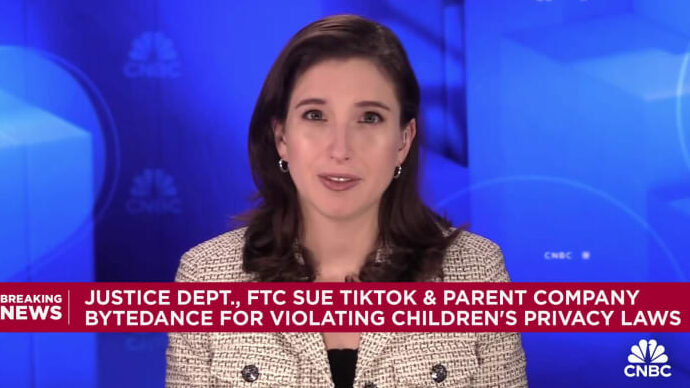
TikTok and its Chinese parent company ByteDance have agreed to pay $400 million to settle a major US lawsuit centred on the alleged collection of personal data belonging to children under the age of 13. The agreement, one of the largest of its kind in the history of American child privacy law, puts a staggering dollar figure on what regulators and attorneys general have long warned about: that the world’s most addictive short-video platform was not doing nearly enough to protect its youngest and most vulnerable users.
What the Lawsuit Actually Alleged
The legal action, which originated from a 2024 lawsuit, accused TikTok and ByteDance of harvesting “vast amounts of data” from millions of minors who had not yet reached their thirteenth birthday. Under US law, specifically the Children’s Online Privacy Protection Act, platforms are prohibited from collecting personal information from children under 13 without verifiable parental consent. The lawsuit alleged TikTok was doing exactly that, and doing it at scale.
You can read more about the settlement as reported by BBC News, which has been tracking the story closely. The sheer breadth of the alleged data collection, touching millions of underage accounts, is what pushed this case into historic territory.
Why $400 Million Matters
To put that number in perspective, most tech companies that have faced child privacy penalties in the past walked away paying a fraction of that sum. The scale of this payout signals a shift in how seriously US authorities are treating violations involving minors online. It is no longer a slap on the wrist. It is a full-force financial consequence designed to make other platforms sit up and rethink their data practices.
ByteDance, which remains privately held and is headquartered in Beijing, has faced years of scrutiny from US lawmakers over data security and the potential exposure of American users’ information. This settlement adds a new and particularly sensitive dimension to those concerns: it’s not just about national security or adult data. It’s about children.
The Children Who Never Knew They Were Targets
Most kids who downloaded TikTok at age ten or eleven weren’t thinking about data privacy policies. They were there for the dances, the trends, the sheer chaotic joy of the app’s endless scroll. What the lawsuit alleged, however, is that while they were watching videos, the platform was watching them, cataloguing behavioral patterns, preferences, and personal details in ways that their parents never consented to and likely never knew were happening.
This is the part that should alarm every parent. The data collected from children isn’t abstract. It can include location information, usage habits, content preferences, and device identifiers, all building a detailed profile of a minor that can be used for targeted advertising or, in worse scenarios, passed on in ways users would find deeply troubling.
A Pattern Across Big Tech
TikTok is hardly alone in facing this kind of scrutiny. Meta, Google, and other major platforms have all been called before regulators over the years to account for how they handle data from younger users. But the $400 million figure attached to this particular settlement suggests that the era of tech companies treating child privacy violations as a manageable cost of doing business may genuinely be ending.
Governments around the world, from the UK’s age-appropriate design codes to the European Union’s digital services regulations, have been tightening the rules around children online. The US, historically slower to move on tech regulation, appears to be catching up fast. When settlements reach nine figures, the message becomes impossible to ignore even in Silicon Valley, or Beijing.
What Happens to the Money?
Settlement funds in cases like this typically flow toward state-run child welfare or digital literacy programs, legal fees, and in some cases direct relief for affected families. The specifics of how this particular $400 million will be distributed have not yet been fully disclosed publicly, but the broader principle is clear: the money is meant to carry meaning beyond the balance sheet, to serve as both punishment and deterrent.
The Bigger Picture for Parents and Regulators
If there’s one takeaway from this settlement that goes beyond the headlines, it’s this: the platforms children use most enthusiastically are also the platforms that know the most about them. Every tap, every watch, every skip, every replay feeds an algorithm that is, at its core, a data machine. When that machine is pointed at children, the ethical and legal stakes become immediately higher.
For regulators, this settlement is a milestone but not a finish line. Enforcement is only meaningful if it’s consistent, and one $400 million payout, however historic, won’t automatically reform an industry built around maximising user data. The pressure needs to stay constant. The scrutiny needs to remain sharp.
For parents, the message is worth hearing clearly: knowing what apps your children use is no longer enough. Understanding what those apps collect, and demanding platforms be transparent about it, is now part of modern parenting in a way previous generations never had to consider.
As TikTok continues to dominate global attention spans and the debate around its future in the US market rolls on, one question lingers well after this settlement is signed and sealed: if a $400 million penalty is the consequence of getting caught, what data practices are still happening right now that nobody has caught yet?