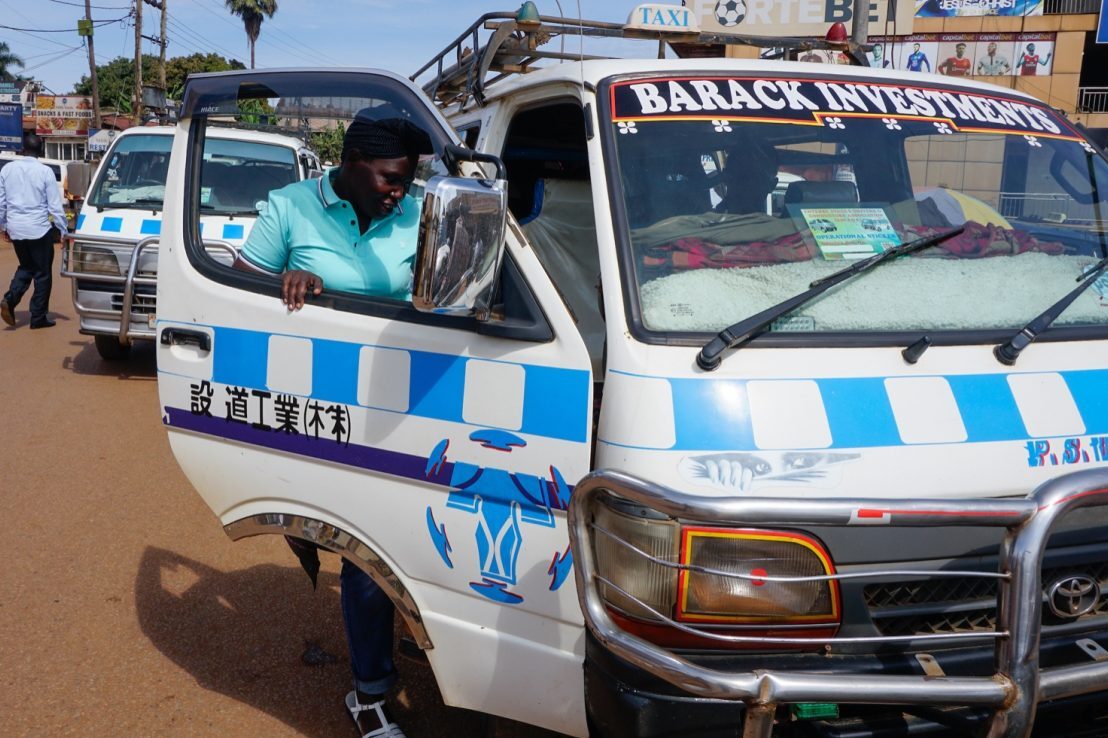
Uganda’s traffic police have officially begun what authorities are calling a 100-day operation to remove structurally unsafe commuter taxis, locally known as ganyegenya, from roads across Greater Kampala. The crackdown, announced this week, targets 14-seater minibuses operating throughout Kampala, Wakiso and Mukono, and it carries real teeth: vehicles that fail safety inspections will be impounded on the spot, and operators could lose their licences entirely.
What Is a Ganyegenya, and Why Does It Matter?
The word ganyegenya is Luganda slang that roughly translates to something that shakes or rattles, which tells you everything you need to know about the condition of the vehicles it describes. These ageing minibuses are the backbone of public transport for hundreds of thousands of people who commute daily into Kampala from surrounding districts. They ferry students to school, market traders to work, and office workers through some of the city’s busiest corridors. They are, for many people, the only realistic transport option available.
But affordability and availability have long come at a cost. Many of these taxis are elderly vehicles that have been patched together rather than properly maintained. Some, according to the government, were previously abandoned in garages, purchased at low prices, fitted with cheap replacement parts, and put back into passenger service without any meaningful mechanical overhaul. The result is a fleet of vehicles carrying human beings at highway speeds with brakes, tyres, steering systems and chassis that may be nowhere near roadworthy.
Zero Tolerance: The Government’s Position
Works and Transport Minister Fred Byamukama was direct about what this operation is and what it is not. Speaking at the launch, he made clear that the crackdown is not an attack on the taxi industry or on operators who run their vehicles responsibly. The target is specifically vehicles that pose what he described as an unacceptable danger to the public.
“No commercial interest should take precedence over human life,” Byamukama said, a statement that will resonate with anyone who has ever squeezed into a rattling taxi and quietly wondered whether the brakes would hold on a steep Kampala hill.
The minister also revealed a statistic that speaks for itself: over the past 60 days, the government offered taxi operators the chance to voluntarily bring their vehicles in for inspection. Not a single one passed. According to reports on the operation, Byamukama confirmed that among the voluntarily submitted vehicles, defective brakes and other serious mechanical faults were consistently found. Zero passed the test. That is not a small or isolated problem. That is a systemic failure.
What the Crackdown Looks Like on the Ground
Traffic police will set up inspection checkpoints on major roads, key transport corridors and at taxi parks across the Greater Kampala Metropolitan Area. Officers will be checking for a specific list of defects: worn-out tyres, faulty brakes, compromised steering systems, structurally weakened chassis and non-functioning lights. Any vehicle that does not clear these checks gets impounded. Any operator who repeatedly runs unsafe vehicles risks losing their operating licence altogether.
The practical impact on daily commuters will be significant, at least in the short term. With a large number of taxis potentially being pulled from service simultaneously, morning and evening rush hours could become considerably more difficult to navigate. Taxi parks that are already chaotic at peak hours may see longer queues and fewer vehicles competing for passengers.
Wakiso and Mukono Included in the Sweep
The operation does not stop at Kampala’s city limits. Wakiso and Mukono districts, both of which feed enormous numbers of daily commuters into the capital, fall within the scope of the 100-day campaign. This is significant because some of the busiest and most congested transport routes in the country run through these areas, and the taxis plying those routes operate under the same conditions as those in the city centre.
A Long Time Coming
This crackdown did not emerge from nowhere. The government had spent weeks issuing warnings to taxi operators about the condition of their fleets before deciding that warnings alone were not producing results. The voluntary inspection programme that yielded zero passing vehicles across 60 days was itself a kind of extended grace period. When that produced no improvement, the Ministry of Works and Transport moved to compulsory enforcement.
Road safety in Uganda has been a persistent concern. Kampala’s roads are among the most congested on the continent, and the mix of heavy trucks, boda bodas, private cars and packed taxis creates conditions where a mechanical failure on any one vehicle can have serious consequences for everyone nearby. A taxi with defective brakes on a slope in Wandegeya or a worn-out tyre blowing out on the Jinja Road is not just a problem for the passengers inside it.
The Commuter Calculus
For ordinary Kampala residents, this operation presents a short-term pain versus long-term gain equation. The immediate disruption to transport routines is real, and for people whose livelihoods depend on getting to a market stall or a construction site on time, that disruption has financial consequences. But the alternative, which is continuing to pack commuters into vehicles that cannot pass the most basic safety standards, carries consequences that are far more permanent.
There is also a broader question about what replaces the taxis that get removed from service. If a significant portion of the current fleet is taken off the road within the 100-day window, the gap in transport capacity will need to be filled somehow. Whether that means accelerating the introduction of better-maintained vehicles, expanding other transport options, or simply creating longer wait times at taxi stages remains to be seen.
The Ministry of Works and Transport has drawn a clear line. The question now is whether the taxi industry responds by upgrading its fleet, or whether the next 100 days simply become a prolonged standoff between operators and traffic police at checkpoints across the city. Kampala’s commuters, as usual, will be watching from the back seat. What do you think: should the government have moved even faster on this, or is the 100-day timeline the right balance between enforcement and allowing the industry to adjust?