





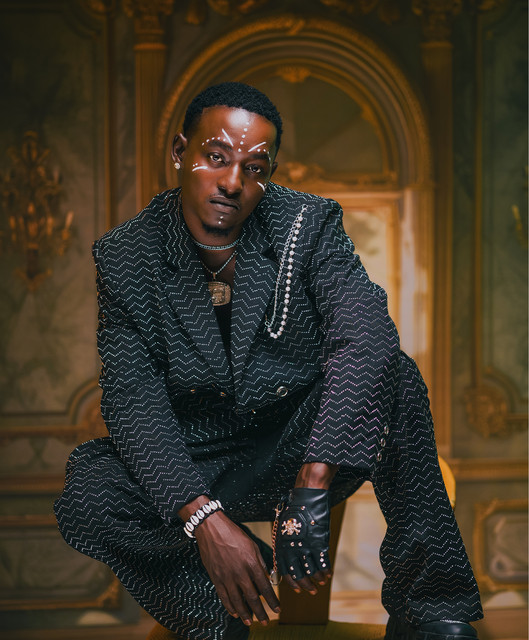
There is a particular kind of frustration that creative people know well: being celebrated for one thing while an entire other dimension of your talent goes largely unacknowledged. For Ugandan musician Dokta Brain, that frustration has a name, and it is the word “songwriter.” Yes, he is brilliant at it. But he is also a performer, and he is about to make that point in the most direct way he knows how.
The Concert Nobody Else Would Fund
Dokta Brain is preparing for his maiden concert, set to take place next month, and the build-up has been anything but conventional. There is no big corporate sponsor attached to the event, no major promoter riding shotgun. As the artist confirmed in a candid interview, the money coming in to make this show happen is his own, drawn from his team and bolstered by early bird tickets purchased by insiders who believe in what he is building.
“We have organized it with my team,” he said, speaking to Galaxy TV. “It’s not like we have a sponsor for it. It’s me, my team and insiders who are buying the early bird tickets, funding for others who are still analyzing.”
That last phrase is telling. “Others who are still analyzing” is a polite way of describing an industry that has not yet decided what to make of him as a live act. Promoters, by nature, follow the money and the crowd. If your name has not yet been attached to a sold-out venue, many of them will hesitate. Dokta Brain is not waiting for their confidence. He is manufacturing it himself.
When Your Biggest Blind Spot Is Also Your Biggest Credential
Being known primarily as a songwriter in Uganda’s music industry is not exactly a small thing. Songwriters shape the sound of an entire genre. The best ones write the lines that audiences mouth in the dark, words people borrow when their own fail them. Dokta Brain has earned that reputation, and it is real.
But reputation has a way of becoming a ceiling. When promoters look at an artist and see only one dimension, booking decisions get made on incomplete information. The performer gets left out of conversations where only the songwriter is invited. That gap between how an industry sees you and who you actually are is precisely the space Dokta Brain is using this concert to close.
He has been transparent about the fact that challenging this perception is a central motivation for the show. The concert is not just a performance. It is an argument, and the stage is the evidence.
A Small Venue, a Big Statement
The venue chosen for the event is relatively intimate in scale, which might prompt some observers to underestimate what is happening here. But smaller venues have a particular power that large arenas often lack: they are intimate enough for an audience to genuinely feel an artist. Every facial expression lands. Every lyric carries weight. If Dokta Brain brings the energy that his songwriting suggests he is capable of, a compact space will amplify it rather than swallow it.
There is also something strategically sound about starting where you can control the variables. A self-funded, fan-driven concert at a manageable venue is far less risky than overpromising a stadium experience nobody has backed. This is not a man running from ambition. This is a man building toward it methodically.
Fan Demand as a Compass
One of the more quietly significant details in Dokta Brain’s account is that fan demand played a direct role in the decision to hold the concert at all. Artists sometimes stage shows because their label tells them to, or because a promoter cuts a deal. This one is happening because people who listen to Dokta Brain’s music asked for it.
That kind of organic demand is worth more than any press release. It suggests a base of listeners who do not just stream his work passively but feel connected enough to want to be in the same room with him. For an artist trying to prove his value as a live performer to a skeptical industry, showing up with an audience that came looking for him is a far more persuasive case than any pitch deck.
What Uganda’s Music Industry Can Learn From This
The broader story here is not just about one artist and one concert. It is about the way creative industries sometimes fail to see people fully, sorting them into neat categories that are easier to market but rarely capture the whole truth. Dokta Brain’s situation is hardly unique to Uganda. Songwriters the world over have had to fight to be taken seriously as performers, and performers have had to fight to be taken seriously as writers.
What is refreshing about his approach is the refusal to wait for permission. He is not lobbying promoters or writing open letters about being underestimated. He is organizing, funding, and staging a concert that will either prove his point or teach him something valuable. Either outcome is useful. Both outcomes are brave.
Uganda’s music scene is full of artists with multidimensional talent who have been quietly shelved into single-use categories by an industry that moves fast and thinks in shortcuts. If Dokta Brain’s maiden concert lands the way his team is preparing for it to, it might just remind a few promoters that the artist they thought they knew is only half the story.
A Bet Worth Watching
Self-funding a concert without a sponsor is a financial and reputational risk. It means that if the numbers disappoint, there is no corporate buffer to absorb the optics. It also means that if the night goes brilliantly, every bit of that success belongs to the people who believed early. Dokta Brain and his team are the ones holding the chips right now, and they have chosen to push them all in.
The months ahead will tell us whether this particular bet pays off. But the courage it takes to stage that kind of show, on your own terms, with your own resources, while the industry watches from a distance and “analyzes,” is already a story worth following.
So here is the question worth sitting with: how many other artists in Uganda and across the continent are sitting on full, complex talent, waiting for a promoter to grant them permission to show it? And more importantly, what would happen if they stopped waiting?