



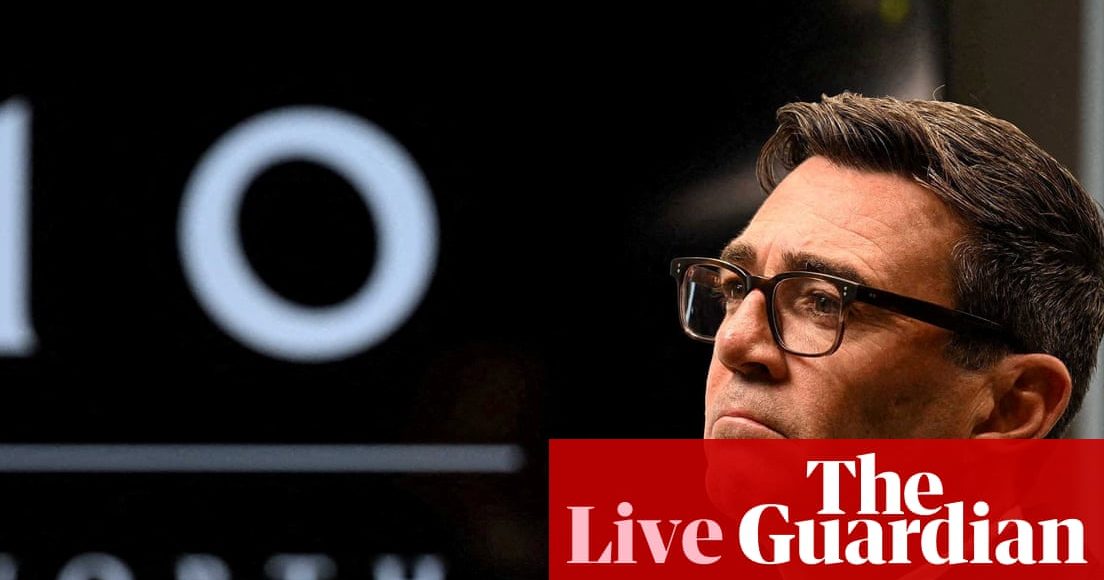
On August 21, 2026, a growth meeting chaired by Andy Burnham at No 10 North brought together a formidable lineup of Labour heavyweights, including Chancellor John Healey, Lou Haigh, Angela Rayner, and Sally Jameson, with regional mayors also expected to take part. The gathering is designed to push the government’s economic growth agenda beyond the M25 bubble and into the regions. But while that conversation gets underway up north, a very different kind of meeting is playing out on paper in London, and it is considerably less collegial.
The Letter That Landed Like a Grenade
Three Conservative council leaders in the capital have written directly to Andy Burnham, and they are not mincing words. The leaders of Westminster, Wandsworth, and Kensington and Chelsea have accused the government of what they call “devolving blame” rather than devolving power. Their argument is blunt: central government funding has been cut to a degree that forces local councils to make an impossible choice between hiking council tax significantly or gutting the services their residents depend on.
It is the kind of political accusation that stings precisely because it carries a grain of uncomfortable truth. Devolution, when done well, gives regions and councils genuine autonomy over decisions that affect their communities. When done badly, or strategically, it can become a mechanism for passing the buck on unpopular financial realities. The three council leaders are firmly arguing the latter is happening here.
Why These Three Boroughs Matter
Westminster, Wandsworth, and Kensington and Chelsea are not struggling post-industrial towns. They are among the wealthiest local authority areas in the entire country, home to some of the most expensive real estate on the planet. When councils of this profile start warning about financial pressure serious enough to force service cuts or steep tax rises, it sends a signal worth paying attention to. If the squeeze is being felt here, the implications for less affluent boroughs elsewhere in England are worth thinking about seriously.
Council tax has long been one of the most politically charged levers in local government. Nobody enjoys paying it, and nobody enjoys raising it. When a council does raise it, the instinct of local politicians is almost always to point at whatever external force they can credibly blame. The Conservatives in these three boroughs are pointing squarely at Labour’s approach to central funding allocation.
The No 10 North Meeting and What It Signals
The growth meeting itself, as reported in detail by The Guardian’s politics live blog, brings together a roster of senior Labour figures alongside regional mayors in a format that underlines this government’s stated commitment to spreading economic decision-making outside London. Burnham, long a champion of Greater Manchester and the broader northern agenda, is a natural fit to chair such a gathering.
The symbolism is not lost on anyone watching closely. Hosting a growth summit at No 10 North rather than in Westminster is a deliberate statement about where this government wants the story of the British economy to be written. Whether the substance matches the symbolism is the question that always follows these kinds of set-piece meetings.
Regional Mayors as Power Brokers
The inclusion of regional mayors in the meeting is more than window dressing. These are elected figures with real mandates and, increasingly, real budgets and responsibilities. Their presence at a table chaired by Burnham signals that the government sees them as genuine partners in delivery rather than ceremonial figures to be photographed and sent home. That is an evolution in British political culture that deserves credit, even from sceptics.
But here is the tension: expanding the power and profile of regional mayors while simultaneously cutting the central funding that local councils rely on creates a two-tier story. Some areas gain influence and resources through the mayoral model. Others, particularly those without a mayor or operating under a different governance structure, find themselves caught between reduced central support and a council tax base that can only stretch so far before voters revolt.
Devolution as Shield or Sword?
The accusation of “devolving blame” is politically sharp because it reframes the entire devolution conversation. Supporters of devolution argue it gives communities control over their own futures. Critics, particularly when they are on the receiving end of reduced funding, argue it is a convenient way for central government to distance itself from the consequences of its own fiscal decisions.
The reality, as it usually does in politics, sits somewhere more complicated than either side wants to admit. Funding formulas for local government in England are genuinely complex, frequently contested, and notoriously difficult to reform. Any change creates winners and losers. The councils writing to Burnham clearly believe they are among the losers in the current configuration.
What makes this particular moment interesting is the timing. A growth meeting designed to project confidence and momentum is happening on the same day that three London councils are publicly challenging the narrative. Growth and austerity by proxy do not sit easily in the same political frame, and the optics of that collision are not ideal for a government trying to project economic optimism.
What Comes Next
The letters from Westminster, Wandsworth, and Kensington and Chelsea are unlikely to change government policy overnight. But they add to a growing body of pressure from local government across the political spectrum. Labour-run councils have expressed similar frustrations in less confrontational terms. When even the wealthiest Tory strongholds in London are warning of financial strain, the government cannot easily dismiss the concern as opposition politics alone.
For Burnham and his colleagues in the growth meeting, the challenge is to ensure that the agenda being discussed translates into tangible outcomes for communities across England, not just those lucky enough to sit within the catchment area of a well-funded mayoral authority. The rhetoric of levelling up, or whatever this government chooses to call its equivalent, has to eventually meet the reality of local government finance.
So the question worth sitting with today is this: can a government genuinely commit to regional growth and economic devolution while simultaneously presiding over a funding squeeze that forces councils to raise taxes or cut services? And if the answer is no, which of those commitments has to give way first?