



OpenAI announced on August 18, 2026, a suite of new safety features specifically designed for teenage users of ChatGPT, and the headline change is one that runs counter to everything the broader AI industry has been racing toward: making the chatbot sound and feel less like a person.
Pulling Back the Human Curtain
The centerpiece of the update is a new option that lets teen account holders switch off the human-sounding voice response mode. For an industry that has poured enormous resources into making AI voices warmer, more expressive, and frankly harder to distinguish from a real human being, this is a striking about-face. The logic is straightforward, even if the execution is unprecedented. Young people, whose emotional development is still very much in progress, may be more susceptible to forming attachments to AI systems that present themselves as living, feeling entities.
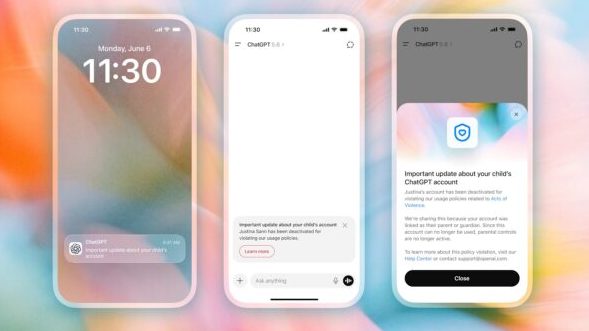
OpenAI is also building in regular nudges that remind teenagers to step away from the screen. These prompts will explicitly tell users that ChatGPT is an AI, and that whatever the task at hand might be, it can wait. It is a small design choice with potentially significant psychological weight.
As reported by the BBC, OpenAI has been clear that these changes are not a reaction to any specific incident involving a child becoming convinced that ChatGPT is sentient. Still, the timing is hard to ignore. Concerns about people anthropomorphising AI tools have been building steadily across the tech world and beyond.
The Sentience Anxiety Is Real
The worry that people might genuinely believe AI systems are conscious is not fringe speculation. Mustafa Suleiman, the head of AI at Microsoft, said last year that “seemingly conscious” AI products kept him awake at night, such was his concern about their social impact. When one of the most senior figures in the global AI industry admits that the technology his own company builds disturbs him at a fundamental level, that is worth paying attention to.
Children and adolescents are particularly vulnerable here. Adult users often approach AI with a degree of healthy skepticism, aware that the friendly tone and helpful responses are the product of pattern recognition, not genuine understanding or emotion. Teenagers, especially younger ones, do not always have that cognitive armour readily available. A chatbot that laughs at your jokes, remembers your preferences, and checks in on how you are feeling can blur lines that adults take for granted.
The Teen Account Model
Beyond the voice and reminder features, OpenAI is structuring these protections within a dedicated teen account framework. The company has drawn visible inspiration from the approach taken by major social media platforms, which have spent years, often under regulatory pressure, developing age-specific experiences with tighter defaults and additional guardrails.
Teen accounts will become the default setting for anyone who identifies as a teenager during sign-up, as well as for users that OpenAI itself flags as likely being under 18. The company did not, however, spell out the mechanics of that identification process, which is likely to attract scrutiny. Age verification has been a persistent headache for social platforms, and vague promises to identify minors without explaining the methodology rarely satisfy critics for long.
Under-13s remain entirely excluded from the product. That boundary stays firm.
What OpenAI Actually Said
In the blog post announcing what it calls ChatGPT for Teens, OpenAI framed the initiative around the idea that teenage engagement with AI should come with protections that reflect where young people are developmentally, reinforce their real-world relationships rather than replacing them, and support healthy usage habits over time. That is the kind of language that sounds obvious once someone says it, but has rarely been operationalised by an AI company at this scale before.
The framing matters. OpenAI is not positioning this as damage control. It is positioning it as responsible design, baked in from the start for a demographic that deserves different consideration. Whether the company can actually follow through, and whether regulators and parents will find the measures sufficient, is another question entirely.
A Broader Reckoning for the AI Industry
OpenAI’s move arrives at a moment when governments across Europe, the United States, and parts of Asia are actively writing and revising rules around AI and minors. The EU’s AI Act, the UK’s Online Safety Act, and various state-level bills in the US have all trained attention on how powerful technology platforms treat young users. Voluntary safety measures by companies tend to be viewed either as genuine goodwill or as a pre-emptive bid to stay ahead of mandatory regulation. Usually, it is some of both.
What is undeniable is that the question of what AI should feel like, and who it should feel that way for, is no longer theoretical. OpenAI has made a concrete, product-level decision that for teenagers, less human is more responsible. That is a position that will shape how competitors think about their own teen-facing features, and it may well set the tone for industry norms that follow.
The real test will come not from the policy documents or the press announcements, but from how these features hold up in the hands of actual teenagers, many of whom are considerably more tech-literate than the adults designing protections for them. Does making a chatbot sound slightly less human actually reduce emotional dependency? Does a pop-up reminder to take a break change behaviour, or just get dismissed with a tap? The answers will take time, and probably some uncomfortable data, to emerge.
So here is the question worth sitting with: if one of the world’s most powerful AI companies believes it needs to remind teenagers that its own product is not alive, what does that tell us about how convincingly human these tools have already become, and how ready any of us are for what comes next?