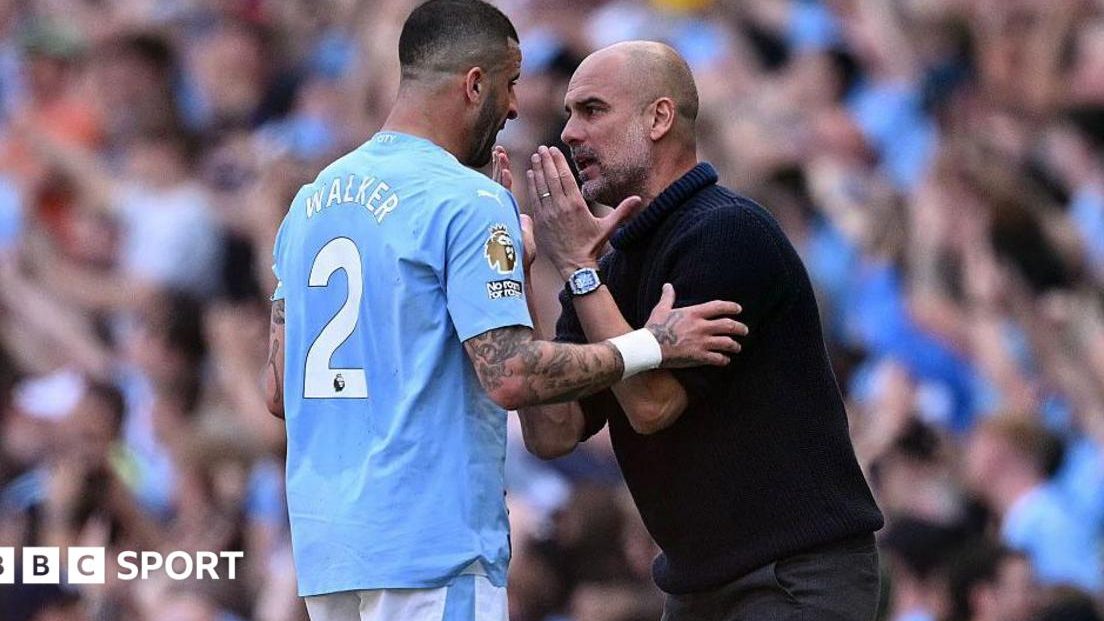
Football documentaries have a habit of delivering carefully curated highlights, boardroom handshakes, and locker room laughs that feel scripted. What Amazon Prime’s new series on Pep Guardiola’s final two seasons at Manchester City serves up is something far more rare: a front-row seat to real tension, genuine heartbreak, and the kind of managerial fury that typically stays buried behind training ground walls.
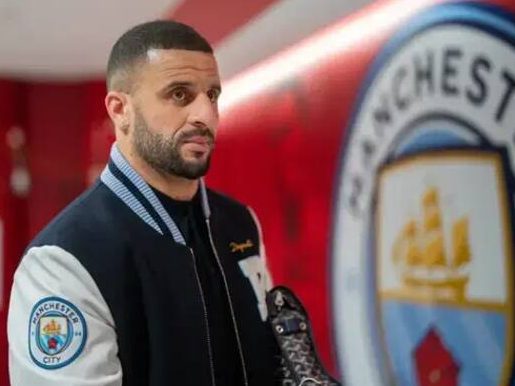
The series, which follows the Spanish coach through his last chapter at the Etihad, has already generated significant conversation. But one sequence in particular has stopped the football world cold: the moment Guardiola stands in front of his squad and, with visible emotion, addresses the departure of club captain Kyle Walker.
“You Cannot Behave as a Captain the Way He Has Done It”
Walker left Manchester City on loan for AC Milan in January 2025, a move that came after the defender reportedly approached Guardiola asking for a fresh start elsewhere. On the surface, it read like a professional parting of ways. Behind the scenes, according to footage captured in the documentary, it was anything but clean.
Days after Walker’s departure, with a home match against Chelsea approaching, Guardiola gathered his players and delivered a speech laced with disappointment. “So sad, what happened with Kyle,” the manager said, his words carrying the weight of someone wrestling with both professional frustration and personal hurt.
But what followed sharpened the edge considerably. Guardiola told his squad that while Walker could have simply come to him and said he was tired, the manner in which the situation unfolded was unacceptable for someone wearing the captain’s armband. “You cannot behave as a captain the way he has done it,” he said. “You cannot, in the toughest moments in our lives.”
He then turned the question back on the group itself, asking them what they had done with their captain during that difficult period. It was the kind of rhetorical challenge that lands harder than any tactical instruction.
The Anfield Argument That Set the Tone
The documentary does not spell out precisely what behaviour Guardiola was referencing in that team address. But an earlier scene provides crucial context. Following a loss at Anfield in December 2024, tensions between manager and captain boiled over in the dressing room.
Walker had been at fault during the match, losing possession to Luis Diaz. Diaz, the former Liverpool winger, subsequently won a penalty from that sequence, a moment that proved costly. Guardiola addressed it directly afterwards, telling his players that losing the ball in that position inevitably leads to a goal at that level.
Walker did not take it quietly. His response was sharp and frustrated: “Every meeting, it’s my name.” It was the response of a player who felt singled out repeatedly, even if Guardiola’s point carried tactical legitimacy. Two proud, strong-willed individuals, both under enormous pressure during what was clearly a difficult stretch for the club, colliding in the raw aftermath of a painful defeat.
The Pressure Cooker That Was Guardiola’s Final Years
What this documentary appears to capture so vividly is the reality that elite football management at the highest level is not a study in composure. It is a daily negotiation between egos, expectations, injuries, and the relentless demand for results. Guardiola, who built one of the most dominant club sides English football has ever seen during his tenure at City, was clearly navigating a squad that was ageing in key areas while simultaneously trying to compete at the summit of the Premier League and European football.
Walker, as captain, was both a symbol of that era and a casualty of its twilight. A player who had been central to so many of City’s successes, his eventual desire to move on was perhaps inevitable. But timing, as Guardiola’s emotional address suggests, is everything. Asking to leave when the club was going through what the manager himself described as “the toughest moments” cut deep.
What the Camera Cannot Lie About
Documentary series of this nature are commissioned with full awareness that drama sells. But the most striking thing about these particular scenes is how unselfconscious they feel. Guardiola is not performing for the lens when he speaks to his players. He is genuinely gutted. Walker is not playing up to the camera when he fires back in the Anfield dressing room. He is genuinely exhausted by the dynamic.
That authenticity is what elevates this kind of access journalism above the standard behind-the-scenes content that clubs usually approve. When a manager of Guardiola’s stature lets the cameras see him vulnerable, questioning his own players, and visibly processing the loss of a captain, it tells you more about elite football’s human cost than any post-match press conference ever could.
A Parting That Echoes Beyond Manchester
Walker’s move to AC Milan was always framed publicly as a career opportunity, a chance for a veteran defender to experience Italian football before the curtain came down on his playing days at the very top. There was no public bitterness, no war of words in the tabloids. Just the quiet bureaucracy of a loan deal and a statement wishing him well.
What the documentary strips away is that diplomatic veneer. Beneath it was a manager who felt let down by a player he had trusted with the armband, and a player who had perhaps simply run out of road at a club where he had given everything. Neither reading makes either man a villain. It makes both of them human.
Guardiola has since left Manchester City, his final seasons now part of the club’s history. Walker, after his time in Milan, has his own next chapter to write. But this documentary ensures that the complicated final act of their professional relationship will not be quietly forgotten. Football rarely allows for tidy endings, and this one is no exception.
So here is the question worth sitting with: when a captain asks to leave during a club’s hardest stretch, is it a betrayal of leadership, or simply an honest act of self-preservation? And who, ultimately, gets to decide which one it was?