









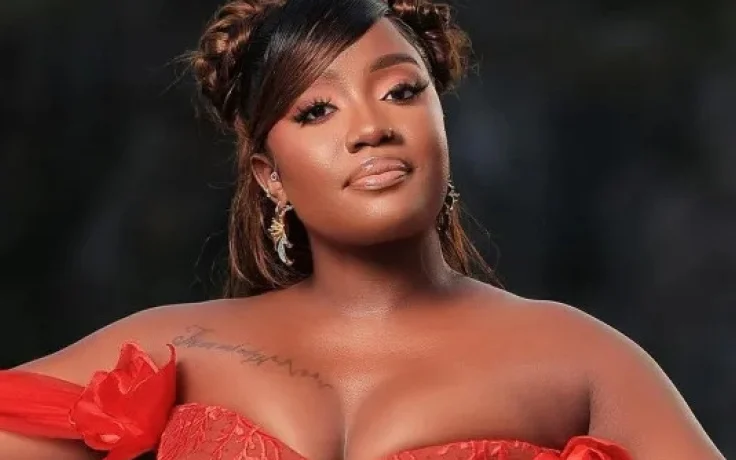
She sings about love with conviction, and it turns out she thinks about it just as seriously off stage. Ugandan singer Lydia Jazmine made headlines this week after speaking openly about how she navigates romance while living squarely in the public eye, drawing a clear and deliberate line between who she would date and who she would actually marry.

The conversation is not just celebrity small talk. It cuts right to the heart of something many artists quietly wrestle with: whether love and lasting partnership can survive when both people are chasing spotlights for a living.
Two Different Rules for Two Different Seasons
Jazmine, best known for the widely loved track “You and Me,” told interviewers that she is genuinely open to dating within the entertainment industry. Her reasoning is grounded and practical. When both people in a relationship understand what it means to keep odd hours, cancel plans for studio sessions, and smile for cameras when you’d rather not, there is a shared language that can make the early stages of romance much smoother.
“Yes, I would because we’re doing the same job,” she said, as reported by Mbu Uganda. It is a sentiment that many industry insiders would quietly agree with. Shared context builds understanding, and in the early chapters of a relationship, understanding is everything.
But marriage? That is a completely different calculation for Jazmine. When the question shifted from dating to long-term commitment, her answer shifted just as sharply. She admitted that settling down with someone who also lives in the public eye would, in her view, be genuinely difficult. “Getting married to someone in fame is a bit tough,” she said, acknowledging how the relentless pressure of public life can chip away at the private sanctuary that a marriage needs to breathe.
What Fame Actually Does to a Relationship
Jazmine’s instinct here is backed by something that goes beyond personal preference. The entertainment industry has a long, well-documented history of high-profile couples who seemed built for each other on paper but could not hold things together once the cameras kept rolling. When two public figures build a life together, every disagreement risks becoming a headline, every independent career decision risks being framed as a betrayal, and privacy, the one thing most couples say they need most, becomes nearly impossible to protect.
For a solo artist especially, the demands are relentless. Tours, interviews, brand deals, social media presence, and the constant expectation to be “on” leave very little room for the quiet, unglamorous work that a lasting marriage actually requires. Now double that pressure by adding a second famous partner to the equation, and the complexity multiplies fast.
There is also the matter of ego and individual ambition, two forces that tend to run hot in creative industries. When both partners are chasing recognition, there will inevitably be seasons where one’s career surges while the other stagnates. Navigating that imbalance requires a particular kind of emotional maturity, one that is harder to sustain when the whole country is watching and forming opinions.
The Case for a Partner Who Lives Off the Grid
What Jazmine seems to be reaching for is balance. A partner outside the industry offers something rare and genuinely valuable: a life that exists independently of public perception. Someone who comes home not because they need to manage their image together, but simply because home is where they want to be.
This is not a new idea. Plenty of artists across Africa and beyond have spoken about the grounding effect of a partner who operates in a quieter world. A teacher, a lawyer, an entrepreneur, someone who respects the craft but is not consumed by it. That kind of relationship offers a door you can actually close on the noise.
For Jazmine, that boundary seems less like a limitation and more like a form of self-preservation. She knows what her career costs her. She would rather not ask a marriage to absorb that same cost.
A Wider Conversation Worth Having
Jazmine’s honesty opens up a broader discussion that the East African entertainment scene rarely has in public: how do its artists actually plan for love in a sustainable way? The industry celebrates new couples enthusiastically and mourns their splits just as loudly, but rarely pauses to ask what structures or choices might make lasting love more possible for people who live so publicly.
Her willingness to separate the question of dating from the question of marriage shows a level of self-awareness that goes beyond the usual celebrity soundbite. It is not cynical. It is strategic, and perhaps even romantic in its own way. She wants a love that lasts, and she is thinking carefully about what conditions give it the best chance.
Whether she finds that with someone from her world or from well outside it, one thing is clear: Lydia Jazmine is not leaving something this important to chance.
So here is the question worth sitting with: in an age where celebrity couples are treated as content and breakups as entertainment, can love in the spotlight ever truly thrive, or does lasting partnership almost always require one partner to step back from the stage?