











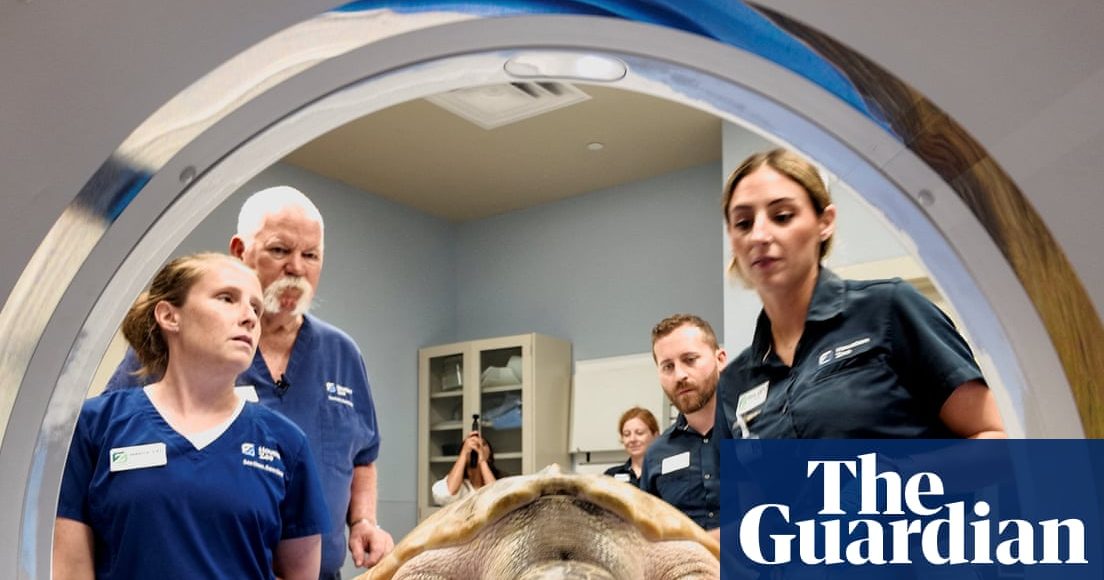
In late 2023, a young sea turtle washed up on a Welsh beach barely clinging to life. Far from his native Gulf of Mexico waters, the animal was cold-stunned, critically ill, and by every measure should not have survived. But survive he did. Today, Rhossi the Kemp’s ridley sea turtle is recovering at the Houston Zoo, charming veterinary staff and giving conservationists something increasingly rare in wildlife work: genuine cause for optimism.
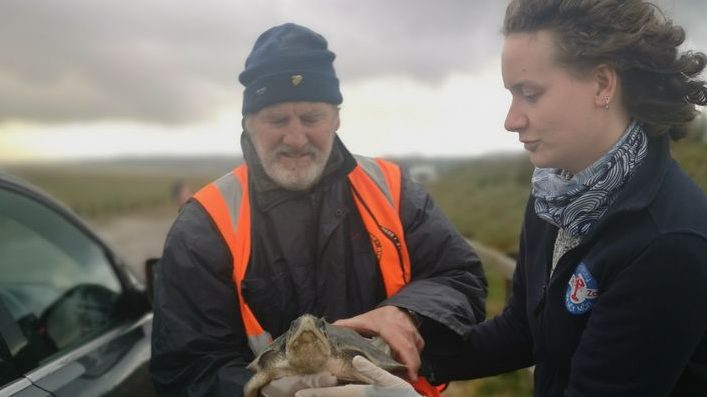
A Wrong Turn That Changed Everything
Kemp’s ridley sea turtles are the smallest and most endangered of all sea turtle species, native primarily to the Gulf of Mexico and the Atlantic coast of North America. They are not, by any stretch, Welsh regulars. So when Rhossi appeared on a Welsh shoreline in late 2023, the alarm bells were immediate. The species occasionally drifts off course, carried by the currents of the North Atlantic, but arriving in Wales in that condition was as far off the beaten path as a creature can get.
Rescuers found him in a dire state. The cold waters of Wales are no place for a warm-water reptile, and the effects were obvious. Cold-stunning, a condition that occurs when sea turtles become lethargic and immobile after prolonged exposure to cold temperatures, had done serious damage. Without intervention, the outcome would have been fatal.
The Long Road to Houston
After being stabilised by rescuers in Wales, the next challenge was getting Rhossi somewhere he could receive the kind of long-term specialist care his situation demanded. That meant crossing an ocean. He was eventually flown to Houston, where the zoo’s veterinary team took charge of his recovery, a journey spanning roughly 5,000 miles from the Welsh coast to Texas.
The Houston Zoo, with its experience in aquatic animal care, became the unlikely home base for a turtle whose life story already reads like an adventure novel. At an estimated age of no older than four years, Rhossi has lived through more than most animals twice his age.
What the Scans Revealed
Veterinary teams at the Houston Zoo have been monitoring Rhossi closely, and while the news is broadly positive, it is not entirely without complication. Recent scans detected signs of lingering pneumonia, a secondary condition that often develops in sea turtles that have been cold-stunned. The lungs, already under stress during cold exposure, can remain vulnerable for extended periods even after the animal begins to stabilise.
The zoo shared a detailed update in a blog post, outlining both the progress and the remaining hurdles. The tone from caretakers is cautiously hopeful. Rhossi is described as largely thriving, which, given where he started, is nothing short of extraordinary. But pneumonia in sea turtles is not a condition that clears overnight, and the team is being careful not to rush his recovery.
Why Kemp’s Ridley Turtles Matter
The Kemp’s ridley is not just any sea turtle. It holds the grim distinction of being the most endangered sea turtle in the world. Decades of egg poaching, fishing bycatch, and coastal development drove the species to the edge of extinction in the twentieth century. At one point, nesting numbers collapsed to just a few hundred females. Conservation programmes in Mexico and the United States have slowly reversed that trend, but the species remains critically fragile.
Every individual animal counts in a very literal sense. Rhossi is not a statistic. He is a young male with years of potential reproductive contribution ahead of him, assuming he recovers fully. The goal from his caretakers is explicit: give him the best possible chance at an eventual return to the wild. That is not a guaranteed outcome with lingering pneumonia in the picture, but it remains the target.
The Human Cost of Caring
There is something quietly moving about the effort that has gone into keeping one small turtle alive. Rescuers in Wales, flight logistics, a transatlantic transfer, and an entire veterinary team in Houston, all mobilised for a creature weighing only a few kilograms. It speaks to something important about how conservation has shifted in recent years: individual animals are no longer written off as collateral in a broader numbers game. The story of one matters.
Rhossi’s case also puts a human face, or rather, a turtle face, on the growing problem of cold-stunning events along the British coastline. As sea temperatures fluctuate and ocean currents shift, disoriented marine animals are increasingly turning up in places they should never be. Rhossi was lucky enough to be found in time. Many others are not.
What Comes Next for Rhossi
The Houston Zoo’s veterinary team continues to monitor his lungs and overall health as he settles into his new temporary home. Scans will track whether the pneumonia is responding to treatment, and the team will assess his readiness for ocean life when the time comes. There is no fixed timeline. Wildlife recovery does not operate on one.
For now, Rhossi swims, eats, and exists in a kind of borrowed safety, far from the Gulf waters where his species belongs. The people looking after him are working toward a day when he can return to those waters, a small but symbolically significant victory for a species that has known too few of them.
The story of this remarkable turtle raises a question worth sitting with: in a world where biodiversity loss is accelerating and conservation resources are stretched thin, what does it say about our collective priorities when we go to such extraordinary lengths for a single animal? And is that a sign of hope, or simply a reminder of how much we still stand to lose?