









A former top intelligence official in Uganda is sounding the alarm over his country’s decision to send troops to Gaza, arguing that Kampala may be sleepwalking into a conflict it does not fully understand and cannot easily exit. Gen. David Sejusa, a veteran of the National Resistance Army and one of Uganda’s most prominent military voices, went public this week with a pointed critique of the Uganda People’s Defence Force’s planned participation in an International Stabilisation Force (ISF) in Gaza, warning that the mission carries serious political, military and legal consequences that the government has yet to adequately address.
A Parliament Vote and a Very Large Question Mark
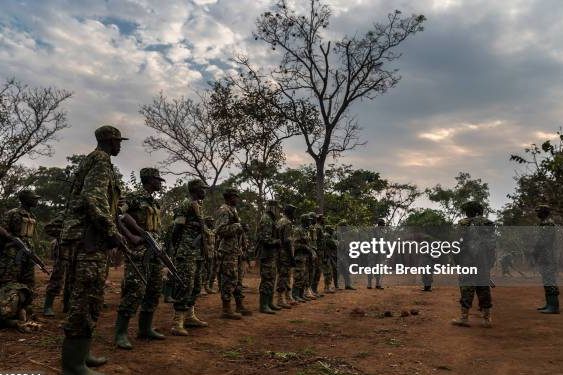
Uganda’s Parliament recently passed a motion authorising the UPDF to join the ISF in Gaza. Defence Minister Kiryowa Kiwanuka framed it to lawmakers as a stabilisation effort, a contribution toward creating conditions for peace in one of the world’s most fractured territories. On paper, that sounds like exactly the kind of multilateral engagement Uganda has pursued for decades, most notably in Somalia under the African Union Mission.
But Gaza is not Somalia. And according to Gen. Sejusa’s public remarks, the critical difference lies in a question the government has conspicuously avoided answering: is the conflict actually over? Peacekeeping, by its very definition, requires a peace to keep. Sejusa is arguing that no such peace exists.
“Is it peace enforcement or peacekeeping? Parliament passed a resolution for peacekeeping; what peace is in Gaza?” he said, in words that carry the weight of someone who has seen the inside of military operations and knows precisely how badly these distinctions matter.
The Difference Between Peacekeeping and Walking Into a War
The distinction Sejusa draws is not semantic. Under international law and the frameworks that govern multilateral military missions, peacekeeping forces are deployed after hostilities have ceased, with the consent of all parties, to monitor ceasefires and support political processes. Peace enforcement is something else entirely. It involves the use of force to impose or maintain security in environments where fighting continues, and it carries vastly different legal and operational risks.
If Israeli military operations are ongoing when UPDF soldiers arrive, those soldiers would not technically be peacekeepers. They would be operating in an active conflict zone, potentially alongside one party to that conflict. The legal exposure alone, under international humanitarian law, could be significant. The reputational exposure, particularly across the African continent and the Arab world, could be worse.
Sejusa acknowledged that Uganda stands to gain from the mission. Stronger ties with Washington, economic incentives, and an opportunity to build military capacity are real and tangible rewards. He was careful not to dismiss those benefits as irrelevant. But he framed them as calculations that must be weighed honestly against what Uganda is risking in return.
The Geostrategic Arithmetic
“At its core lies cold national geostrategic imperatives, leveraging international goodwill, economic benefits, military capacity building, cold strategic alignment with Western and Israeli security architecture,” Sejusa said, with the kind of blunt clarity rarely heard in official foreign policy discussions. He added that pursuing those objectives is perfectly legitimate, provided they do not compromise Uganda’s long-term strategic and ideological interests.
That caveat is doing a lot of work. Uganda has spent years threading a difficult diplomatic needle, maintaining security partnerships with Western governments while simultaneously deepening ties with Russia and aligning itself with the BRICS grouping of emerging economies. Sejusa described this as “multi-vector diplomacy,” a balancing act that has served the country reasonably well. The Gaza deployment, he implied, could force Uganda off that tightrope.
The African Union Dimension
There is another layer to this that Sejusa touched on: Uganda’s commitments within the African Union and its stated support for Palestinian self-determination. The African Union’s position on the Gaza conflict has broadly leaned toward calls for a ceasefire and respect for Palestinian rights. A UPDF deployment that ends up functioning as a force operating in coordination with Israeli military structures would put Uganda at odds with that continental consensus.
That kind of diplomatic isolation can be costly. Africa is Uganda’s neighbourhood. Its relationships with neighbouring states, with the AU, and with the broader bloc of Global South nations form the backbone of its foreign policy identity. Trading that credibility for a seat at a Western-backed stabilisation table is a bargain that Sejusa clearly thinks deserves far more scrutiny than it has received.
What Kampala Owes Its Soldiers and Its Citizens
Beyond the geopolitics, there is a simpler and more urgent question. Uganda is being asked to send young men and women in uniform into one of the most dangerous and politically charged territories on the planet. Those soldiers deserve clarity about what they are being sent to do, who they are operating alongside, and what legal protections they will have if things go wrong.
Parliament’s approval of the motion gave the mission a democratic stamp. But parliamentary approval is not the same as strategic clarity. The Defence Ministry’s framing of the mission as a contribution to “stabilisation” is broad enough to mean almost anything. And in conflict zones, vague mandates have a way of producing very concrete disasters.
Sejusa’s warning is not a demand to abandon the mission. It is a demand for honesty. Uganda should know exactly what it is signing up for, spell it out clearly to the public, and make a fully informed decision about whether the rewards justify the risks. That is not an unreasonable ask. It is the bare minimum that sound governance requires.
As Uganda moves closer to what would be an unprecedented military deployment into the Middle East’s most volatile flashpoint, the country faces a defining moment for its foreign policy identity. Will Kampala engage the hard questions Gen. Sejusa is raising, or will it press ahead on the assumption that the strategic rewards will outweigh the costs it has not yet fully calculated?