









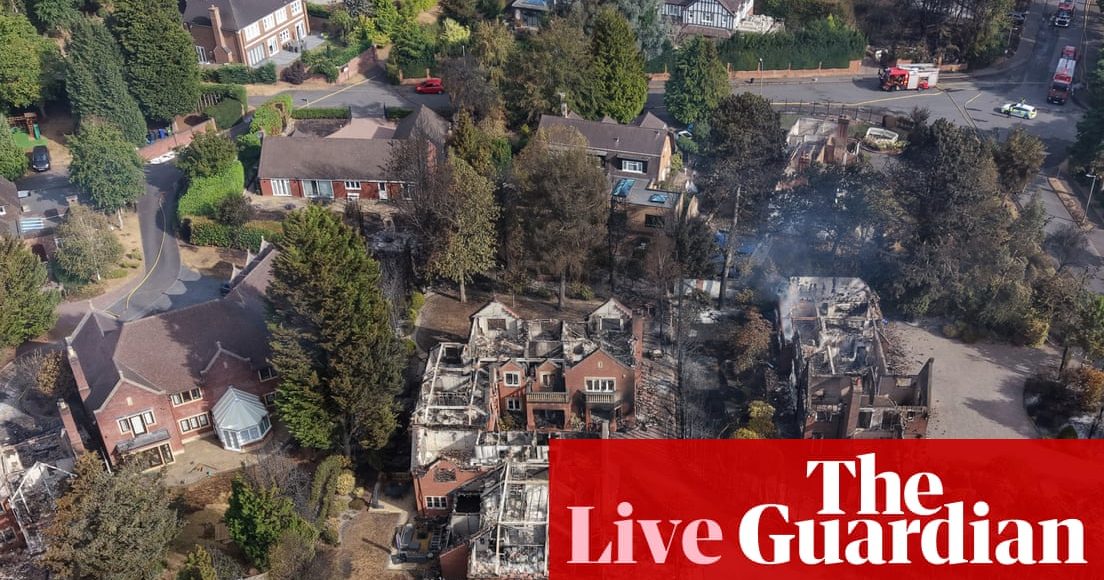
Nineteen people were rushed to hospital and at least 54 more were treated at the scene after fires tore through Stourbridge in the West Midlands on August 14, 2026, the latest flashpoint in a summer that has turned large parts of England and continental Europe into a tinderbox. The blazes arrive against a backdrop of rainfall figures that should alarm anyone paying attention: England has recorded just 4mm of rain so far this month, a meagre 6% of the long-term average for August, according to the Environment Agency.
A Summer Without Rain
That statistic does not exist in isolation. It follows what was officially the driest July on record for England, a month in which the country managed only 7mm of rainfall, roughly 10% of what would normally fall. Back-to-back historic drought conditions have left soil parched, vegetation bone-dry, and fire crews stretched thin across a country that, not so long ago, was better known for its grey drizzle than its fire risk.
The Stourbridge incident sent emergency services scrambling. While 19 people required hospital treatment, the broader toll on those caught in the fire’s path was considerably higher, with paramedics attending to more than 50 individuals at the scene. The human cost of what happens when prolonged heat meets a poorly watered landscape is not abstract, it shows up in ambulance call logs and crowded A&E waiting rooms.
Croatia Joins the List
Britain is not facing this alone. Thousands of people were forced to evacuate their homes in Croatia as wildfires continued to spread across the Adriatic coast, part of a wider pattern that has seen fires rip through multiple European countries including Greece and France during this period of sustained extreme heat. Croatia’s coastline, beloved by tourists for its crystal-clear waters and medieval towns, has become a recurring casualty of summers that keep breaking temperature records.
The scale of the evacuations in Croatia underlines just how quickly a wildfire can outpace the resources available to contain it. Coastal towns with limited access roads face particular challenges when fires spread from hillsides toward populated areas, and this summer has tested those logistical limits repeatedly.
What the Numbers Actually Mean
Let’s put England’s rainfall figures into sharper perspective. At 4mm for the first half of August, the country is on track for one of the driest Augusts in recorded history, building directly on July’s record-breaking drought. Two consecutive months of near-zero precipitation do not just raise wildfire risk, they threaten water supply infrastructure, damage crops, lower river levels to dangerous points for wildlife, and stress urban drainage systems that were never designed to cope with extended dry spells.
The Environment Agency’s figures, passed on through PA news wire, carry a quiet urgency that the raw numbers alone cannot convey. These are not aberrations to be shrugged off. They are data points in a trend that climate scientists have been projecting for decades, now arriving on schedule and with greater force than many contingency plans anticipated.
Fire Risk Meets Urban Sprawl
The West Midlands is not a wilderness. It is one of England’s most densely populated urban regions, and fires breaking out in or near residential areas carry immediate risks for communities that have no particular culture of fire preparedness. Unlike rural areas where farmers and land managers maintain some awareness of fire conditions, suburban and urban residents are largely unequipped, psychologically and practically, for the kind of rapid evacuation decisions that wildfire demands.
The Stourbridge fire is a signal that this needs to change. Fire services, local councils, and public health bodies will need to reconsider how they communicate risk to urban populations during extended dry periods, not as a one-off response to this summer, but as standing protocol for what may well become a regular seasonal reality.
Europe’s Wider Reckoning
Zoom out from the West Midlands and the picture is sobering. Greece, France, Croatia, and the UK are all dealing with fire and heat events simultaneously, stretching cross-border emergency response capacity and testing national infrastructure. The idea of Europe as a moderate, temperate zone is being quietly retired by each successive summer, replaced by something that looks more like the fire-prone Mediterranean climates that southern Europe has historically shared with parts of California and southern Australia.
The political and financial implications of that shift are considerable. Insurance markets are already rethinking coverage in high-risk coastal and forested areas. Governments are being forced to invest in aerial firefighting fleets, early warning systems, and public communication infrastructure at a scale that previous budgets did not anticipate. And individual communities, from Croatian coastal villages to West Midlands neighbourhoods, are living with consequences that no amount of policy language fully prepares you for.
The People Behind the Statistics
It is worth pausing on the human detail here. Fifty-four people treated by paramedics at a single fire scene. Nineteen hospital admissions. Thousands evacuated from their homes in Croatia with little notice. Behind each of those numbers is a person who woke up that morning expecting an ordinary Thursday in August, not a day that would be defined by smoke, emergency vehicles, and the particular fear that comes with not knowing whether your home will still be standing by nightfall.
Heat and drought statistics, however stark, can feel remote. The individual experiences they produce do not. And as this summer makes abundantly clear, those experiences are becoming harder to dismiss as exceptional.
As Britain records its driest consecutive months in living memory and emergency services across Europe strain to keep pace with fires that grow faster than forecasts predicted, the question worth sitting with is this: at what point does “unprecedented” stop being a description of events and start being the new baseline we plan around?