








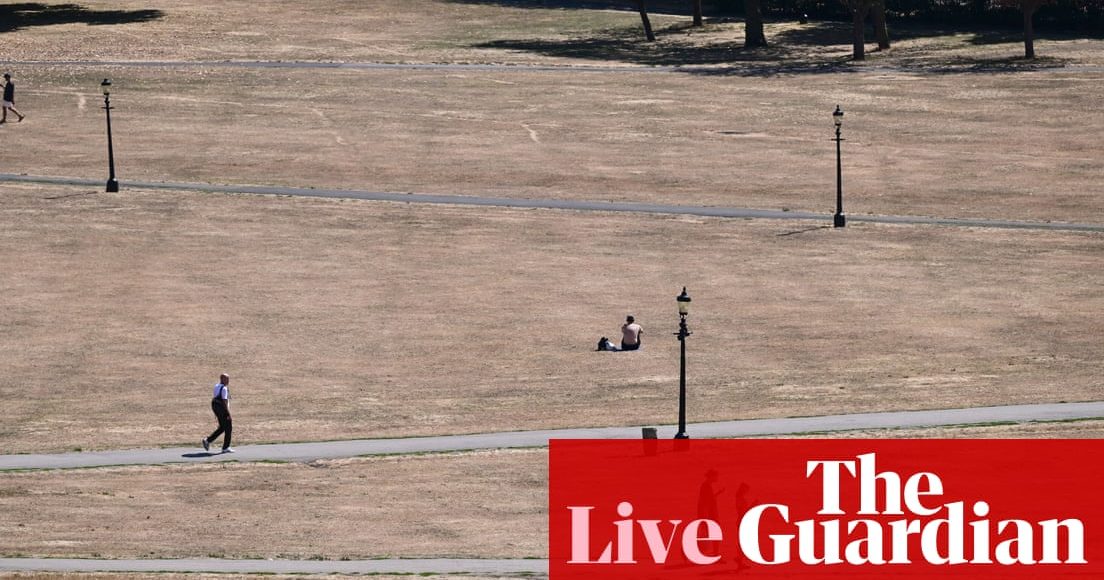
By mid-morning on August 13, 2026, Britain had already stopped pretending it was summer and started surviving it. Temperature readings at weather stations across the country were clearing 30 degrees Celsius before 11am, a detail that would have felt alarming just a decade ago and now barely raises an eyebrow among meteorologists bracing for a far worse afternoon. By the time the day peaked, the UK had recorded 38.1C, the highest temperature of 2026 so far, a number that sits heavy in the air alongside the heat itself.
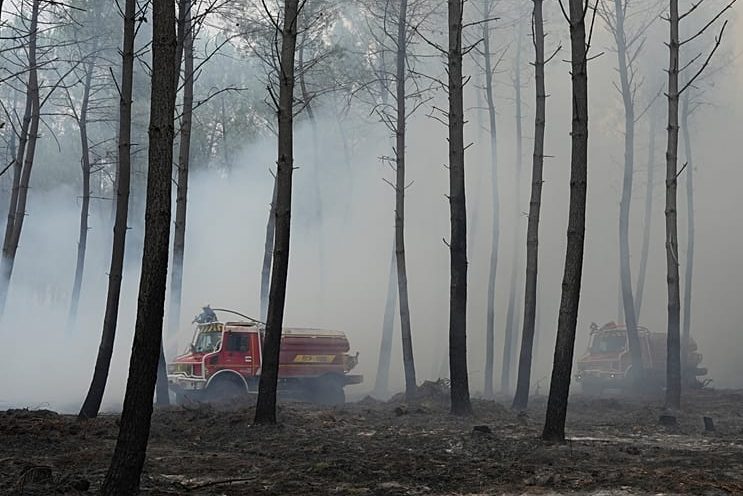
This is not just a British story. Across Europe, August 2026 is writing a chapter that nobody wanted to read. Greece is fighting on two fronts: an unforgiving sun above and ferocious wildfires spreading rapidly across dry terrain, fanned by gale-force winds that have turned what might have been manageable blazes into fast-moving walls of fire. France, Spain, and Italy are similarly gripped, each country watching its drought maps darken and its emergency services stretch thin.
The Numbers That Should Alarm Everyone
The Met Office logged temperatures of 30.4C at Wych Cross, 30.3C at Charlwood, and 30.2C at Kenley Airfield, all before the clock hit 11am on what would become the UK’s hottest day of the year. Those are not afternoon highs. Those are morning readings, the kind that signal a day well capable of breaking people, infrastructure, and records.
A final peak of 38.1C confirmed what the early data was already telegraphing: this was a shattering heat event, to borrow the word used by a former UK government scientific adviser who stepped forward with a warning that cuts through the noise. The adviser did not mince words. The heat gripping Britain and the continent right now, as bad as it feels, is not the ceiling. Worse is coming. That is not political commentary or environmental activism. That is a scientific assessment from someone who spent years inside the machinery of government climate policy.
What Happens When the Wind Turns Villain
In Greece, the crisis has a different texture. Wildfires are not new to the Greek landscape; the country has fought them every summer for years, building up hard-won expertise in containment and evacuation. But expertise has limits when the wind refuses to cooperate. Gale-force gusts in August 2026 have turned those fires into something far more difficult to predict or contain, pushing flames across firebreaks, shifting fronts without warning, and forcing communities to evacuate with little notice.
The human cost is still being tallied. The infrastructure cost, from scorched agricultural land to damaged homes and roads, will take longer to calculate. What is already clear is that Greece’s fire services are operating at the edge of their capacity, relying on support from European partners under the EU’s civil protection mechanism, a system that gets a real-world stress test every summer and, increasingly, finds itself overwhelmed by the scale of what it faces.
A Pattern That Climate Scientists Have Predicted for Years
There is a grim irony in covering this story in August 2026. The science that describes exactly this kind of summer, the compounding heat, the dried-out vegetation primed for fire, the weather systems that stall over Europe and bake everything underneath them, has been available for decades. The models have been refined, the warnings have been published, the international agreements have been signed. And yet here we are, watching thermometers climb past 38 degrees in England while wildfires rage across southern Europe.
Heatwaves of this intensity used to be once-in-a-generation events in northern Europe. Climate records now suggest they are becoming a regular fixture of the calendar, arriving earlier, lasting longer, and hitting harder than the previous summer’s benchmark. The UK in particular was not built for this. Homes without air conditioning, train tracks that buckle under extreme heat, hospitals that fill up with elderly patients suffering heat-related illness: the vulnerabilities are structural, and patching them takes years and political will that has historically been slow to materialise.
The Human Cost Beyond the Headlines
For most people caught in this heat, the experience is deeply personal before it is political. It is a sleepless night in a flat that holds the day’s heat like an oven. It is a child too hot to eat, an elderly neighbour you check on because you know they live alone. It is a commute that becomes genuinely dangerous when rail operators impose speed restrictions to protect warped tracks, or when a bus sits in traffic on a road that shimmers like a mirage.
Public health authorities across the UK and Europe have been issuing heat-health alerts and urging people to stay indoors during peak afternoon hours, hydrate aggressively, and check on vulnerable neighbours. These are sensible instructions. They are also insufficient on their own as a long-term response to a climate that is fundamentally changing the conditions of daily life in Europe.
What Comes Next
The former scientific adviser’s warning that worse is still to come is not a prophecy. It is arithmetic. As long as greenhouse gas concentrations in the atmosphere continue to rise, average global temperatures will follow, and extreme heat events will become more frequent and more severe. The 38.1C recorded across the UK on August 13, 2026, is not a ceiling. For a generation of children currently sweating through this summer, it may one day be remembered as a relatively mild year.
That is not a reason for despair. It is a reason for urgency: in building cities and homes that can handle heat, in accelerating the energy transition, in funding the kind of early-warning and emergency-response infrastructure that saves lives when the thermometer climbs and the wind carries fire across the hillside. Europe has the wealth, the expertise, and the institutional capacity to do this work. The question is whether the political will can match the pace of the change already under way.
As Britain sweats through its hottest day of the year and Greece watches another hillside burn, it is worth asking: at what temperature does the urgency finally feel real enough to act on?