










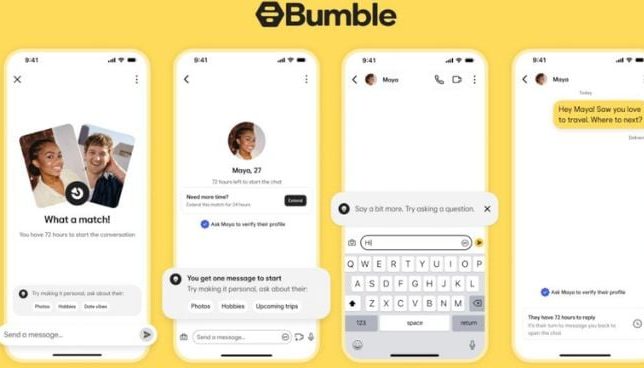
Bumble, the dating app that built its entire identity around women having the power to send the first message, has officially walked away from that founding promise. The company announced it is scrapping the women-first rule that defined it since its launch in 2014, triggering a wave of mixed reactions from users who either see this as a bold evolution or a quiet surrender to the very dynamics the app was built to disrupt.
The Rule That Started It All
When Whitney Wolfe Herd launched Bumble twelve years ago, the pitch was simple and sharp: women control the first move. At a time when apps like Tinder were flooded with unsolicited messages and unwanted advances, Bumble positioned itself as a safer, more deliberate space. Only women could initiate a conversation after a match, a mechanic that was genuinely radical for 2014 and gave the app a distinct edge in a crowded market.
It was not just a feature. It was a statement. Bumble built a brand, a marketing strategy, and a loyal user base almost entirely around that single rule. The yellow logo became shorthand for a specific kind of dating culture, one where women were not passive recipients but active participants.
For years, the app carved out real cultural space. It expanded into professional networking and friendship-finding, but the dating product remained the core, and the first-move rule remained its spine.
Why Bumble Changed Course
According to reporting from the BBC, the decision came after an internal trial that showed higher engagement when the rule was relaxed, alongside a user survey in which 66 percent of women said they actually prefer men to send the first message. That figure is doing a lot of heavy lifting right now across online forums and social media threads.
Wolfe Herd addressed the change directly, saying: “While women making the first move was a radical idea, being women-first was never about prescribing just one way to connect. Today, our community is asking for more flexibility, less pressure, and more opportunities to create real, meaningful connections and that is what this new experience provides.”
It is a carefully worded statement that tries to frame the reversal as growth rather than retreat. Whether users accept that framing is another matter entirely.
The 24-Hour Rule Is Also Getting an Overhaul
The first-move policy is not the only thing changing. Bumble is also extending the window users have to begin a conversation after matching. Previously, the app gave just 24 hours before a match expired. Under the new rules, both users will have three days to initiate a chat.
For anyone who has watched a promising match disappear because life got busy or timing was simply off, this is a genuinely welcome update. It removes some of the artificial urgency that made the app feel more like a game show than a genuine space for connection. Three days is still a nudge toward action, but it is a far less punishing one.
One exception that existed under the old system worth noting: same-sex relationships were always exempt from the women-first rule, meaning the change applies most significantly to heterosexual matching on the platform.
A Divided Community
Reactions across forums and comment sections have split fairly cleanly into two camps. One group argues the update is simply pragmatic, pointing to the survey data and suggesting that flexibility serves more users than a rigid rule ever could. If the majority of women on the platform were privately wishing men would reach out first, the rule was arguably creating friction rather than freedom.
The other camp is less convinced. For them, removing the signature mechanic strips away the one thing that made Bumble meaningfully different from every other dating app on the market. The concern is not just philosophical. It is competitive. If Bumble now operates on the same basic rules as Tinder, Hinge, or any other swipe-based platform, the question of why someone would choose Bumble specifically becomes genuinely harder to answer.
Some users online have been blunt about it, describing the updated app as “just like any other dating app”, which, for a product that spent years selling itself on being the opposite, is a painful comparison.
What This Means for the Broader Dating App Market
Bumble’s decision reflects something bigger than one app’s product update. It speaks to a shifting conversation about what safety, agency, and authenticity look like in digital dating. The original rule came from a very specific cultural moment, a post-2014 reckoning with how men behaved online toward women. It was a product fix for a social problem.
But twelve years on, the landscape looks different. Users across genders have more experience with dating apps, more nuanced expectations, and less patience for features that feel performative rather than genuinely useful. The survey data Bumble cited suggests that what many women actually want is not the obligation to go first, but the confidence that if they do, they will be met with respect.
Whether removing the rule helps or hurts Bumble’s position in the market will become clear over the next few quarters. The engagement numbers from the trial were apparently encouraging, but trials and real-world adoption are different things. Loyalty is hard to rebuild once users feel a brand has drifted from its original promise.
A Brand at a Crossroads
Bumble is not the first tech company to retire a feature that once defined it, and it will not be the last. Pivots happen. Markets shift. What worked in 2014 does not automatically work in 2026. The challenge for Wolfe Herd and her team is convincing both existing users and potential new ones that Bumble still stands for something distinct, even without the rule that originally made it stand out.
The three-day messaging window, the emphasis on flexibility, the reframing of “women-first” as a philosophy rather than a policy, these are all pieces of a new narrative the company is clearly trying to build. Whether that narrative lands depends entirely on whether users decide to stay and find out.
So here is the question worth sitting with: if a dating app removes the one rule that made it different from every other dating app, does it still have an identity worth swiping right for?