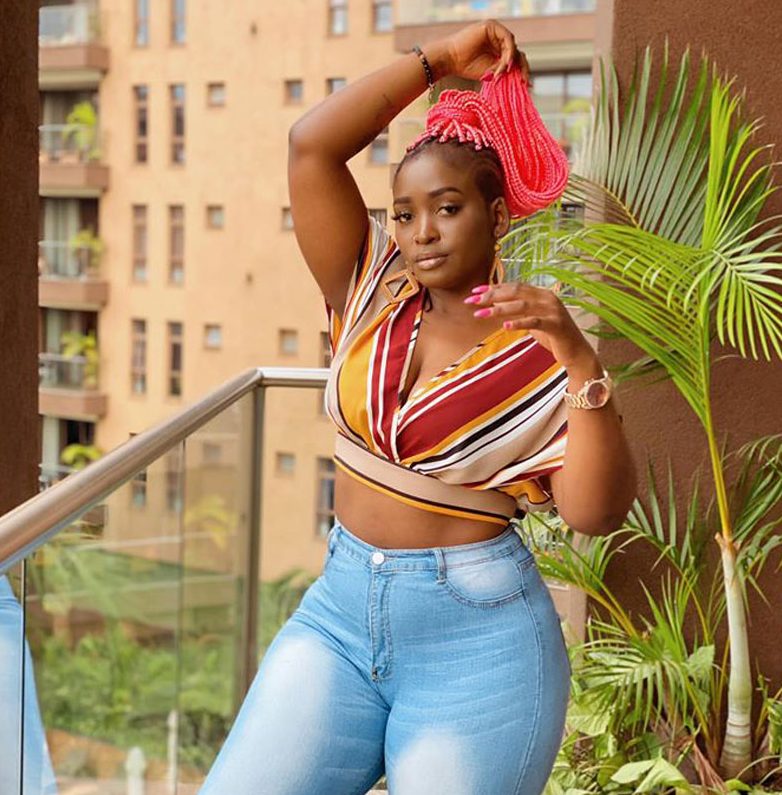
Ugandan music star Winnie Nwagi has had enough of the internet’s obsession with her body, and she made that crystal clear this week when she fired back at critics who have spent considerable time dissecting changes in her physical appearance. The singer addressed the chatter head-on, offering no apologies and even less patience for those fixated on the size of her backside.
What the Critics Were Saying
For a while now, social media users have been pointing out that Nwagi’s figure looks different from what fans grew accustomed to seeing. Her backside, once widely admired and frequently discussed in online circles, appears smaller than before. The conversation grew loud enough that it eventually reached the singer herself, which, if critics expected silence or embarrassment, turned out to be a miscalculation.
Online body-shaming is a well-documented problem that disproportionately targets women in the public eye. Female artists across Africa and beyond regularly face scrutiny over weight gain, weight loss, skin tone, and countless other physical attributes that have nothing to do with their talent. Nwagi’s situation is hardly unusual in that regard, but her response certainly stands out.
Nwagi’s Unfiltered Response
Speaking directly to the noise, Nwagi kept it short and sharp. According to her widely quoted response, she told critics: “What happened to the nyash? Nothing happened. It’s you who are stupid, I’m sorry to say. I still have my nyash.”
It is the kind of answer that requires no translation. Nwagi did not reach for diplomacy or a carefully worded public relations statement. She went straight for the jugular, and many of her supporters loved every word of it.
She also offered a straightforward biological explanation for anyone genuinely confused about what they were seeing. The singer noted that losing weight does not affect all parts of the body equally. Different areas respond differently to changes in diet, exercise, and overall health. It is basic human physiology, yet it remains something that public discourse around celebrity bodies consistently ignores in favour of speculation and gossip.
The Bigger Picture: Why This Conversation Matters
Nwagi’s pushback is about more than one comment on one day. It speaks to a culture that treats women’s bodies, especially those of public figures, as communal property open to constant evaluation. The moment a female artist’s shape changes in any direction, the commentary begins. She gains weight and she is told she is letting herself go. She loses weight and suddenly something must be wrong, or worse, she must have had a procedure reversed.
The irony is not lost on anyone paying attention. Nwagi built a significant part of her public image on being confident, bold, and unapologetically herself. For critics to expect that she would quietly absorb their opinions about her body suggests they were not paying attention in the first place.
Body image pressure in the entertainment industry is relentless. Female musicians are expected to maintain a very specific aesthetic while simultaneously insisting that their artistry matters most. It is a contradiction the industry has never fully resolved, and social media has only amplified the problem by giving everyone with a phone a platform to weigh in on a stranger’s physical form.
Nwagi’s Track Record of Speaking Her Mind
This is not the first time Nwagi has refused to play the gracious celebrity who smiles through uncomfortable attention. She has a well-established reputation for saying exactly what she thinks, which has earned her both devoted fans and the occasional controversy. That consistency, though, is part of what makes her response feel authentic rather than performative.
There is something worth noting in the fact that she did not choose to reframe the conversation as a lesson in body positivity or deliver a rehearsed speech about self-love. She simply dismissed the premise that her critics had any standing to comment at all. That directness, raw as it is, resonates with a generation of fans who are tired of watching public figures contort themselves to manage other people’s feelings about their appearance.
What Fans Are Saying
Reaction online has been broadly supportive of the singer’s response. Many fans praised her for not backing down, while others pointed out that the original criticism was rooted in a deeply uncomfortable tendency to monitor and police women’s bodies without their consent. A smaller contingent felt her language was too aggressive, though even some of those critics acknowledged that the frustration behind her words was understandable.
The conversation has also sparked a broader discussion about the standards applied to female artists compared to their male counterparts. Male musicians in Uganda and across the continent rarely face the same level of physical scrutiny, and when they do, the conversation typically moves on far more quickly.
The Bottom Line
Winnie Nwagi’s body is her own business. She has said so clearly, and she has every right to say it. Whether her figure has changed due to weight loss, lifestyle shifts, or anything else entirely is a matter between her and no one else. The critics who prompted this response would do well to redirect that energy somewhere more productive.
As for Nwagi, she appears entirely unbothered and fully in control of her own narrative, which is exactly where any artist worth their stage time should be.
The question worth sitting with is this: when did it become acceptable to treat a woman’s body as a subject for public debate, and what does it say about us as an audience that the comment sections fill up faster when a celebrity changes shape than when she releases new music?