





For years, Uganda’s skyline has climbed higher and its cities have grown faster than its ability to know whether the structures being built can survive a serious shake from below. That era of guesswork is, at least officially, over. On August 7, two key government bodies signed a formal agreement in Kampala to design and carry out the country’s first-ever Baseline Survey of Buildings, a national inventory that will tell authorities, for the first time, exactly what Uganda’s built environment looks like and how much of it would hold up under pressure.
A Survey Long Overdue
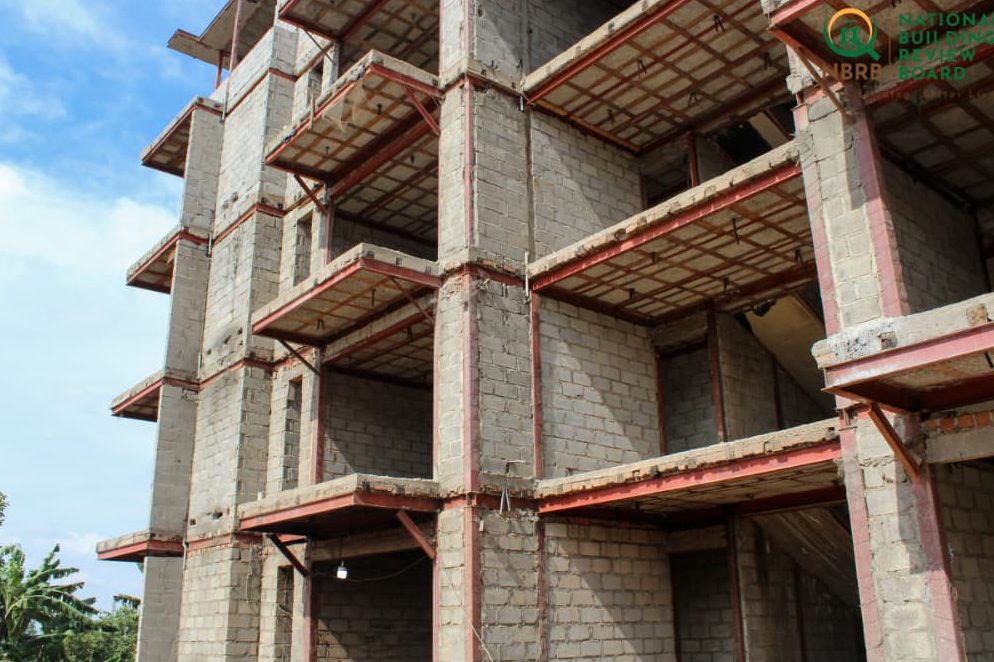
The Uganda Bureau of Statistics and the National Building Review Board are the two institutions behind the agreement, which will see them jointly collect data on structural conditions across the country. The scope is broad and the mission is serious: the survey will record compliance with building regulations, ownership details, occupancy patterns, and the geographical spread of structures nationwide. The result will be a credible, data-driven picture of what Uganda has actually built over the decades.
UBOS Executive Director Chris Mukiza, speaking at the signing ceremony, framed the initiative as an exercise in good governance. The idea is simple but powerful: planning decisions about infrastructure and disaster preparedness should be grounded in real numbers, not estimates. As reporting from Chimpreports notes, Mukiza specifically pointed to the value of building Uganda’s National Statistical System through partnerships like this one.
That said, the timing of this initiative is not accidental. It arrives against a backdrop of growing concern about what would happen to Uganda’s cities and towns if the ground beneath them suddenly moved.
Living on a Fault Line
Uganda sits squarely within the East African Rift system, a vast and geologically active zone where the African continent is slowly pulling itself apart. This is not a theoretical risk. The country has a documented history of damaging earthquakes that stretches back decades, and the tremors have not been trivial.
In 1966, a magnitude 6.6 earthquake struck the Tooro region with enough force to crack the Karuzika Palace. Nearly three decades later, in 1994, a magnitude 6.2 quake hit the Kisomoro area in the Rwenzori region, again causing significant damage. Then, in September 2016, an earthquake near the Uganda-Tanzania border rattled southern Uganda and caused deaths and widespread destruction across the border in Tanzania. These are not distant historical footnotes. They are recent enough to inform present-day policy.
President Yoweri Museveni has made his concern on this front explicit. Through Executive Order No. 1 of 2023, he directed government engineers to audit permanent buildings across Uganda, with high-rise structures taking priority. The logic was direct: as Uganda urbanises and multi-storey buildings multiply, the question of whether those structures can withstand seismic activity becomes increasingly urgent.
Where the Risk Is Sharpest
Museveni’s instructions were specific about where to start. “They should, in particular, audit the high-rise buildings, starting with those of the ground floor plus one floor,” he said, adding that single-storey bungalows could be assessed last. It is a prioritisation that reflects where the danger is most concentrated: a collapsing high-rise in an urban area is a catastrophe on a different scale from a damaged rural structure.
This is the practical reality that the Baseline Survey of Buildings will help address. Without a national inventory, authorities cannot know which structures are most vulnerable, which zones carry the highest density of non-compliant construction, or where emergency response would be stretched thinnest in the event of a major quake. The survey fills that information gap.
What the Data Will Cover
The survey’s scope covers several critical categories. Structural condition assessments will tell engineers whether existing buildings are sound or compromised. Compliance checks will reveal how many structures were built to code and how many cut corners. Ownership and occupancy data will help planners understand population exposure in high-risk zones. And geographical distribution mapping will allow disaster-risk reduction teams to build response strategies around actual building locations rather than rough assumptions.
Taken together, this data could reshape how Uganda approaches construction regulation, urban planning, and emergency preparedness for years to come.
A Country Building Faster Than It Can Audit
Uganda’s population growth and rapid urbanisation have driven a construction boom over the past two decades. Kampala and secondary cities have seen residential and commercial buildings rise at a pace that has outrun the regulatory infrastructure meant to govern them. Enforcement of building codes has historically been inconsistent, and inspections have not always kept up with the volume of new construction.
The result is a built environment of uncertain quality sitting on seismically active ground. That combination is precisely why a survey of this nature matters beyond bureaucratic box-ticking. When the next significant earthquake arrives, whether tomorrow or twenty years from now, the difference between a building that stands and one that collapses may come down to decisions made during construction that nobody ever checked.
What Happens After the Data
A survey, of course, is only as useful as the action it generates. The agreement between UBOS and the NBRB is a meaningful first step, but the harder work comes after: retrofitting vulnerable structures, enforcing compliance, updating building codes to reflect seismic realities, and training engineers and inspectors to apply those standards consistently. Countries in earthquake-prone regions that have done this work, often after painful lessons, have significantly reduced the death tolls of subsequent disasters.
Uganda now has the opportunity to get ahead of that lesson rather than learn it the hard way. The data being collected will be valuable. Whether it translates into genuine structural change across the country’s building stock depends entirely on what officials choose to do with it.
So the question worth sitting with is this: when the survey results come in and the full picture of Uganda’s structural vulnerabilities is finally on the table, will the political will exist to act on what the numbers reveal, or will the data gather dust while the buildings stay standing and the rift keeps shifting beneath them?