





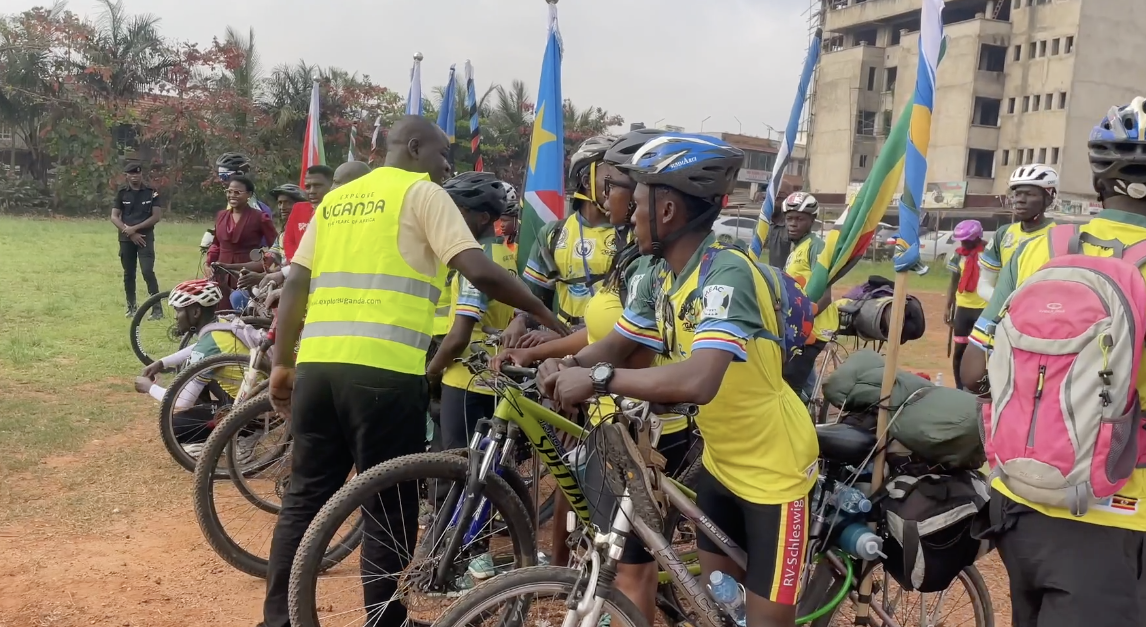
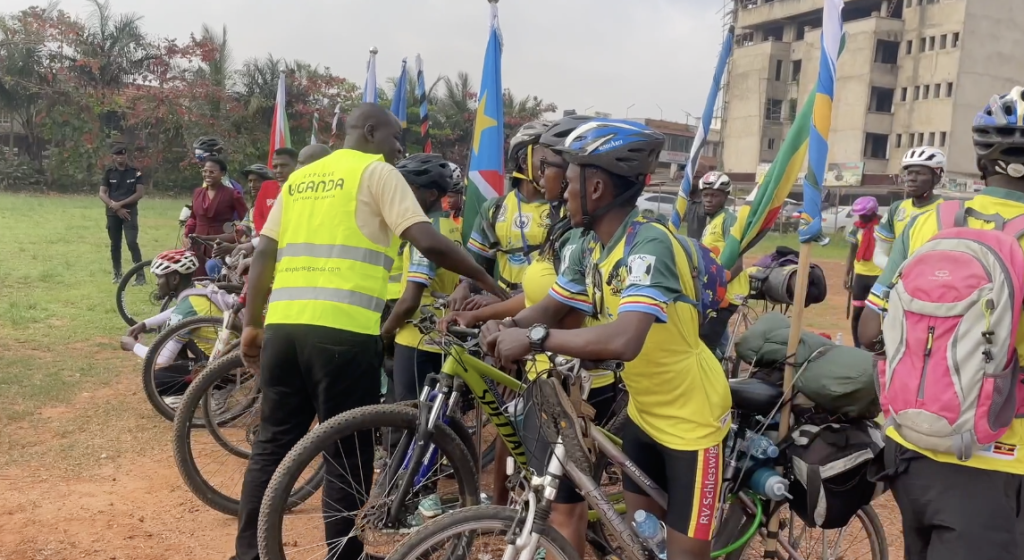
Fifty cyclists rolled out of Kampala on a mission that goes far beyond fitness. Their route stretches across five countries, covers 6,500 kilometres of East African terrain, and carries a message that diplomats have been trying to deliver for decades: that the borders dividing this region are, ultimately, just lines on a map.
Pedalling a Point That Politicians Have Struggled to Make
The expedition, billed as the East Africa Integration Tour, will take the riders through Uganda, Kenya, Tanzania, Rwanda, and Burundi. It is an ambitious undertaking by any measure. Six thousand five hundred kilometres is roughly the distance from London to New York. Completing it on a bicycle, through shifting altitudes, unpredictable weather, and roads that range from smooth tarmac to unforgiving gravel, demands a particular kind of resolve.
But the organisers are clearly betting that the physical scale of the journey is exactly what gives it its symbolic weight. A signed communiqué from a regional summit rarely makes headlines in the villages these cyclists will pass through. A column of fifty riders, sweating through your town, waving flags and spreading a message of unity, is a different kind of statement altogether.
The group was officially flagged off at the office of East African Community Minister Rebecca Kadaga in Kampala, lending the exercise a formal government endorsement that signals this is more than a sporting event. As NTV Uganda reported, the send-off was a deliberate act of public messaging, with the minister’s presence tying the ride directly to the broader agenda of East African integration.
Why East African Integration Still Needs a Push
The East African Community has existed in one form or another since the late 1960s, though its current incarnation dates to 2000. On paper, the bloc represents one of the most ambitious regional integration projects on the continent, with ambitions stretching from a common market to, eventually, a political federation. In practice, the road has been long and uneven, much like the terrain these cyclists will now navigate.
Trade barriers, inconsistent border policies, and infrastructure gaps have slowed the kind of seamless movement that integration promises. Yet at the grassroots level, East Africans have always moved, traded, and intermarried across these borders with a fluidity that formal institutions often fail to capture. The cycling tour taps into that lived reality, choosing people over paperwork as its primary argument.
There is also something strategically clever about the choice of sport. Cycling is accessible to ordinary people in a way that, say, a golf tournament or a gala dinner is not. Riders on bicycles belong to the road. They pass through markets, school gates, and rural homesteads. Their journey becomes a rolling conversation with the communities along the route, not a broadcast from above.
The Five-Country Route and What It Represents
Each country on the itinerary brings its own texture to the story. Uganda, the starting point, is home to the EAC secretariat’s political leadership and has long positioned itself as a central driver of regional cooperation. Kenya brings the bloc’s largest economy and its commercial heartbeat, Nairobi. Tanzania offers the sheer geographical scale of the journey, with the country’s size alone accounting for a significant chunk of the total kilometres.
Rwanda, meanwhile, has become something of a showcase for what focused governance and regional openness can look like. Its capital, Kigali, regularly tops continental rankings for ease of doing business and urban planning. And Burundi, the smallest nation on the route, carries perhaps the heaviest symbolic load, given its history of conflict and its ongoing efforts to reintegrate into regional life after years of political turbulence.
Riding through all five in sequence is not just a logistical challenge. It is a deliberate act of geographic solidarity, a way of saying that no single country on this list is optional, and that unity means accounting for every member, not just the convenient ones.
Soft Power in Cycling Shoes
Governments spend billions on public diplomacy campaigns, cultural exchanges, and media outreach to build the kind of cross-border goodwill that a group of fifty cyclists might generate simply by showing up. There is a long tradition of sport being used as a vehicle for political messaging, from the ping-pong diplomacy of the 1970s to the way football has repeatedly served as a language shared across ethnic and national lines in Africa.
The East Africa Integration Tour belongs to this tradition, but it is also distinctly of its moment. As the region negotiates the realities of a changing global order, shifting trade alliances, and the growing urgency of infrastructure investment, local narratives of unity carry renewed importance. The tour gives ordinary citizens a reason to see themselves as part of something larger, and that is a story worth following, kilometre by kilometre.
The real question, once the cyclists cross their final finish line and the crowds disperse, is what comes next. Events like this generate momentum and goodwill. But momentum needs structure to become something lasting. Will the institutions of the East African Community find ways to channel the energy of tours like this into tangible policy wins for the people those cyclists rode past? That is the challenge worth watching.