





He walked into the military as a young man with a sense of purpose and walked out, 47 years later, as one of Uganda’s most decorated and battle-tested officers. General Edward Katumba Wamala officially retired from the Uganda People’s Defence Force this August, bringing the curtain down on a career so long it outlasted entire governments, border conflicts, and at least one very serious attempt on his life.
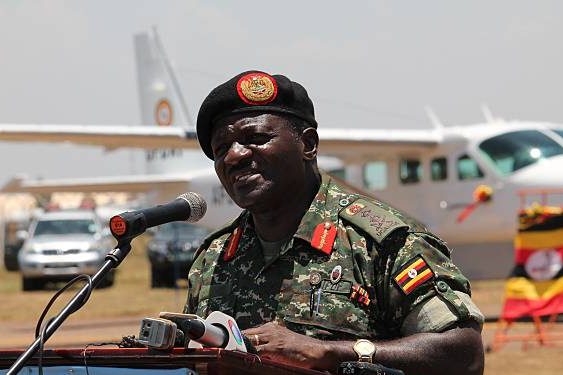
The farewell was held at his home in Kikandwa, Kasawo, in Mukono District, a setting that felt appropriately personal for a man reflecting on the private costs of a very public life. Friends, family, and colleagues gathered to mark an occasion that was equal parts celebration and reflection. Katumba himself set the tone: measured, grateful, and honest about what the journey had taken from him.
A Career Built on More Than Rank
Katumba described his 47 years in uniform using four words: passion, dedication, commitment, and love for Uganda. That is a clean summary, but the biography behind it is anything but tidy. His military path ran through some of the most turbulent chapters of Uganda’s modern history, and his survival through all of it speaks to a combination of skill, fortune, and sheer resilience.
By the time of his retirement, he had also taken on a significant civilian role, serving as Uganda’s Minister of Public Service in the national cabinet. That dual identity, soldier and administrator, says something about how the Ugandan state has long valued officers who can navigate both the barracks and the boardroom. According to reporting on his farewell remarks, Katumba used the occasion to reflect openly on the journey, including the moments that cost the most.
The Day That Changed Everything
No account of Katumba Wamala’s career can skip over June 1, 2021. On that morning, unknown gunmen opened fire on his vehicle along the Kisaasi-Kyanja road in Kampala. The general survived. His daughter, Brenda Nantongo, did not. Neither did his driver, Haruna Kayondo.
It was the kind of violence that strips away the abstraction of military life and makes it devastatingly concrete. Katumba spoke about it at his farewell, which took courage. Grief of that nature does not age neatly. It sits alongside every subsequent milestone, every ceremony, every morning. To name it publicly, in a room full of people there to celebrate him, was a choice to honour those lost rather than bury the memory beneath the occasion.
The attack at the time sent a chill through Uganda’s security circles. Investigations were launched, arrests were made, and the country watched closely. Katumba, once he recovered from his injuries, returned to duty. That return was itself a statement.
What 47 Years Actually Looks Like
To put the scale of this retirement in perspective, consider that 47 years of service means Katumba joined the military well before many of his junior colleagues were born. Governments shifted. Technologies transformed warfare. The nature of the threats Uganda faced changed dramatically over the decades, from internal insurgencies to regional peacekeeping operations on the African continent.
Through all of it, his career evolved rather than stagnated. Rising to the rank of General is not a given in any military, and the responsibilities attached to that rank in Uganda, a country with a complex and often high-stakes regional security role, are substantial. The UPDF has been active in peacekeeping missions in Somalia under the African Union framework, and senior officers like Katumba have shaped both the doctrine and the execution of that presence.
The Quiet Symbolism of Going Home to Mukono
Choosing to hold his farewell at his personal home rather than a formal military venue was a telling detail. It signaled that this retirement was not just an institutional event but a human one. The general was stepping away not just from a title but from a way of life that had defined him since his youth.
Kasawo, in Mukono District, is not the flashiest address for a man of his stature, and that is precisely the point. There is something grounded and deliberate about gathering loved ones in your own compound to mark the end of a chapter that big. It read less like a medal parade and more like a man genuinely ready to exhale.
A Legacy Beyond the Uniform
Katumba leaves behind a military record that younger officers will study, and a personal story that the broader Ugandan public will remember. The combination of institutional achievement and human tragedy gives his career a texture that pure biographical facts cannot fully capture.
His continued role in public service as a cabinet minister means his contribution to Uganda’s governance does not end with the retirement of his uniform. But the symbolic weight of removing that uniform after nearly five decades is enormous. It closes a loop that opened before most of the country’s current workforce had ever set foot in a classroom.
Uganda has produced many generals. It has produced very few who carried so much, lost so much, and kept showing up anyway. As Katumba Wamala steps into this new phase, the question worth sitting with is this: what does a nation truly owe the men and women who give it their entire adult lives, and are we doing enough to answer that debt?