










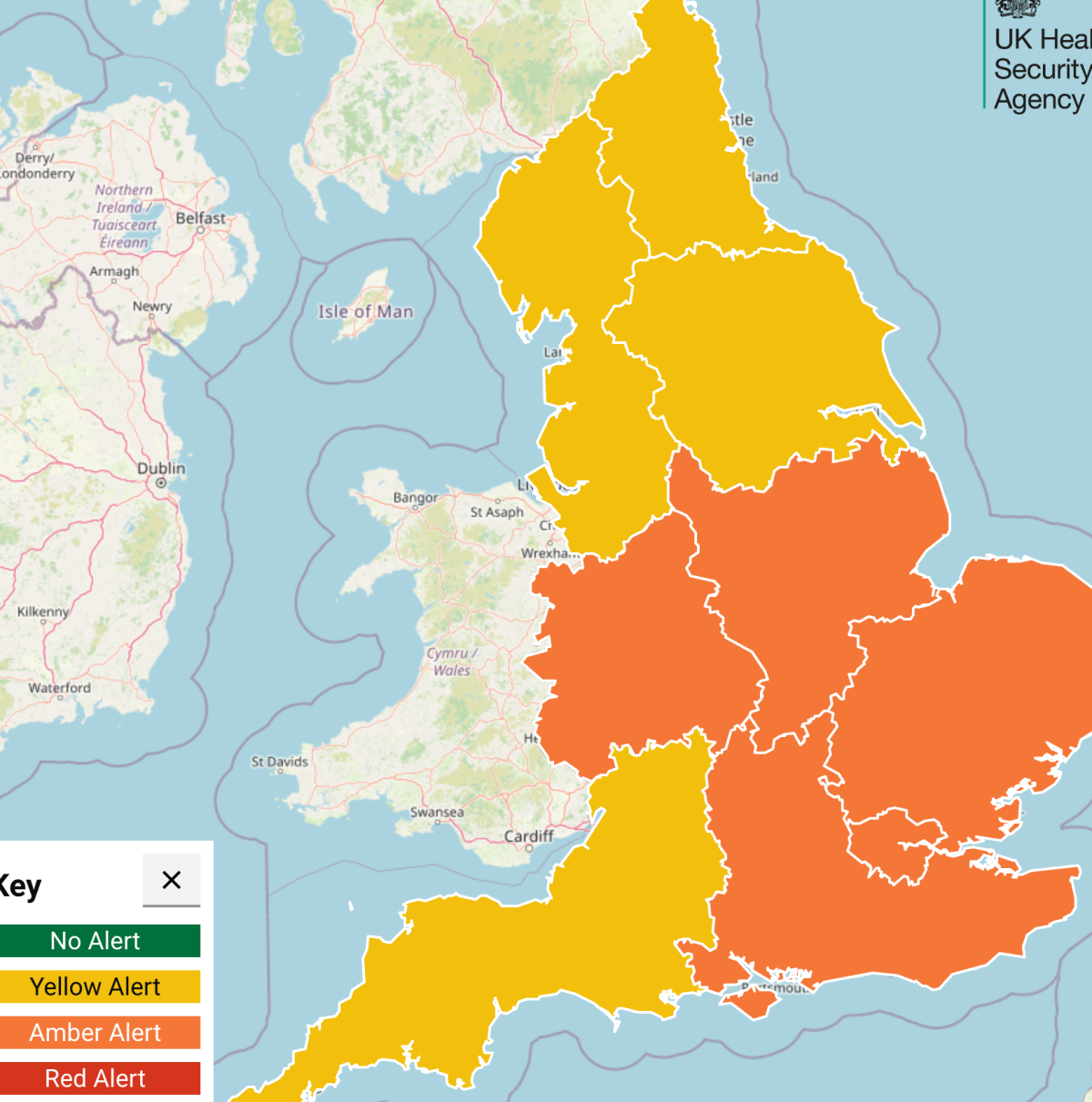
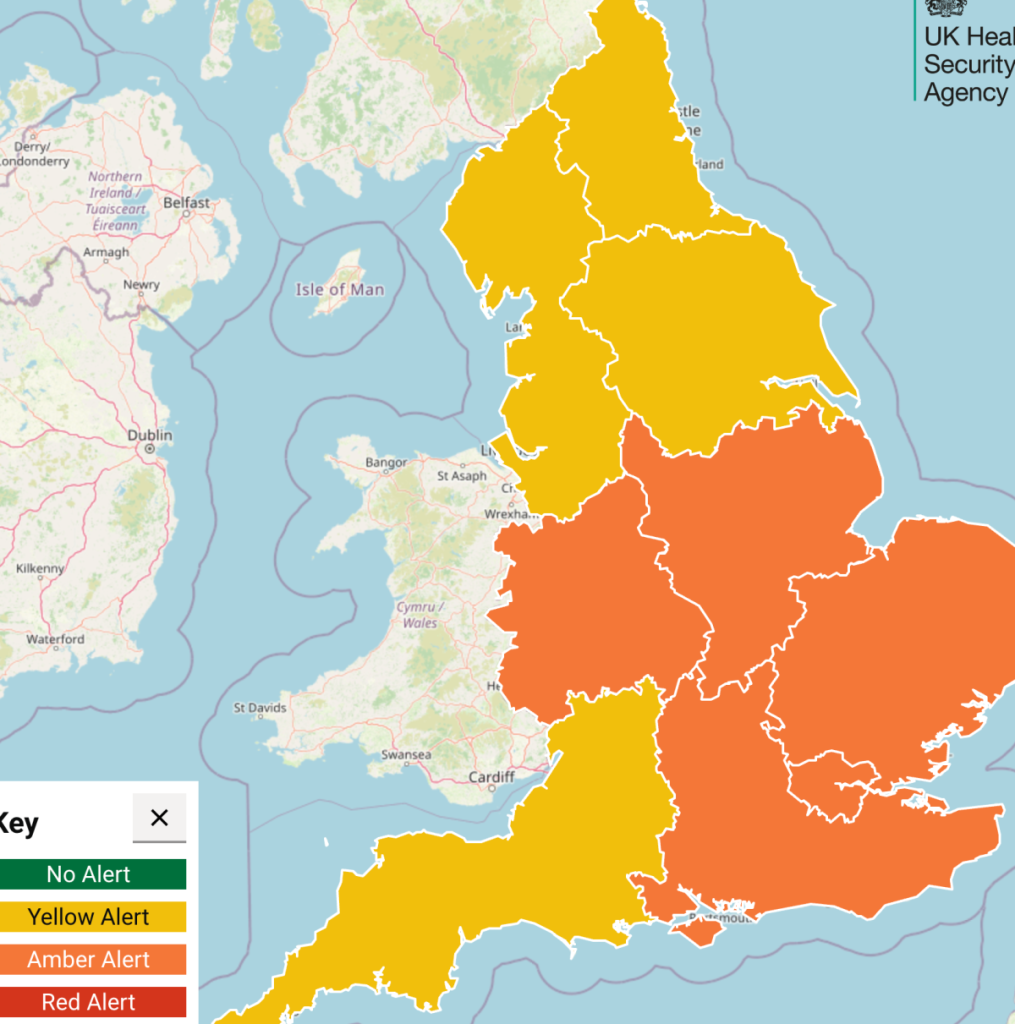
England woke up on Monday, August 10, 2026, to the uncomfortable reality of an amber heat-health alert covering the majority of the country, with forecasters warning that temperatures could climb to 36 degrees Celsius or even higher before the week is out. The alerts, which carry serious public health implications, are set to run from 9am on Tuesday through to 6pm on Wednesday, giving authorities a tight but critical window to urge the public to take the heat seriously.
What an Amber Alert Actually Means for Everyday Life
An amber heat-health alert is not issued lightly. It sits one level below the most severe red warning, and it signals that health services should expect a measurable uptick in demand. Vulnerable people, including the elderly, very young children, and those with pre-existing medical conditions, face genuine risk when temperatures sustain at these levels. Hospitals prepare. GP surgeries brace. And for most people going about their normal routines, the alert is a firm nudge to rethink outdoor plans, check in on neighbours, and keep hydrated.
What makes this particular heat event stand out is its timing and breadth. Most of England falling under a single amber designation simultaneously is a significant logistical and public health challenge. Emergency services, local councils, and NHS trusts must coordinate across a vast geography, all while the mercury keeps climbing.
Chessington World of Adventures Closes as Water Outage Bites
The heat did not just make headlines in weather bulletins. On Monday, Chessington World of Adventures Resort, the beloved Surrey theme park sitting just outside London and drawing families with its mix of adventure rides, a zoo, and a sea life centre, was forced to close its gates entirely. The reason was a water outage affecting the surrounding local area, a disruption that made it impossible for the park to operate safely.
In a statement, the resort confirmed it was working directly with Thames Water and local partners to restore normal operations as swiftly and safely as possible. The park acknowledged the frustration of guests, many of whom would have planned their visit weeks in advance, and asked for patience while teams worked on a resolution.
Closing a theme park of that scale is never a small decision. Chessington is a significant tourist draw, especially during the summer school holidays when families pile in from across the south-east and beyond. A water outage might sound like a minor inconvenience on paper, but for a site that runs water rides, manages animal welfare, operates catering across dozens of outlets, and maintains basic sanitation for thousands of visitors, it is an immediate safety concern. The park had no real choice.
The Broader Picture: Infrastructure Under Pressure
What happened at Chessington is a pointed reminder of how extreme heat and the strain it places on infrastructure can ripple outward in unexpected ways. Water supply systems across southern England have faced growing pressure over successive dry summers, and reports of a drought being declared alongside this latest heatwave suggest the country is dealing with more than just a few uncomfortable days. This is a pattern.
Thames Water, which serves millions of customers across London and the Thames Valley, has been under sustained scrutiny over recent years regarding its ability to manage supply during peak demand periods. A local outage affecting a busy area of Surrey during one of the hottest spells of the year is the kind of incident that fuels wider questions about whether the water infrastructure serving England is genuinely fit for a future where summers like this one become the norm rather than the exception.
Staying Safe When the Country Turns Into an Oven
Public health guidance during amber alerts is consistent and worth repeating. Stay out of direct sunlight between 11am and 3pm when the heat is at its most intense. Keep rooms cool by closing blinds and curtains during the day, then opening windows at night when temperatures drop. Drink water regularly, not just when you feel thirsty, because by the time thirst kicks in, mild dehydration may already be underway.
For those who work outdoors or in poorly ventilated buildings, the risks multiply quickly. Construction workers, delivery drivers, agricultural workers, and others who cannot simply move their jobs indoors face particular challenges during a sustained amber alert. Employers carry a duty of care here that goes beyond the theoretical.
Checking on elderly relatives, isolated neighbours, or anyone without access to cool spaces is not just a nice thing to do during a heatwave. It is often the difference between a difficult few days and a genuine medical emergency. Heat-related illness can escalate fast, and the most vulnerable rarely ask for help until it is urgent.
A Summer That Is Leaving Its Mark
Summer 2026 has not been subtle. Between drought declarations, amber health alerts, and a theme park shutting down because the local water supply gave out, the season is writing its own story about a country navigating a climate reality it is still learning to manage. The infrastructure built for a cooler, wetter England is straining under conditions that would have seemed unusual a generation ago but now arrive with something close to regularity.
The window between Tuesday morning and Wednesday evening will be the most intense part of this particular event, but the broader question it raises does not close when the alerts are lifted. How prepared is England for the summers still to come?
As the country fans itself through another sweltering week, it is worth asking: are we doing enough to build a country that can handle the heat, or are we still treating every heatwave as an unusual event rather than a recurring reality that demands a permanent response?