









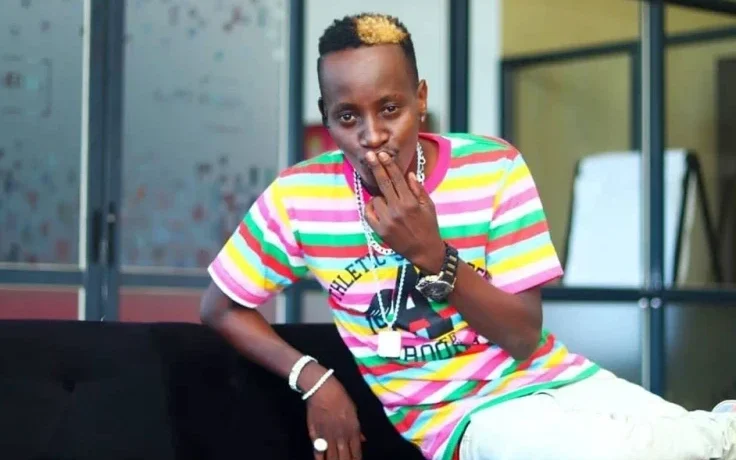
Edwin Katamba, the veteran Ugandan broadcaster widely known as MC Kats, is making noise again, and this time it has nothing to do with music. In a candid interview that has set the local media world buzzing, Kats unloaded a pointed critique at Uganda’s mainstream television stations, accusing them of replacing trained, experienced presenters with social media personalities whose only credential is a viral TikTok video.
A Veteran Who Did His Research Before Walking Out
What makes Kats’ criticism particularly sharp is the fact that it isn’t idle grumbling from the sidelines. Before he stepped away from TV presenting altogether, he spent time conducting what amounted to an informal industry audit, studying presenter lineups across multiple stations and looking for patterns. The pattern he kept finding was the same one: talent scouting had been quietly replaced by follower counts.
Speaking to Dr. Mich Egwang, MC Kats revealed that when he examined the rosters of various Ugandan TV stations, he found that the majority of newer presenters shared one common background: they had blown up on TikTok before landing a broadcast role. That observation, he said, was part of what drove his decision to exit the television space.
Kats knows the terrain better than most. He has worked at some of Uganda’s most prominent stations, including WBS TV, NTV Uganda, and NBS TV. That kind of track record gives him a front-row seat to what broadcasting used to demand and a clear view of how far the bar has shifted.
The TikTok Pipeline Into Broadcasting
There is nothing wrong with TikTok as a platform. It has created careers, launched musicians, and given ordinary people a global audience. But Kats is drawing a firm line between online entertainment and professional broadcasting, and he argues that media executives in Uganda have blurred that line almost beyond recognition.
The skills required to hold a live television interview, manage a panel discussion, read breaking news with authority, or interview a grieving family in a crisis are not skills you pick up by posting fifteen-second skits to a phone screen. They come from training, mentorship, time in the field, and a genuine understanding of editorial responsibility. When stations skip all of that in favour of someone who already has a built-in audience, they are essentially outsourcing their talent development to an algorithm.
The logic from the stations’ perspective is not entirely irrational. A presenter with half a million TikTok followers brings an audience with them. In an attention economy where ratings translate directly to advertising revenue, that is a calculable asset. But Kats’ argument is that this short-term thinking is quietly corroding the quality and credibility of Ugandan television.
What Gets Lost When Virality Replaces Craft
When broadcasting roles are handed out based on social media performance, the craft of journalism and presentation takes a back seat. Accuracy suffers. On-air composure under pressure becomes a luxury rather than a baseline standard. The ability to hold a difficult conversation, challenge a powerful guest, or structure a compelling narrative gets replaced by the ability to be entertaining in short bursts.
Audiences notice, even if they cannot always articulate what feels off. There is a reason seasoned broadcasters carry a certain weight when they speak. It is not just charisma. It is the accumulated competence of years spent getting it right and learning from getting it wrong. That depth is hard to fake, and a TikTok following does not manufacture it.
The Broader Conversation Uganda’s Media Industry Needs
Kats is not alone in feeling this way. Across African broadcast markets, the tension between digital-native personalities and traditionally trained journalists is a live debate. As television audiences fragment and younger viewers increasingly get their information from social platforms, stations are caught between chasing the new audience and maintaining the standards that gave them credibility in the first place.
The smarter approach, and one that some international broadcasters have managed, is to invest in training digital personalities so they can grow into well-rounded professionals, rather than simply parachuting them into roles they are not yet equipped for. That takes patience and resources, two things that are in short supply when ratings pressure is constant.
Uganda’s media landscape is not uniquely guilty here. But given the rich history of broadcasting talent the country has produced, including figures like Kats himself, the slide feels particularly avoidable. The infrastructure for good training exists. The appetite for quality content exists. What appears to be missing is the institutional will to connect the two.
MC Kats and the Weight of Stepping Away
It is worth pausing on what it means that someone of Kats’ experience chose to walk away rather than stay and adapt. He did not leave because the industry no longer wanted him. He left, at least in part, because of what the industry was becoming. That kind of principled exit, quiet as it was, carries a message of its own.
His willingness to speak openly about what he observed before leaving suggests he wants the conversation to happen. He wants station managers, media trainers, journalism schools, and audiences to reckon honestly with where Uganda’s television is heading if current hiring trends continue unchecked.
The microphone is still on. The question is whether anyone with the power to change things is listening.
Should Ugandan TV stations be required to meet minimum professional standards before placing new presenters on air, or should the market decide what audiences deserve? Drop your take in the comments.