









At a wedding in Kiruhura District last Saturday, Uganda’s President Yoweri Museveni did not simply show up to celebrate. He used the occasion to fire off a pointed warning to an entire community: the Banyankole’s growing appetite for expensive marriage rituals is pricing young people out of family life, and the consequences, he argued, are far bigger than any dowry negotiation.
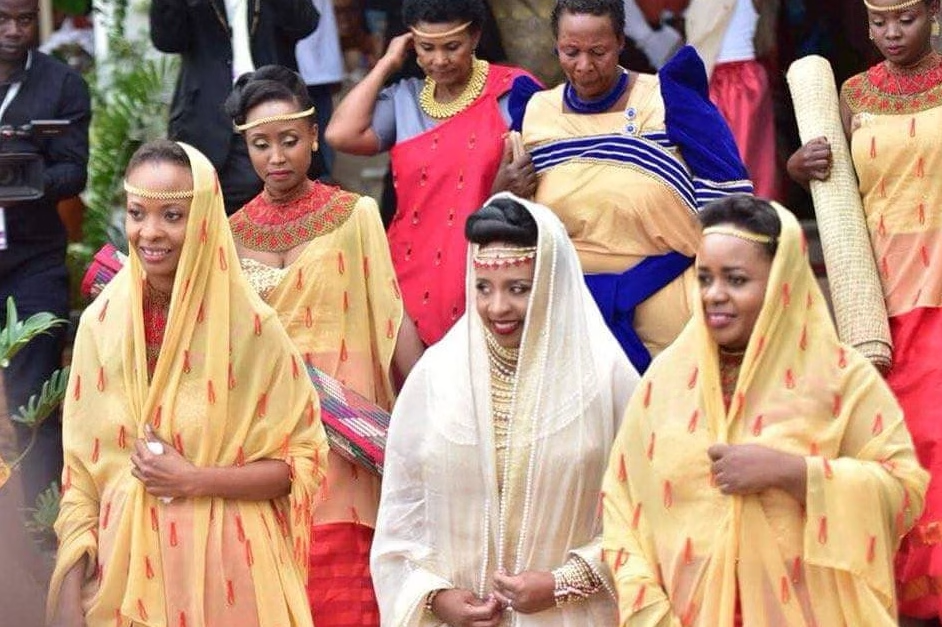
The President was presiding over the Okuhingira ceremony of Kisha Isabel Byanjeru Kaboyo, daughter of State Minister Alice Kaboyo, at Kakyeera in Kiruhura District, when he turned the celebration into something of a public lecture. His target was the commercialization creeping into what was once a culturally grounded tradition. According to reporting on the ceremony, Museveni told the gathered community bluntly that the practice of Okujugusa, the payment of bride price, has mutated from a symbolic gesture of respect into a crippling financial transaction.
When Tradition Becomes a Price Tag
There is nothing inherently wrong with bride price. Across East and Central Africa, the custom carries deep meaning, a formal recognition of a union between two families, a show of gratitude, a social contract sealed with livestock or gifts. But somewhere between tradition and the present day, the numbers started climbing. What was once a reasonable exchange of cattle and goodwill has, in some communities, ballooned into demands that would make a bank manager sweat.
Museveni’s frustration is not difficult to understand. A young man working an entry-level job or farming a modest plot cannot realistically assemble the kind of wealth now expected in some high-stakes bride price negotiations. And if the price of starting a family is financial ruin before the ink is dry on the marriage certificate, many will simply opt out. That, the President suggested, is exactly what is happening.
He went further, taking aim at the extravagant wedding ceremonies that have become status competitions rather than genuine celebrations. The elaborate receptions, the imported décor, the guest lists that rival small concert audiences, all of it adds up to a mountain of debt that young couples carry into their marriages before they have even begun building a life together.
A Demographic Problem Hiding in Plain Sight
What sounds like a cultural gripe is actually a demographic concern with real weight behind it. When young people delay or avoid marriage because the entry costs are too high, birth rates can stagnate, household formation slows, and the social fabric that communities depend on frays quietly. Museveni framed the issue in terms of population, suggesting that the Banyankole are, as he put it, damaging their own numbers through the practice.
Uganda is a young country, with a significant portion of its population under 30. The energy, creativity, and productivity of that generation is one of the country’s most valuable assets. But if cultural pressures are pushing young men and women away from forming stable families, that asset risks going underutilised. The President’s concern, stripped of the ceremony-day context, is really about the long arc of community sustainability.
The Okuhingira Under Pressure
The Okuhingira ceremony itself is a beautiful piece of Ankole cultural identity. Traditionally, it marks the formal introduction and blessing of a bride, with families coming together in a spirit of joy and unity. It is supposed to be a moment of warmth, not a financial negotiation. But as wealth displays have become entwined with the ceremony, it has started to mean something different to the young generation watching from the sidelines: a barrier, not a bridge.
The irony is that by making the ceremony grander, families may believe they are elevating its significance. In practice, they are doing the opposite, turning a rite of passage into a rite of exclusion for those who cannot afford the admission price.
Simplicity Is Not Shame
Museveni’s call for simpler marriages is not an attack on Ankole culture. It is, if anything, a defense of its original spirit. A marriage built on genuine connection, mutual respect, and community blessing does not need a lavish price tag to be valid. Cultures that have endured centuries of change know how to adapt without losing their soul, and this is precisely the kind of adaptation Museveni was urging.
Other African leaders have wrestled with the same tension. In Zimbabwe, in Kenya, in South Africa, public figures have periodically raised alarms about bride price inflation and its effect on young couples. The conversation is not unique to Uganda. What is notable here is that the President chose a live, festive ceremony, surrounded by family, tradition, and community elders, to make the point. That is not a coincidence. It is a calculated choice to speak directly to the people who have the power to change the norm.
Who Actually Has the Power to Change This?
Presidential speeches matter, but cultural norms shift when communities decide to shift them. The real agents of change in this conversation are the elders who set expectations, the parents who draw up demands, and the young people who either comply or quietly walk away from marriage altogether. If families begin to measure the success of an Okuhingira not by the number of cattle exchanged but by the happiness and readiness of the two people at the centre of it, the dynamic changes.
There is also a role for open, honest conversation within households. Young men should be able to tell their prospective in-laws what they can genuinely afford without shame. Young women should not be priced like commodities. And families on both sides should ask themselves whether the celebration they are planning is for the couple or for the audience.
Museveni’s words at Kakyeera were blunt, perhaps uncomfortably so for a wedding day. But sometimes the most important conversations happen at precisely the moment you least expect them. The question now is whether the Banyankole community, and Ugandan society more broadly, is ready to listen, and to act.
Is your community’s marriage culture building families or quietly breaking young people before they even start? Share your thoughts below.