

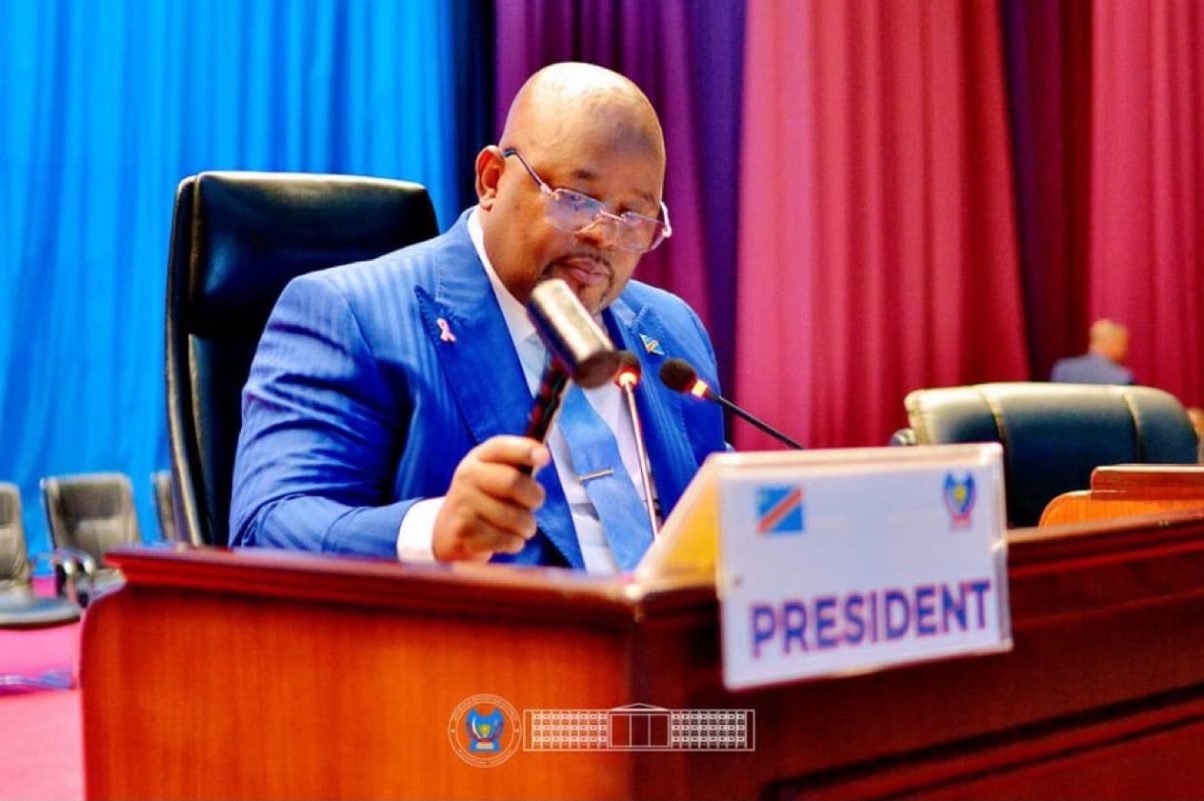
In Kinshasa on Friday, October 23, the Democratic Republic of Congo’s National Assembly did something that would look perfectly routine in most countries: it passed a law. The vote was 346 in favour, zero against, and one abstention, out of 347 participating lawmakers. That near-perfect consensus, however, is far from routine. The legislation in question regulates how referendums are organised in the DRC, and in a country already simmering over the prospect of constitutional change, its passage carries weight that extends well beyond parliamentary procedure.
At the centre of the political storm is President Félix Tshisekedi. He took office in January 2019, won re-election, and is now midway through his second five-year term, which runs until 2028. Under the current constitution, that should be the end of the road. Two terms, full stop. But political winds in Kinshasa have been shifting, and the question of whether Tshisekedi might pursue a third term has moved from whispered speculation to the subject of open national debate.
From Constitutional Court to Parliament Floor
The path this legislation took before reaching the full chamber is worth understanding. The Constitutional Court had previously reviewed the referendum bill and found it broadly consistent with the constitution, but flagged 13 specific provisions that required reconsideration. Following that ruling, President Tshisekedi asked Parliament to revisit those particular articles rather than let the matter stall.
The National Assembly’s Political, Administrative and Legal Commission took up the task, reformulating the 13 flagged articles before presenting its revised report to the plenary session. Lawmakers approved those amendments, then voted on the full revised legislation, producing the lopsided result that drew immediate regional and international attention.
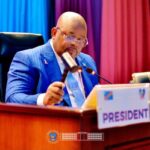
National Assembly Speaker Aimé Boji Sangara framed the vote as an affirmation of Parliament’s constitutional role, saying it demonstrated the legislature’s commitment to strengthening democracy and the rule of law. Those are the right words to say after a vote like this. Whether the process they describe matches the political reality on the ground is a separate question entirely.
Why the Numbers Tell Only Half the Story
A 346-0 vote in any legislature should prompt a raised eyebrow. Political bodies, by their very nature, contain disagreement. When disagreement disappears almost entirely, it usually means one of two things: either the legislation is genuinely uncontroversial, or the environment makes opposition feel dangerous or futile. In the DRC, a country with a turbulent political history and a ruling coalition that commands a commanding parliamentary majority, the latter interpretation is difficult to dismiss.
The DRC is no stranger to constitutional manipulation dressed in democratic clothing. Across sub-Saharan Africa, the pattern has repeated itself enough times to have become its own political genre: a sitting president with constitutional term limits encourages or engineers a referendum to rewrite those limits, often framing the exercise as giving the people a voice. The referendum law now approved in Kinshasa hands the government a ready-made legal mechanism to call such a vote. Whether it chooses to use it that way remains to be seen.
The Term Limit Question
Tshisekedi’s current term expires in 2028, which gives the political conversation a two-year runway before it becomes urgent in a practical sense. But legislative groundwork tends to be laid well in advance of the moment it is needed. A referendum law passed in late 2026 could, theoretically, enable a constitutional referendum well before the next election cycle forces the issue.
Opponents of any constitutional revision argue that term limits are not just procedural guardrails but hard-won protections in a country that has experienced extended authoritarian rule. Supporters of a third term pathway, meanwhile, tend to argue that the people should decide, not the constitution written by a previous political generation. Both arguments will almost certainly get louder over the next 18 months.
What Comes Next
A referendum law is an instrument, not a decision. Its passage does not guarantee that a referendum on term limits will be called, and Tshisekedi has not publicly declared any intention to seek a third term. Political positioning in the DRC rarely works that directly. What the law does is remove one significant procedural obstacle, making it considerably easier for the government to call a national vote on any constitutional question it chooses to put to the public.
The international community, including African Union observers and Western diplomatic partners who have invested heavily in monitoring DRC’s fragile democratic process, will be watching the next steps carefully. The DRC is also dealing with an active conflict in its eastern provinces and a humanitarian situation that remains deeply serious, which means any political energy consumed by a constitutional battle carries real opportunity costs for millions of people who need governance, not theatrics.
For now, the law sits on the books. The debate, though, is very much alive. The DRC’s constitution is the document that governs how power changes hands in a country of roughly 100 million people. Any move to alter it through a referendum will trigger one of the most consequential political contests the region has seen in years.
The real question worth sitting with is this: when a parliament votes 346 to zero on legislation with such clear political stakes, does that represent the will of the people, or the consolidation of power by those who already hold it? Where do you think the line falls?