


Young Ugandan artist Dwiz Playboy is no longer keeping his grievances to the comment section. This week, he walked into Katwe Police Station in Kampala to obtain a formal police reference, the first concrete legal step in what is shaping up to be a bitter ownership battle over the song Bukutu. The move signals a clear escalation from a social media dispute into territory that could have real legal consequences for everyone involved.
From TikTok Frustration to Police Station
The saga began, as many modern music disputes do, online. Dwiz Playboy had been using his TikTok platform to voice his frustration over what he describes as the wrongful claiming of Bukutu, a song he insists belongs to him. But talking on camera and taking formal action are two very different things, and the young artist made it clear this week that he was done with just talking.
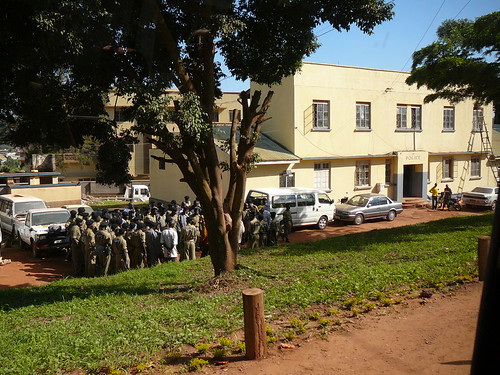
According to reports from Mbu, Dwiz addressed his followers directly in a TikTok video, confirming that he had visited Katwe Police Station to get the reference he needs as he maps out his legal strategy. His words carried the weight of someone who has been sitting with a genuine hurt for too long.
“The fact that I’m serious about the issue of claiming my song, I’ve decided to seek legal action at Katwe Police Station and get a reference as I figure out what to do next,” he said. “I think it’s time to take this matter to the legal side because what I’m doing is true, and I’m expressing the pain I’m going through deep down in my heart.”
That is the kind of statement that does not come from someone looking for clout. That reads like someone who genuinely believes an injustice has been done to them.
Why Music Ownership Disputes Hit Differently
Ownership rows in the Ugandan music industry are not new, but they rarely get this far this fast. Most disputes fizzle out after a few heated exchanges online, with both parties eventually moving on. What makes the Bukutu situation notable is the speed at which Dwiz has chosen to involve formal institutions rather than let the court of public opinion run its course.
Music ownership is a deeply personal issue for any artist. A song is not just a product; it is often a piece of lived experience, a creative vision crafted over hours of work in a studio. When that work ends up under someone else’s name, the emotional damage runs far deeper than any financial loss. Dwiz’s choice of words, specifically referencing pain “deep down in my heart,” reflects exactly that kind of wound.
The broader issue also touches on something the Ugandan creative industry has long needed to address: the formal protection of intellectual property for emerging artists. Young musicians, particularly those without the backing of major labels or well-connected management, are especially vulnerable to having their work claimed or misrepresented by others. The systems to protect them exist on paper, but navigating those systems without resources or legal counsel is genuinely difficult.
What a Police Reference Actually Means
Obtaining a police reference is typically the beginning of a process, not an end. It creates an official record that a complaint has been made and provides the complainant with documentation they can use when approaching other legal bodies, including civil courts or the relevant intellectual property authorities. In Uganda, matters involving music rights can potentially be directed toward the Uganda Registration Services Bureau, which handles copyright registration, or pursued through civil litigation.
The reference Dwiz obtained at Katwe is essentially his ticket to the next stage. It does not resolve anything on its own, but it establishes a paper trail and demonstrates that the complaint is being treated with a level of seriousness that a TikTok video alone could never achieve. His next steps will likely depend heavily on the quality of evidence he can produce to support his claim of ownership.
The Role of Documentation in Copyright Claims
This is where things get complicated for many young artists. Proving song ownership in a dispute often comes down to documentation: studio session records, original recordings with metadata, written agreements, witness accounts from producers or collaborators. If Dwiz can produce a strong paper trail showing he created Bukutu, his legal case becomes significantly more solid. If that documentation is thin or missing, the road ahead gets harder regardless of how genuine his claim may be.
Copyright law, while designed to protect creators, tends to reward those who kept records. It is one of the uncomfortable realities of the creative industry, where the paperwork matters just as much as the passion.
A Moment the Industry Should Pay Attention To
Regardless of how the Bukutu dispute ultimately resolves, the fact that a young Ugandan artist is actively pursuing formal legal channels over a music ownership claim is itself significant. It sends a message to others in similar situations that these tools exist and can be used. It also puts other players in the industry on notice that disputes will not simply go away if ignored long enough.
The Ugandan music scene has produced genuine global moments in recent years, with artists reaching audiences far beyond the continent. Protecting the integrity of that creative output starts with ensuring that the people who make it can actually claim it as their own.
Dwiz Playboy may be young, and the odds of navigating a legal dispute without significant resources may be stacked against him, but the decision to go to Katwe Police Station rather than just stay on TikTok shows a level of resolve that deserves to be taken seriously. Whatever happens next, he has made his position clear: he wants his song back, and he is willing to go through the proper channels to get it.
The question now is whether the music industry’s informal power structures will respond to formal pressure, or whether Dwiz will need to push even further up the legal ladder to be heard. What do you think: should Uganda’s creative industry do more to protect young artists from ownership disputes before they even reach the police station?