




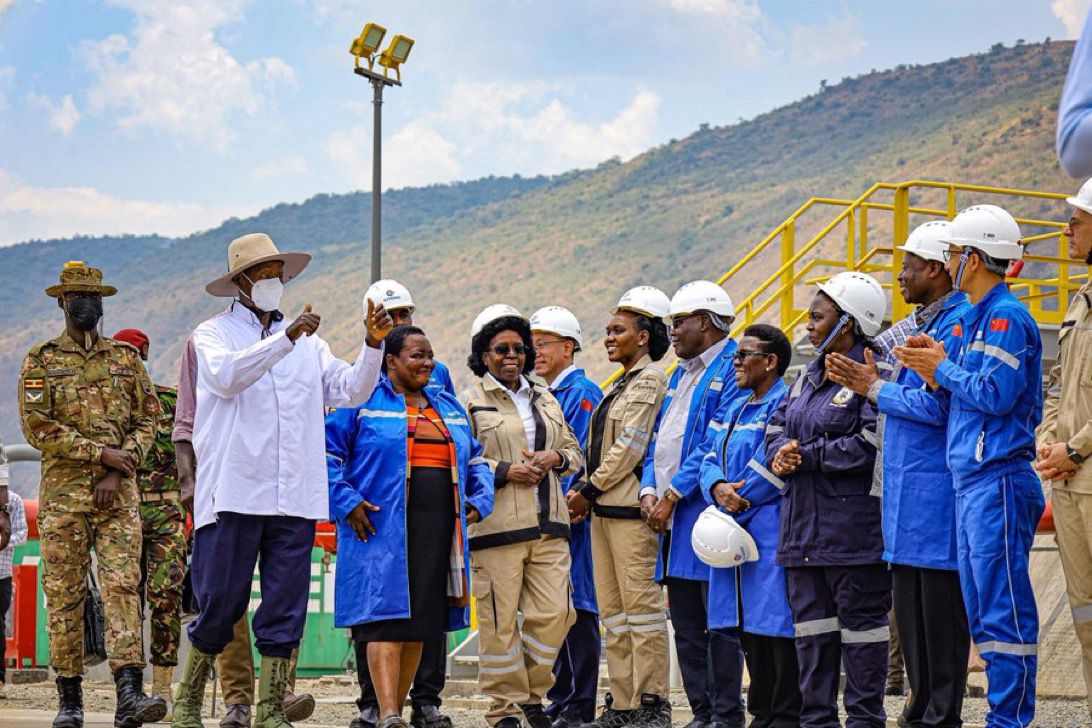
At a ceremony held in Kikuube District on Wednesday, Uganda’s energy sector crossed a threshold that many observers had quietly doubted would ever arrive. Total investment in the country’s oil and gas industry has now reached approximately $7 billion, equivalent to Shs26.6 trillion, with domestic companies alone capturing contracts worth $2.27 billion of that figure. According to Chimpreports, the figures were disclosed by Energy Ministry Permanent Secretary Irene Bateebe during a ceremony at the Kingfisher Development Area, the same occasion on which Uganda officially unveiled the commercial name of its crude oil blend.
The Money Trail: Who Is Investing and Who Is Benefiting
The scale of capital flowing into Uganda’s oil fields is significant for any frontier producer, but what stands out in Bateebe’s announcement is not just the headline number. The $2.27 billion secured by Ugandan enterprises represents roughly 32% of total sector investment so far. That proportion matters enormously in a conversation that has long been dominated by questions about whether African resource wealth ever truly benefits African economies or simply flows straight back to the headquarters of multinational energy firms.
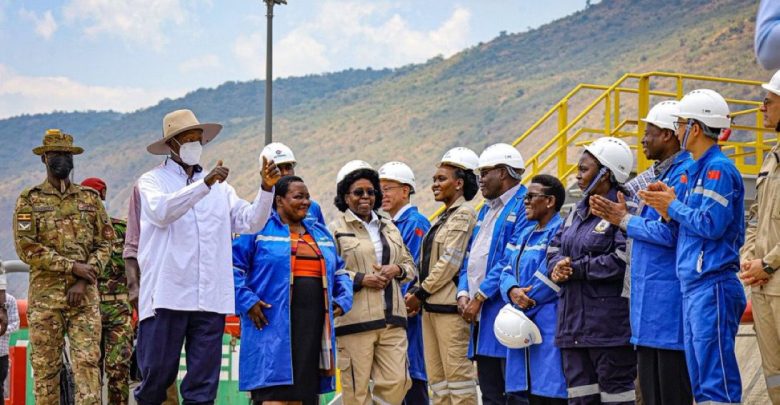
The workforce picture reinforces that narrative. More than 18,000 Ugandans are directly employed across the sector, with over 5,000 of those workers drawn from oil-host communities, the very villages and districts that bore the social and environmental costs of exploration. Bateebe added that Ugandans hold about 65% of management positions, 85% of technical roles and 99% of support positions across the industry. Those figures, if they hold as production scales up, would represent a genuinely unusual degree of local participation for a country producing its first barrel.
Kingfisher: The Smaller Project That Is Ready First
CNOOC Uganda and its joint-venture partners have poured approximately $2.4 billion into the Kingfisher Development Area, located in Kikuube District on the eastern shore of Lake Albert. The project is described as about 80% complete in overall terms, but drilling readiness tells a sharper story: Kingfisher is 98% ready for first oil, with commissioning and testing already underway. At peak output, the field is expected to produce 40,000 barrels of crude per day.
Forty thousand barrels is not a transformative number by global standards, but for Uganda, it is the start of a new economic chapter. The country has been sitting on confirmed reserves for nearly two decades without seeing a single commercial barrel extracted. Getting Kingfisher across that line first would represent the end of an agonisingly long wait.
Tilenga: The Bigger Picture
If Kingfisher is the appetiser, the TotalEnergies-operated Tilenga project is the main course. Tilenga is roughly four times the size of Kingfisher and is expected to produce around 190,000 barrels per day at peak capacity. That output level, combined with Kingfisher’s contribution, would push Uganda into genuinely consequential territory as an African oil producer. More than 210 wells had been drilled by July, surpassing the minimum number required to begin initial production.
TotalEnergies has navigated considerable turbulence over the Tilenga project and the broader pipeline it feeds into. Environmental groups and affected communities along the pipeline corridor have raised concerns that attracted international attention. The fact that drilling has exceeded minimum thresholds suggests the project is advancing regardless, though how those social fault lines are managed will shape Uganda’s reputation as a resource-producing nation for years to come.
The Pipeline That Makes It All Possible
None of the oil these fields produce has any commercial value without a way to get it out. Uganda is landlocked, which means every barrel must travel overland to a port before it can reach global markets. The solution is the 1,443-kilometre East African Crude Oil Pipeline, a heated pipeline designed to keep Uganda’s waxy crude in a liquid state across some of the most challenging terrain in the region. As of Bateebe’s announcement, construction has reached 92.7% completion.
At that figure, the pipeline is close enough to done that the remaining work is largely an engineering formality rather than an open question. The route runs from Hoima in Uganda through Tanzania to the port of Tanga on the Indian Ocean coast, passing through communities, national parks and sensitive ecosystems along the way. It is one of the longest heated crude pipelines ever built, and its near-completion marks a genuine engineering achievement regardless of one’s views on the politics surrounding it.
What Commercial Production Would Actually Mean for Uganda
Uganda has been anticipating oil revenue for long enough that the phrase “first oil” has become something of a national joke in some circles. But the combination of Kingfisher at 98% drilling readiness, Tilenga with drilling ahead of schedule, and a pipeline at 92.7% completion suggests that the joke is running out of runway.
When commercial production does begin, the fiscal implications will be immediate and substantial. Oil revenue could fund infrastructure, reduce Uganda’s dependence on external borrowing and provide a buffer against the kind of currency and balance-of-payments pressure that has challenged the economy in recent years. The $7 billion already invested has also created a domestic contractor ecosystem, a trained workforce and management capacity that did not exist a decade ago.
The risks are equally real. Oil wealth has a complicated relationship with governance across the African continent, and Uganda’s democratic institutions will face new pressures when serious revenue starts flowing. Commodity price cycles are unforgiving, and a country that builds its fiscal plans around $80-a-barrel assumptions can find itself in serious difficulty when markets shift.
Still, September 2026 finds Uganda closer to commercial crude production than it has ever been. The machinery is in place, the workforce is trained, the pipeline is nearly complete and at least one field is months, not years, away from flowing. Whether the country converts that resource potential into lasting prosperity is a question whose answer is still being written.
As Uganda prepares to finally join the ranks of African oil producers, what governance and transparency safeguards would you need to see in place before you would consider the country’s oil boom a genuine success story for its citizens?